The Unfinished Swan is a first-person exploration and traversal game developed by Giant Sparrow, the same developer that created What Remains of Edith Finch. The Unfinished Swan is not new, having released in 2012 on PlayStation 3 and then on PC in 2020, but I only now got around to playing it.
You play as Monroe, a newly orphaned boy, inheriting from his mother a single painting depicting an unfinished swan. One night the swan leaps out of the painting. Monroe follows it, embarking on a magical journey through a surreal, dream-like world.
The Unfinished Swan‘s world is initially wholly white. However, Monroe can hurl paint drops onto it, revealing details like walls and furniture. The game’s world is a blank canvas that only solidifies when painted. For example, what was formless white is suddenly a black frog that leaps into a nearby pond.
As the game progresses, it introduces new mechanics, such as the physics-defying, AntiChamber-like puzzles; buttons and levers to activate ladders and bridges; or hurling water to encourage the growth of climbable vines. You can also find hidden balloons that unlock upgrades and additional material.
The game slowly reveals a fairytale-like story through narration, about or from the world’s prodigious but eccentric king, and storyboards, complete with child-friendly line art. The music is also ethereal, consisting of glockenspiels and light strings, reminiscent of Tchaikovsky’s Dance of the Sugar Plum Fairy.
Thematically, The Unfinished Swan views grief and impermanence through a child’s imagination. The normally mischievous act of splattering paint allows Monroe to find certainty, meaning and agency where there is none. The shared act of painting links Monroe with his mother. Metaphors have power.
The Unfinished Swan is also moving because, by seeing the world through Monroe’s eyes, we can experience things both superficially, as he does, and with an adult’s experience and context. Implication and inference also have power.
Despite its age, The Unfinished Swan still holds its own as novel and thought-provoking. It is short, taking under four hours to complete, and wraps up its story positively but with restraint. Those looking for something contemplative and unusual will enjoy it.
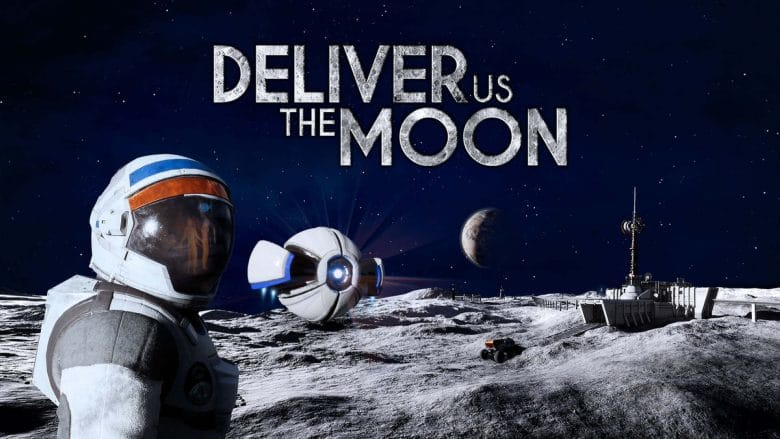
Deliver Us the Moon is a first-person interactive fiction game similar to Tacoma, Event[0], The Station or Stardrop. You play an astronaut blasting off an environmentally-devastated, near-future Earth to restore the energy transmission from the moon after it mysteriously shuts off.
Deliver Us the Moon could be called a walking simulator, a genre uncharitably named for its simplicity and monotony. Like many walking simulators, much of Deliver Us the Moon involves the lone player exploring their immediate area, finding notable objects to scan or historical scenes to review then solving simple puzzles to unlock progress to the next area. There is no branching narrative or progression.
However, unlike some walking simulators, Deliver Us the Moon packs variety. It includes multiple mini-games like docking spaceships, driving moon rovers, repairing robots or aiming radar dishes. Its space scenes impart the feeling of weightlessness, potentially disorienting the player with “up” only denoted by the occasional sign, screen or seat. Limited oxygen makes scenes in space or on the lunar surface tense. Sometimes you lose yourself staring at the desolate but beautiful lunar surface. Sometimes you are just desperately surviving. It is more What Remains of Edith Finch than Dear Esther.
Like many interactive fiction games, Deliver Us the Moon is short, taking seven to eight hours to finish. However, given its weighty story, it feels about the right length. Its brevity and economy contrast with unending contemporary live service games. It also becomes more accessible – you complete it in a few gaming sessions.
The success of an interactive fiction game depends on how well it resonates with the player. The key is the adage, “Show, don’t tell”. Rather than telling you how you or some player surrogate acted or felt, it places you in that situation, drip-feeding you background and context. When the game finally asks you to care, it feels natural after surmounting challenges and discovering lore organically.
At first, Deliver Us the Moon‘s setting and premise may seem far-fetched. Climate change is a genuine problem. However, Deliver Us the Moon‘sworld exhausts natural resources and desertifies sooner than even pessimistic climate projections. Extended stays in space or on the lunar surface require huge, Earth-side teams to support them. Given our understanding of physics, beaming sufficient energy from the moon to power the Earth is impractical.
However, Deliver Us the Moon is not a game about environmentalism, technology or space. Its puzzles are never hard enough to frustrate or block progress.
Deliver Us the Moon is about how personal connections drive us, such as protecting family or camaraderie. It is about how alienating disconnection can be, even when the world is a stake. Amidst space’s vastness, alienness and hostility, the small things matter.
Deliver Us the Moon will appeal to those who enjoy empathising with a good story and can relate to its themes. You will enjoy Deliver Us the Moon if you enjoyed Firewatch or Gone Home but want more interactivity, some tense moments or a science fiction setting. Like other interactive fiction games, those looking for something challenging, action-filled or longer should look elsewhere.
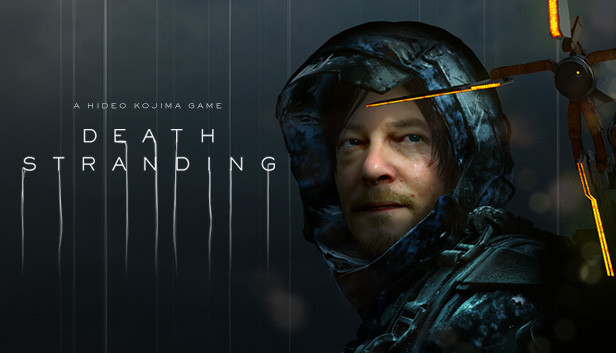
Death Stranding is an ambitious and heavily thematicgame that tweaked my curiosity. Given fifteen hours to play through it, I captured my initial thoughts.
You play as Sam “Porter” Bridges, a porter that carries cargo between human settlements in a post-apocalyptic world where the divide between the dead and the living has muddied. The remnants of human civilization live scattered and disconnected.
The gameplay chiefly consists of the mundane but meditative act of hiking. Initially, Sam focuses on balancing his cargo while avoiding rocks, steep inclines and deep water. He soon gains additional abilities, like constructing ladders and bridges, and encounters challenges like humans, the dead or worse.
The gameplay is refreshingly unique. It takes the oft-maligned “walking simulator” moniker given to games like Gone Home and Dear Esther then renders them all pretenders.
Graphically, Death Stranding’s world is a persistently overcast landscape initially of grey bogs and rock exposed through green moss, like Scotland or Iceland. Playing with ray tracing and DLSS, the images would be awe-inspiring if the world was not intentionally dull. The water effects are superb.
Thematically, Death Stranding’s world is Shakesperean and human-centric, with the natural environment reflecting problems of the human one. Crows plummet to the earth to herald danger, while seagulls represent safety and the assurance that being surround by life brings. Grey, beached dolphins and whales denote when the player is at the boundary between life and death. The black dead claw at the protagonist to drag them down into the hellish depths. An inverted rainbow subverts the usual happy connotations as an augur of doom. Elemental water tries to extinguish the fire of life while air and earth passively observe.
Mechanically, Death Stranding tries to be too many things. The horror, body horror, combat and stealth conflict with the more meditative and novel hiking, load management and exhaustion mechanics. The transitions between them can be jarring and sometimes occur outside the player’s control.
Does some of Death Stranding‘s symbolism have to be so unsettling? Umbilical cords link the living to the dead, like dehumanized BB (“bottle baby”), your companion. The handprints of the otherwise invisible approaching BTs (“beached things”) are textbook horror.
Death Stranding’s overt symbolism also borders on clumsy. Is handcuffs the best model for Sam’s communication device, something so dualistic and confronting even Sam mentions it? Was it necessary to call a device to connect settlements a “q-pid”, like Cupid?
The game explains everything in detail under the guise of world-building or tutorials. The journal entry explaining “likes”, used as experience points, is unnecessary given our increasingly complex relationship with them in the real world. Letting the player guess or infer may be more effective.
Playing Death Stranding is like someone meticulously explaining a comedian’s jokes, removing the player’s inference and agency. When the player carries no burden, unlike the protagonist, the meaning and achievement disappear.
Worst of all, the symbolism and heavy themes are unrelenting. Sam is an isolated, herculean, messianic figure carrying others’ burdens through a purgatorial landscape. There is no middle ground between hope and despair. There is no mundanity or humanity, like a local merchant or comic sidekick. Supporting characters lack personality, with thematic names like Heartman, Deadman or Fragile. Place names are functional, like “Central Knot” or “Middle Knot”. Even showering and using the toilet have in-game uses.
Death Stranding is not a bad game, despite the comments above. It is an allegory about how social media disconnects us, with Sam gaining “likes” for successful deliveries and giving or receiving likes for shared constructions like ladders or bridges. Most human detract from constructive discussion by stealing deliveries (attention or content) but distract us from real threats. The game’s tenet is we are stronger together and must never lose our compassion.
Death Stranding also blurs the line between cinema and games, with character models matching their actors. The prologue slowly rolls credits as the player trudges through the dreary landscape set to an alternative rock soundtrack.
I suspect the developers wanted to make a subtler, thematic game. However, a requirement for mass-market appeal and sales dictated compromises. Playing further may alleviate these concerns. Death Stranding introduces some novel mechanics and deals with timely themes. It is worth a look for anyone looking for novel gameplay or something emotional, if unsubtle.


 The Single Player