“Everspace 2” Review: A Wonderful Space ARPG

Everspace 2 is a space fight simulator with 3D movement focusing heavily on combat, exploration and puzzles. Rockfish Games, the developer, describes Everspace 2 as a “space shooter” with “RPG elements” on its Steam page. That is untrue. Everspace 2 is an action role playing game (ARPG) like Diablo or Path of Exile. And it is terrific.

You play Adam Roslin, an ex-military fighter pilot working for an uncaring and manipulative corporation. After a routine mission goes wrong, you are captured by outlaws and escape to a long abandoned base. You and your fellow escapees then rebuild and prepare for a heist that could set you all free.

Flying your ship in Everspace 2 is a joy. The controls are less detailed than those of more complex space simulators like Elite Dangerous. Still, such an outwardly arcade-like game offers a surprising degree of control. Dodging enemy fire, circling capital ships, and navigating maze-like tunnels all feel fluid and natural.

The combat is vibrant, frantic and engaging. Like most ARPGs, you usually fight swarms of weaker enemies, each with different weapons, defences, and abilities. This structure provides constant variety and changing tactics. Your relative strength also fuels the requisite power fantasy. 

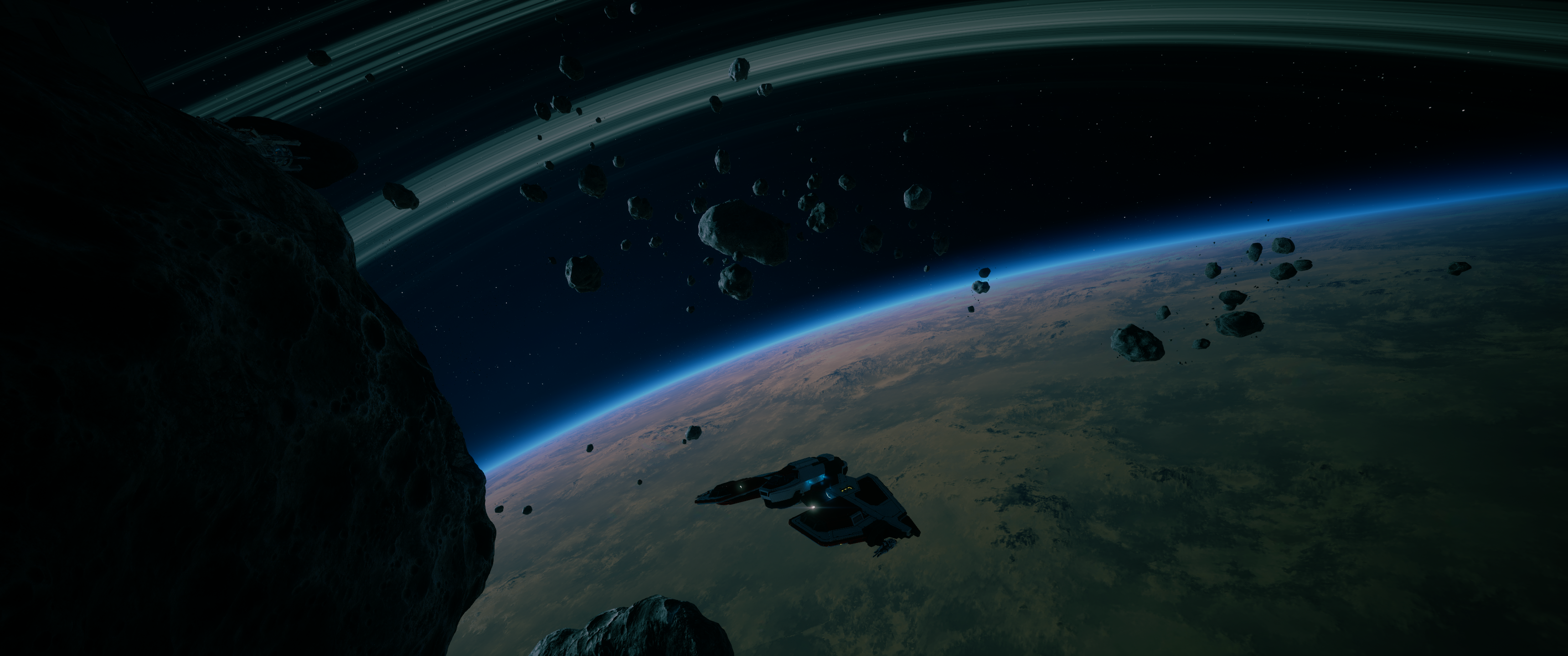
A warm red star and a blue nebula shine through an asteroid field

Locations also contain puzzles, providing cerebral but slower-paced play. As you fly around, your sensors can detect and track nearby loot, mineral deposits or other points of interest. Your ship has a tractor beam that you can use to pick up and move things around, such as removing debris from a passage or picking up a battery to slot it into a socket elsewhere. These usually unlock doors or containers of potential ship upgrades.

Everspace 2 tells its main story through cut scenes showing hand-drawn images with voice-overs. While low-budget, this style works well for a game focused on flying spaceships. The main quest has excellent pacing while introducing more about the universe and its inhabitants.

There are plenty of side quests and activities, too. As with many RPGs, they are often the most interesting, flesh out the world and introduce unique NPCs. Chasing rogue AIs, rescuing trapped miners, or appeasing crime lords are all on the cards. Racing tracks and rifts filled with difficult enemies satiate those seeking a challenge.

Mechanically, Everspace 2 is a testament to game balance. Everything, including your character, gear, and enemies, is geared to a level. Level differences are more pronounced than in other games. Foes more than a few levels above you are deadly. Those a few levels beneath you will be merely speed bumps. Everspace 2 periodically increases the level of enemies to keep the challenge consistent.

A ringed planet seen from the surface of a desert planet

Aesthetically, Everspace 2 is beautiful. Each location is a postcard, with asteroids, massive space stations, aging wrecks, vertigo-inducing icebergs and/or vibrant nebulae. Many are varied and original, like an iceberg in a solar flare or a megafauna skeleton, evoking wonder and appreciation. Each star system also has its distinct look, making them feel unique. 

The electronica soundtrack is also on point, supporting the sci-fi feel. The zen-like cruising pieces contrast with the exciting, upbeat combat ones.

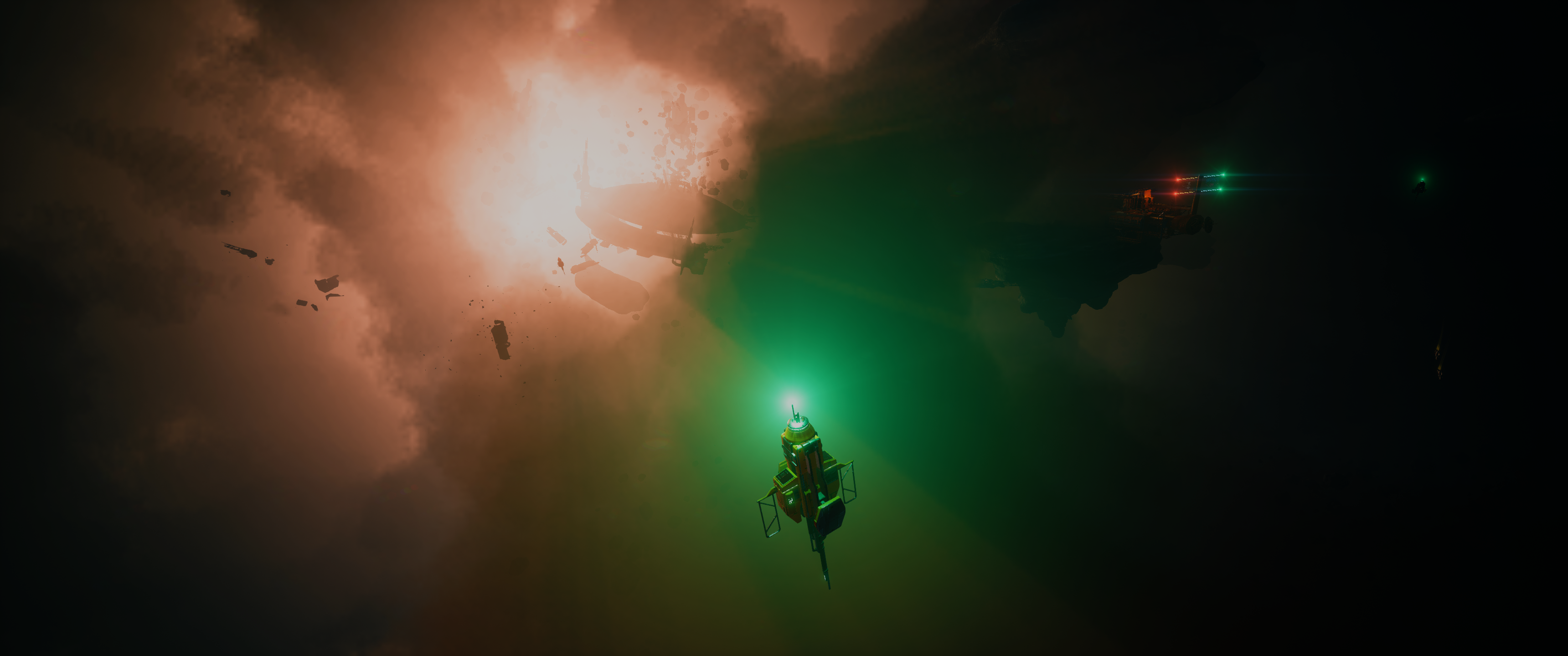
A green beacon in the middle of a dark gas cloud

However, Everspace 2 is not perfect. My biggest gripe is with the writing in the main storyline. No one expects deep or complex writing from an ARPG, but this does not excuse poor writing. 

The characters need more substance. Ben and Delia are just cardboard cutouts and deserve motivation and agency. Maddock becomes a contrived, grumpy omni-antagonist. Combining some supporting characters, like Ben and Tareem, would have enhanced both. Everspace 2 also unnecessarily sexualizes a female supporting character at one point. 

Similarly, the early main story has too much “I need you to do this, but I am not going to tell you why for at least two cut scenes.” It feels unnecessarily opaque and confrontational. The game also removes the player’s agency at a few key moments, railroading you. 

My other gripe is with loot management. Most of the copious loot enemies drop is trash you sell or disassemble for crafting components. The rare upgrade is fun, and Everspace 2‘s crafting system means you will always have suitable weapons, modules or consumables. 

However, the constant gear drops and level churn mean periodically yanking yourself out of the fun combat and puzzle game loops to clear your inventory. Loot management is a broader problem with ARPGs’ variable intermittent reward structure, but it is still a problem.

A ship in an asteroid field hovering over a ringed planet

I initially thought Everspace 2‘s lack of replayability would be a problem. It lacks a skill tree or other ARPG elements that specialize your character. No advancement or story choice blocks off content. ARPGs have traditionally used these to encourage players to create different characters to replay content differently.

However, being able to quickly switch out a new ship or experiment with new weapons or modules means experimentation or change is refreshingly easy. Meanwhile, the perk and challenge systems provide attainable alternative goals that offer useful benefits instead of gatekeeping high-level content from less dedicated players. 

Ultimately, Everspace 2 is a game that knows what it wants to be. It doubles down on that explore -> shoot -> loot -> craft game loop. If you enjoy that loop, and you will find out quickly or via the free demo, the game promises hours of the same. Otherwise, you will bounce off Everspace 2 hard.

Everspace 2 also knows what it does not want to be. It is single-player and offline, eschewing the complex code, gameplay loops and community management required for multiplayer or online play. It focuses on quality over quantity, providing a few well-developed star systems to explore. There is no piracy, salvage, political simulation or other distractions.

It took me about 60 hours to complete the main quest, including most side quests and challenges. As with most RPGs, you could complete it in under half that time, but you would miss the best content. Meanwhile, the developers continue expanding and enhancing the game, showing a welcome love and attention to detail. If only all ARPGs were this good.

“Chants of Sennaar” Review: The Tower of Babel in Game Form

Chants of Sennaar is a 3D puzzle game developed by Rundisc. It focuses on decoding and translating languages, combining the deductive reasoning from The Return of the Obra Din with the language learning from Heaven’s Gate.

The goal of Chants of Sennaar is to ascend to the top of a vast tower, learning the language of each level’s inhabitants as you go. Of course, nothing tells you that. You infer it from the game’s conversations and level design.

The mechanics of learning languages are simple and ingenious. You encounter glyphs, symbols that represent words, in writing, signs, or conversation. You infer a glyph’s meaning from its context. For example, a glyph on a sign over a bottle probably means bottle. 

A ruler using alien numbers.
A clever, succinct way to convey numbers

You automatically capture glyphs in your notebook, where you can type in a meaning or clue. Those meanings are written above the glyphs, giving a rough translation on the fly. You can then iterate with different meanings until you are happy.

Occasionally, you draw pictures in your notebook and then match glyphs to their drawings. If you get all the glyphs correct, the game confirms their meanings, making inferring the meaning of other glyphs easier. In the worst-case scenario, you can keep guessing until you get it right.

Clearly, the main challenge in Chants of Sennaar is inferring or deducing the meanings of glyphs. The languages are simple, restricted to 40 to 50 words each. Some languages even embed hints or patterns in the glyphs themselves. 

However, decoding languages is not straightforward. The tower’s levels are non-linear, so missing a vital clue is easy. Language and meaning are also flexible. If I see a glyph next to an arrow pointing up, does the glyph mean up, high, north, ascend, or just arrow?

Meanwhile, Chants of Sennaar is a puzzle game at heart. Beyond language translation, some puzzles are stealth sections where you must sneak past guards. Some areas are maze-like. Some have simple lever combinations. Sometimes, you must find an item that will unlock a puzzle elsewhere. The variety keeps things fresh. There is even a Flappy Bird mini-game to find.

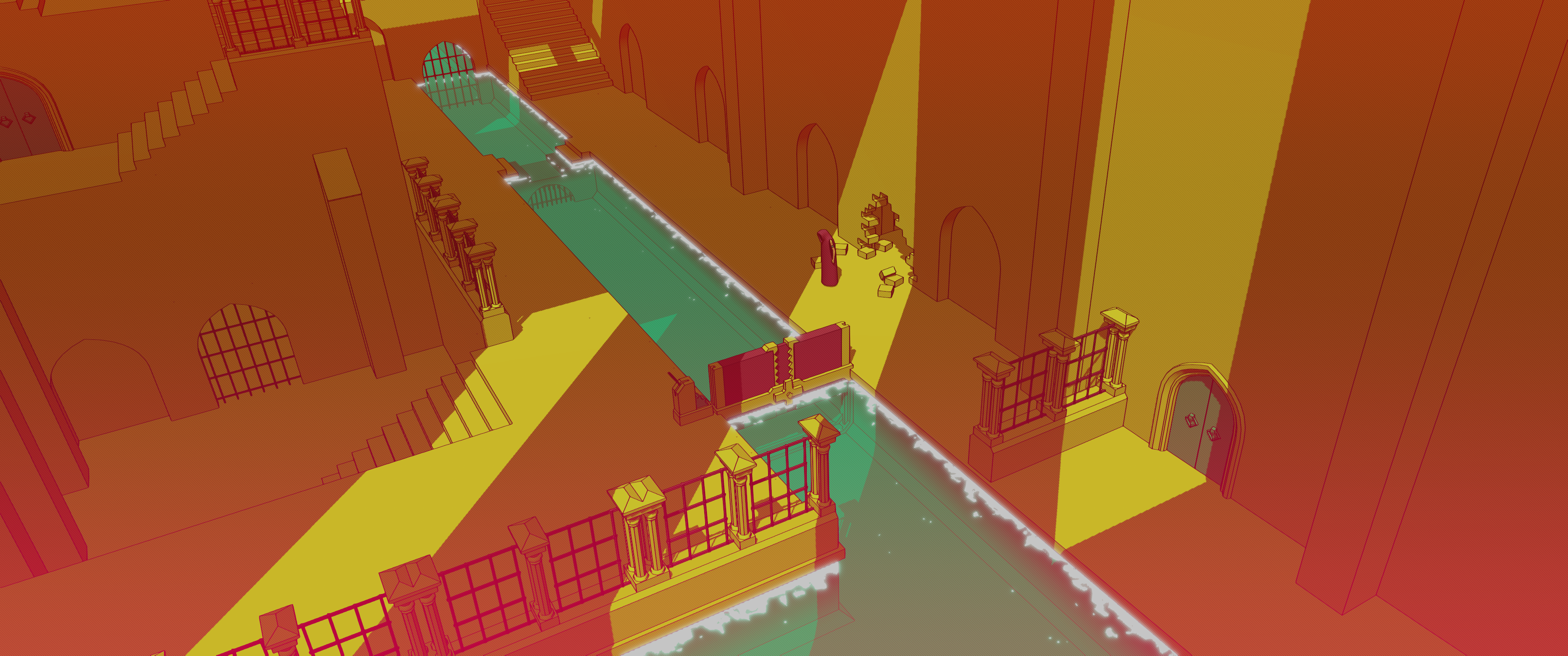
Your character blocked by a canal.
Your first puzzle

The game’s cel shaded art style is simplistic but on point. For example, the yellow and orange walled areas of the Devotees, complete with cats and crows, are obviously different from the blue walls and red water of the Warriors, complete with distant but intrigued lizards.

The audio and soundtrack are subtle but thematic. Early pieces are mainly orchestral but include obscure instruments, drums, claps and other tribal influences to give it a primitive feel. The instrument balance shifts subtly as you progress and discover the true nature of the tower. The audio is mainly environmental, with wonderfully high-quality bubbling water and wind at times.

My criticisms of Chants of Sennaar are few. While the game tracks the glyphs and meanings, it does not track word order. This omission makes translating between some languages more challenging. You can repeat conversations, but you do not track them in your notebook. This decision keeps your notebook decluttered but means you must return to where that conversation occurred to replay it. Some puzzles get obtuse toward the end, too.

Overall, completing Chants of Sennaar is a cerebral ten to fifteen hours for those who love language puzzles. If you do not, this game will be frustrating, boring or both. However, given that its rarest achievement has a 25.8% completion rate at the time of writing, Chants of Sennaar has found its feet with a niche but dedicated audience.

“Enshrouded” Review: Good with Potential for Great

Enshrouded is a new early access, cooperative, survival crafting game from Keen Games. You play a “flameborn”, a magically enhanced human in a post-apocalyptic fantasy world. The “shroud”, a deadly mist, has covered parts of the world, filling them with alien and dangerous inhabitants. Your job is to learn what happened and restore the world.

Mechanically, Enshrouded plays like other fantasy survival crafting games. You start with little but rags. You explore, find or mine materials, craft weapons and shelter, and fight enemies. There is plenty of lore to discover, mainly as glowing notes left in long abandoned places. You can craft a grappling hook and a glider aid in traversal. You can fast travel once you unlock the destinations, usually requiring light traversal and puzzle solving. There is no hunger or thirst meter – you are an immortal flameborn – but enemies are balanced to the buffs given by food and drink.

Enshrouded‘s combat is very Souls-like, at least for melee characters. Timing, parrying and dodging are critical, although the creatures are generally more forgiving than anything from From Software. Non-melee characters are easier to play. Magic operates like a bow and arrow, with a staff firing magic spells instead of arrows. There is a stealth system, allowing you to snipe enemies from afar or backstab them up close.

The quests and crafting are standard for the genre. Quests progressively take you further afield and push the lore. You can rescue other NPC flameborn survivors, who provide unique crafting recipes and quests. Completing quests and acquiring new materials provide new crafting recipes. Most crafting requires crafting stations, which takes time and encourages you to head out into the world while you wait.

Enshrouded‘s building is voxel-based. You place floors, walls and ceilings individually, mixing and matching the materials to taste. Aesthetically, crude stone or thatch rooves are easy to mass produce but intentionally look uneven and primitive. You can discover better-looking materials, which require more and rarer ingredients. Mechanically, buildings provide shelter, which gives a stamina buff. The rescued NPCs also need shelter to produce more complex recipes. 

Enshrouded‘s character advancement options follow a skill tree model. It covers the usual archetypes from a “sword and board” (melee weapon and shield) tank to a two-handed barbarian, a mage, a healer and a stealthy assassin. You gain XP from killing enemies, completing quests and gathering resources. You gain skill points when you level up or fell a shroud root, mushroom-like growths that create the shroud. Skills cost different amounts depending on their utility. You can also respec cheaply, making exploring different builds easy.

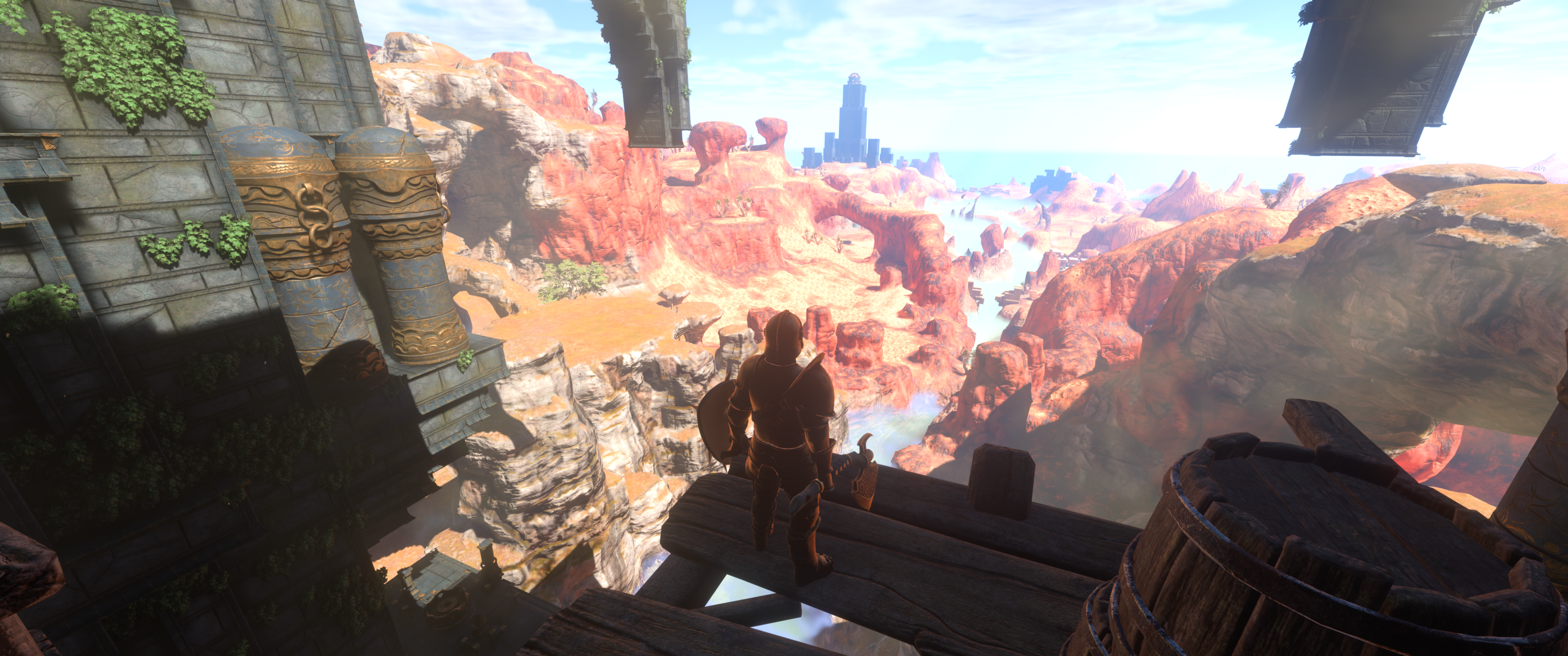
More generally, the quality and amount of content in Enshrouded is excellent. Apart from a few enemies getting stuck in the terrain and the occasional visual glitch, the game was flawless. The panoramic vistas are lovely, and the eerie green, blue and yellow lights shining through the shroud at night give it an alien, unworldly feel. Enshrouded‘s skill tree hints at something wonderfully complex and bristling with undiscovered synergies, like Path of Exile, in the final game.

An armored figure standing on a high stone ruin overlooking a shrouded desert valley.
Yet another beautiful panorama, looking down from an ancient stone ruin into an enshrouded valley

Critiquing an early access game is arguably unfair. After all, Enshrouded is unfinished and has a long development road ahead. However, there is enough to hint at what it could be and where problems lie. 

Enshrouded‘s biggest problem is there is little extrinsic reward for exploration. The hand-crafted map is enormous and dotted with areas to explore. However, quests will take you to most of the essential places and get the critical rewards. The tidbits of lore are flavourful but disjointed. Flame shrines give unique rewards, but I accumulated all I needed early on. There are too few enemy types and each has fixed behaviour, potentially leading to repetitious and unchallenging combat. I was swimming in bows, staves and wands but, as a melee build, I found the first useful non-quest item in a chest sixty hours into the game. By the time I reached the Kindlewastes, the last accessible area, I had lost the exploration buzz. Walking down the next unexplored path felt like a chore. This issue is a “must fix”, particularly with so much of the map still unavailable.

Enshrouded‘s late-game crafting requires too much effort for too little reward. I was happily defeating level 30 creatures wearing low-20s gear. The only crafting you need is unlocking higher “flame levels”, which opens up previously inaccessible shrouded areas. While you keep unlocking new crafting recipes, higher-level crafting requires more tedium: more ingredients, longer crafting time, and heading back to lower-level regions. Inventory management becomes tiresome. Planting and harvesting crops is convenient, but doing so plant by plant gets repetitive quickly. 

There is little incentive to build Enshrouded‘s beautiful bases. With dozens of materials available and the developer’s apparent effort, it screams out for an in-game need to build more. Unfortunately, once you make a sufficiently large structure, usually at the starting location using basic materials, you can fast travel back to it whenever needed. Replacing fast travel with a point-to-point mechanism or requiring crops to be planted in their native biome might help.

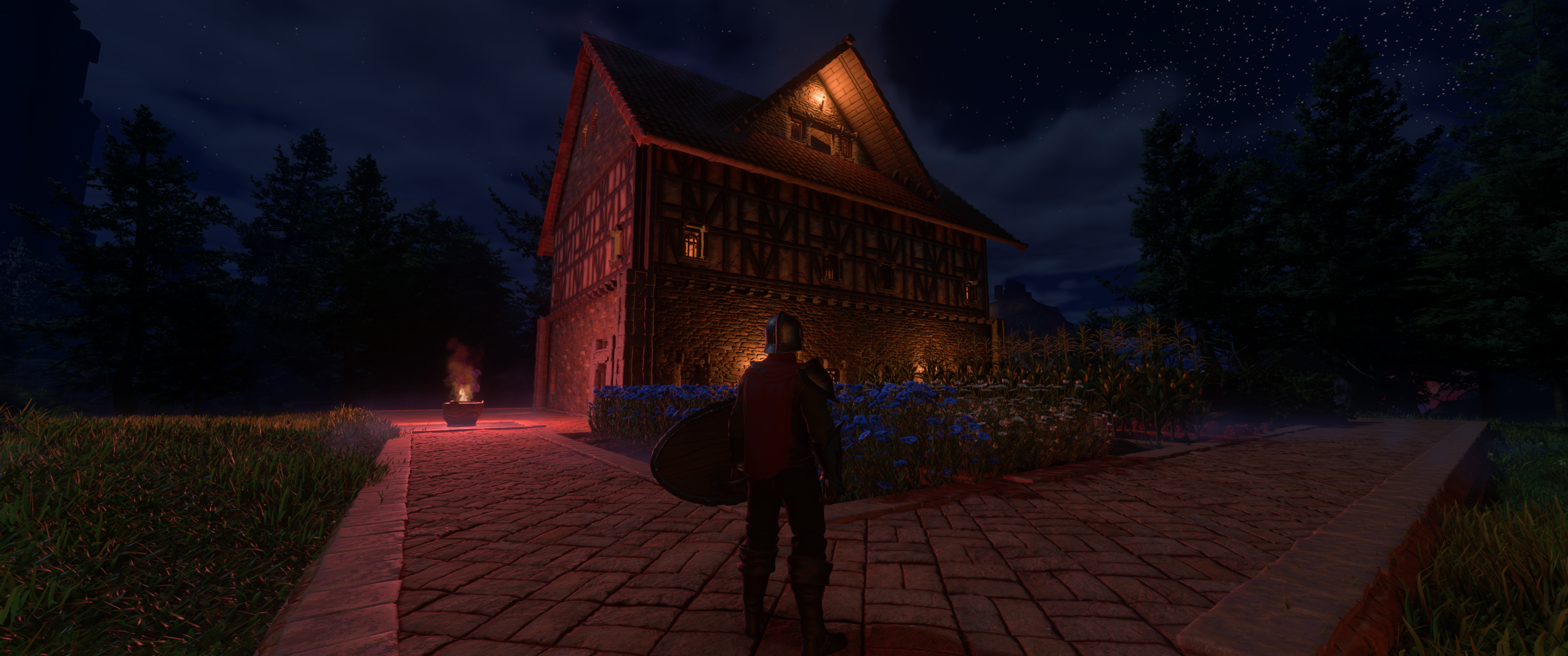
An armored figure standing before a modest house and garden.
My modest abode at night, complete with garden.

Lastly, Enshrouded has a few balance issues. Melee characters are underpowered early on, and suitable upgrades are hard to find. Spell-casting and ranged characters are more powerful, easier to play and have more plentiful gear. 

Enshrouded has the foundations for a great game. The quality and amount of content for an early access title are excellent and hint at a truly great game. The game has what it needs at the moment: solid foundations and exposure. Now Keen Games must refine Enshrouded‘s unique solution to the survival-crafting equation. As with pinnacles of the genre like Subnautica and Valheim, this will be a lengthy process. I hope Keen Games can take the time and resources to realise Enshrouded‘s potential.

The Art of Video Game Screenshots

Have you ever watched a movie or TV show and wanted to pause and marvel at a scene? It may be beautiful, showing off an artful mix of colour and design. It may be complex, requiring time to appreciate the detail. It may capture a moment that creates strong feelings or thoughts.

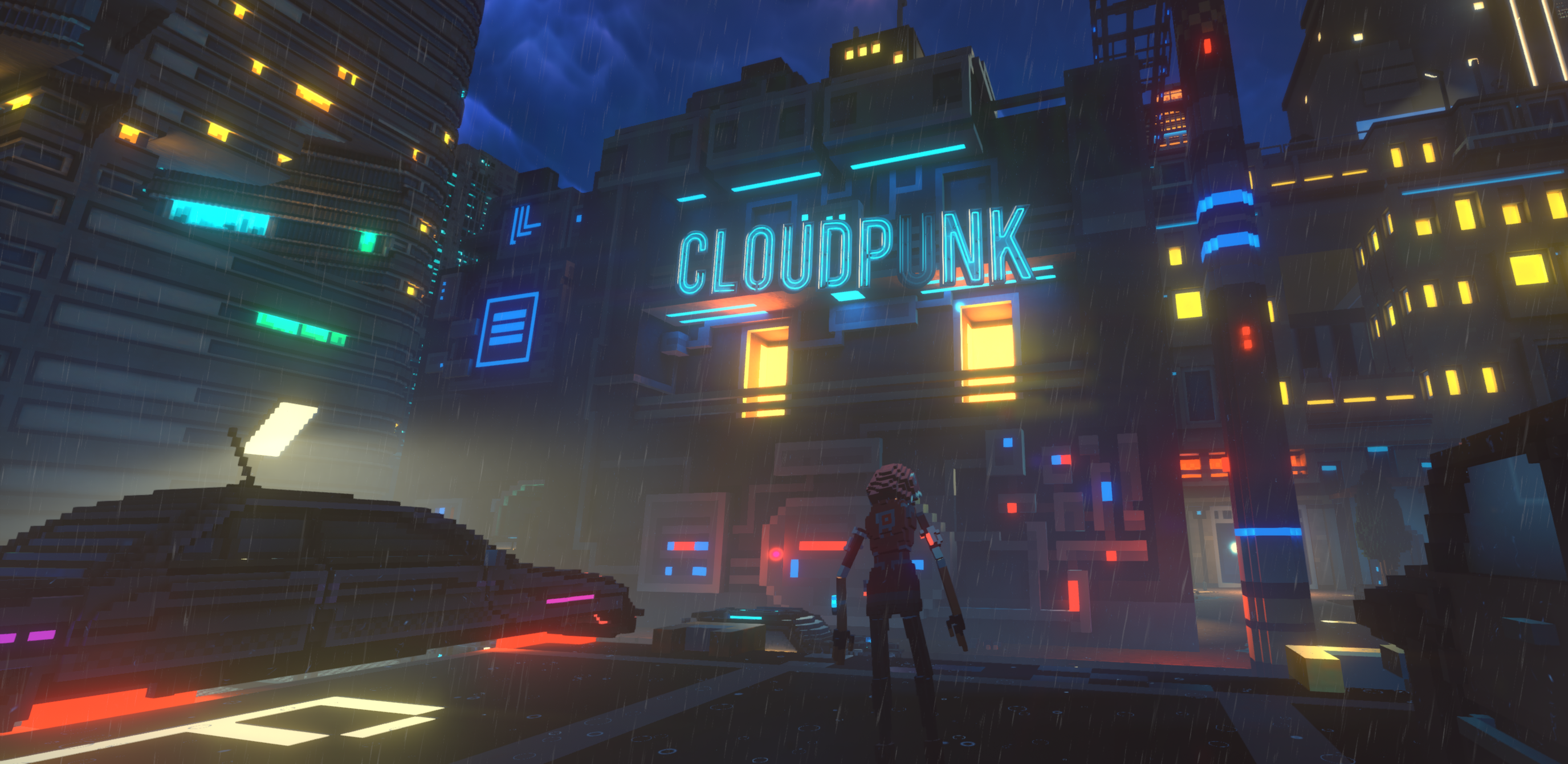
I love taking screenshots in video games. Not all video game graphics are lifelike or realistic, but even retro or pixel graphics have their beauty, such as the screenshot from Cloudpunk below. The definition of “realistic” also decays as each new generation of hardware increases fidelity.

Even Cloudpunk‘s voxel-based graphics are beautiful

Why take screenshots? I enjoy it. Arranging a good scene and admiring it as a screenshot is fun. This admiration is called “sense-pleasure”, a term coined in the original Mechanics-Dynamics-Aesthetics game design framework. Some game developers have screenshot competitions and communities. Winning is fun, as is sharing a common interest. Trying to take good screenshots also allows me to appreciate the effort developers put into games, looking at games and visual media through different eyes.

Taking good screenshots is simple: play games, take lots of screenshots, review them, decide which ones are the best, try to get more of those, and repeat.

That leaves two questions. The first is “Which games should I take screenshots from?” The second is “What makes a screenshot good?”

The answer to the first question is also simple: play whatever games you enjoy. That said, some platforms, such as PCs, and game types, like 3D open-world games, are more conducive to taking beautiful screenshots. High-end PCs have higher resolutions and are capable of better graphics. The developers of 3D open-world or similarly expansive games often create visually appealing worlds. 

Some graphics capabilities require special attention. Virtual Reality (VR) and Augmented Reality (AR) are more of an experience, something a static screenshot cannot capture. Screenshots from High Dynamic Range (HDR) displays are often too bright, at least in non-HDR file formats.

Screenshots of glitches, memes or schadenfreude are often spontaneous. These can be fun. They have their place. However, these tend to be unpredictable and their popularity fleeting.

Answering the second question, “What makes a screenshot good,” is more difficult. Someone with art training could write volumes on what makes a good painting or scene. However, some general advice I found helpful follows.

The human eye is usually drawn to specific places when playing a game. Players have fractions of a second to decode a busy scene and determine what to do next. The game designer wants to emphasize where to go next or the boss’s weak points.

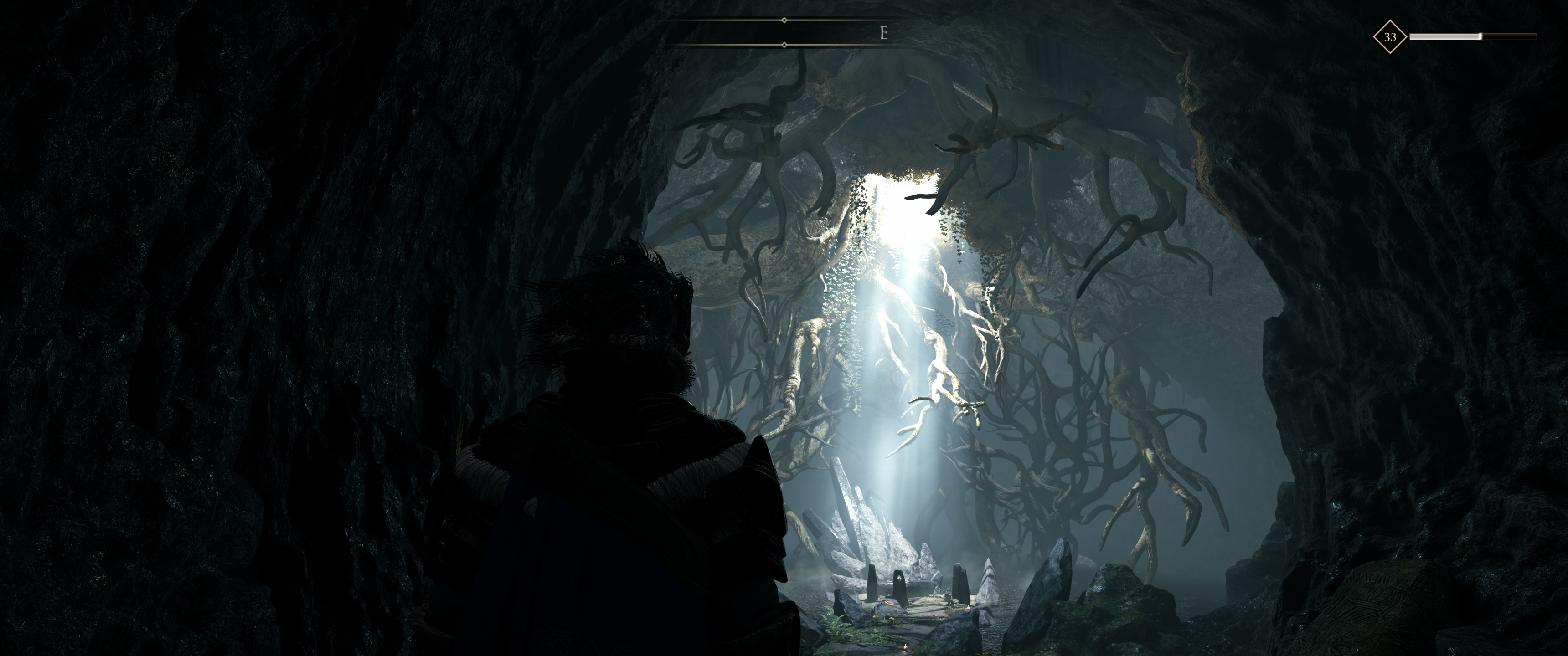
An underground cave from Greedfall

The above screenshot from Greedfall shows how the developer can unsubtly force the eye to focus somewhere. The light filtering from above among the dangling roots directs the player while hinting at this place’s history and significance.

However, the human eye can take its time to appreciate a screenshot. Treat each screenshot as a diorama. People view a screenshot holistically, like a painting. Arrange interesting things around the image or, if there is a single focus, ensure it is unique or intriguing enough to hold attention.

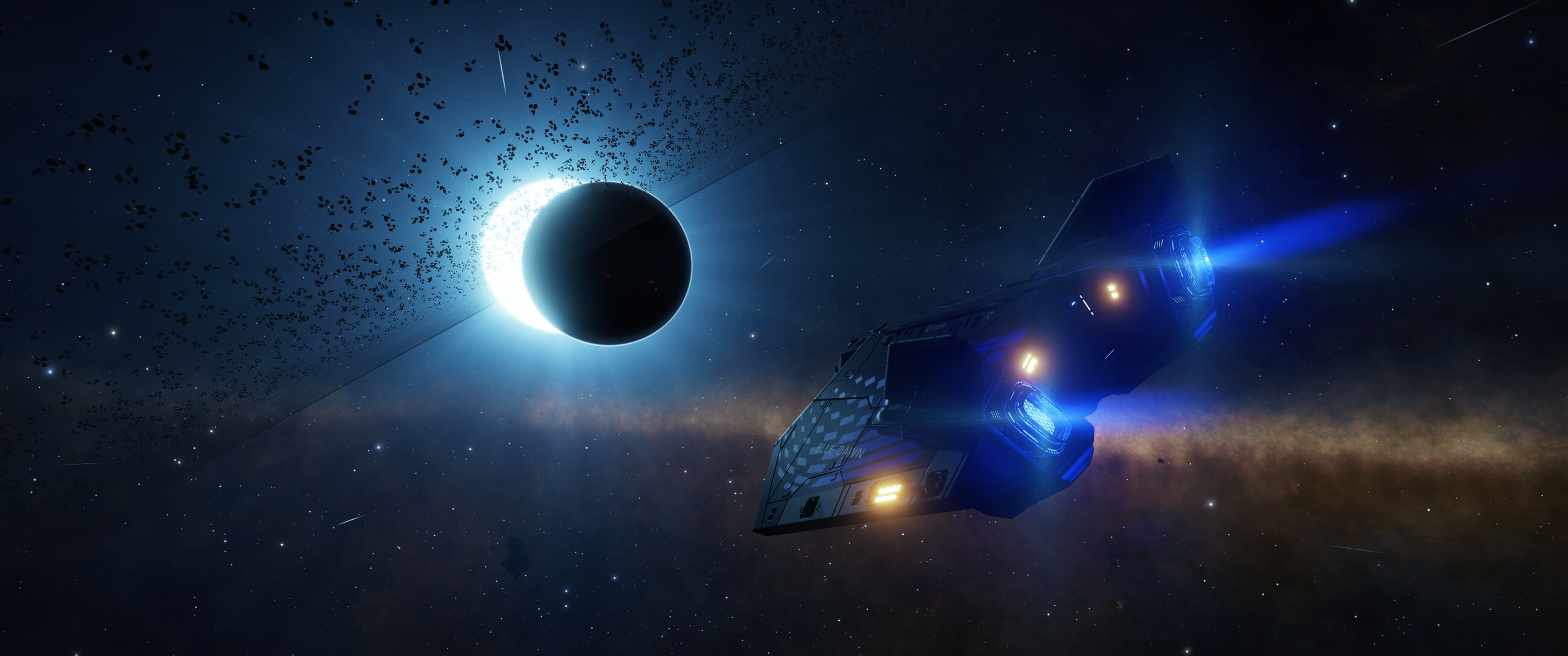
An Asp Explorer (spaceship) from Elite Dangerous

This screenshot shows a beautiful fusion of elements. The blue exhaust from the Asp Explorer (spaceship) heading towards the ringed planet matches the light of the eclipsed blue-white star. The edge of the Milky Way galaxy shows behind. This fills the image, meaning there is something interesting to look at everywhere.

Night City from Cyperpunk 2077

This screenshot shows the busy Night City skyline from Cyperpunk 2077. There is so much detail that it takes time to parse. What initially could pass for any modern metropolis is quickly dashed by the ascending holograms and unfamiliar advertising.

A Krait Phantom (spaceship) flying between a planet and its moon in Elite Dangerous

Another example from Elite Dangerous is above. Elite Dangerous‘ planet generation is fantastically detailed, and the colour contrast reflecting off the Krait Phantom’s mirrored hull looks wonderful. The distortion from the engine exhaust gives it that extra touch of realism and adds momentum.

Looking at the planet’s star through its rings in Elite Dangerous

While stark and beautiful, the lack of something interesting in the foreground in the above image gives the feeling something is missing or incomplete.

The best screenshots are not always from the most action-filled or detailed scenes. Screenshots omit many elements of game interaction, reminding us of what the screenshot lacks. There is no movement or action. There is no music, sound effects or story. The hardware sometimes limits the graphical fidelity. A screenshot can expose low polygon models and blurred textures.

An alien machine from Elite Dangerous

If you have a central focus, viewing it from a slight angle gives it a more natural appearance. It shows more detail from the side or top. The above screenshot shows the misty, creepy, organic, Gieger-esque internals of a thargoid base from Elite Dangerous. The details of the back pillar would otherwise be obscured if the shot was front-on.

The best screenshots tell a story or evoke emotion without context.

A Scorpion (buggy) exploring a thargoid spire site in Elite Dangerous

For example, zooming back from the Scorpion (buggy) and placing it below the camera’s centre in the screenshot above draws the eye towards the towering thargoid spire above it. The contrasting light between the green cloud to the right and the blue star to the left pleases the eye. This screenshot evokes a sense of alienness, wonder and being alone.

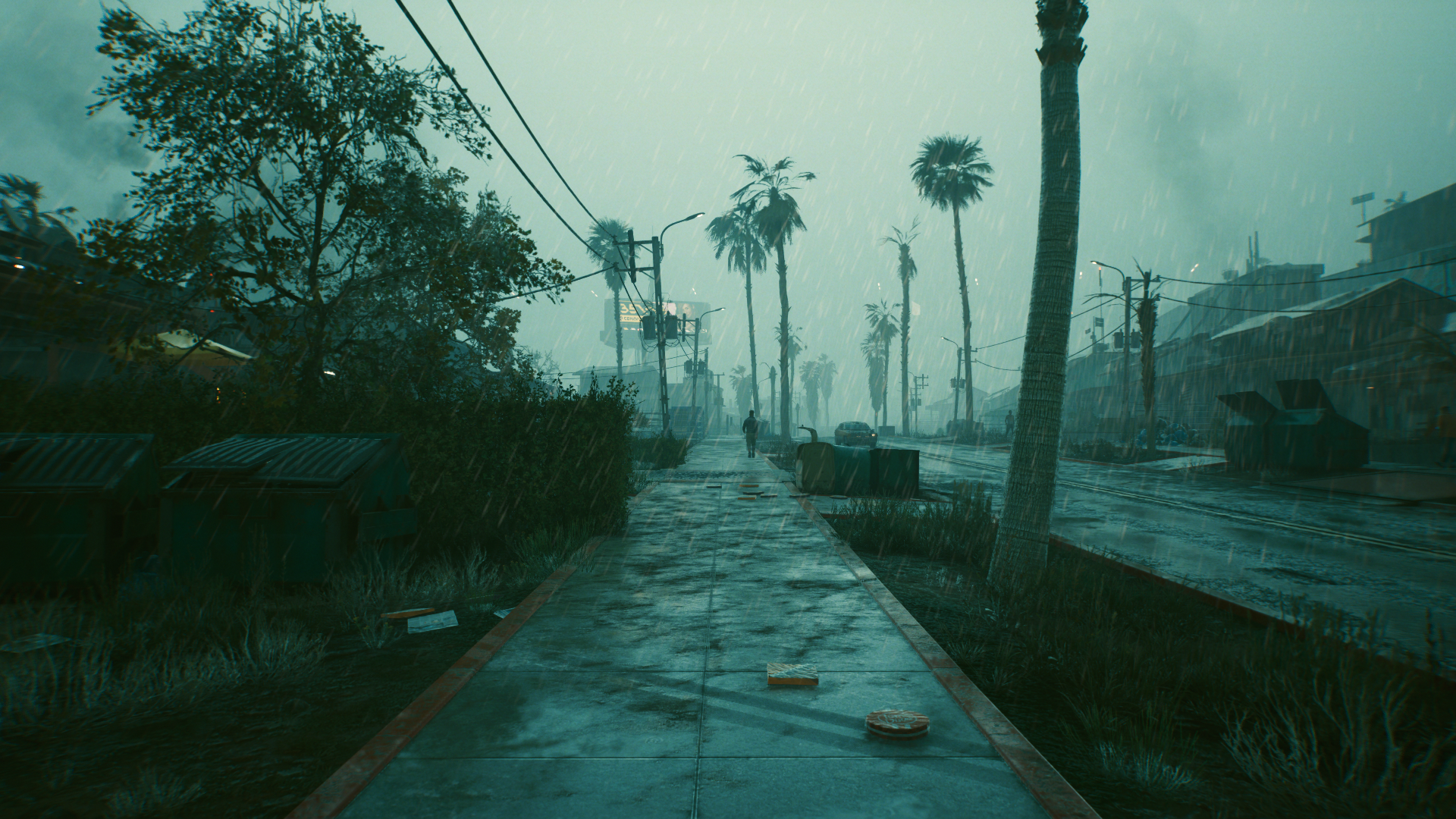
A rain scene from Cyberpunk 2077

Plenty of games have rain. However, the mist, almost monochromatic palette and subtle reflection in the puddles above capture a dreary oppression better than any other I had seen. The dirty footpath and cluttered scene emphasize the worst parts of urban life.

Avoid busy or unclear scenes. The dozens of spell effects hurled at a boss in an MMORPG raid can be impressive. However, parsing the scene can be difficult. 3D scenes rendered in wide aspect ratios, such as 16:9 or 16:10, distort around the edges. Avoid putting essential details there.

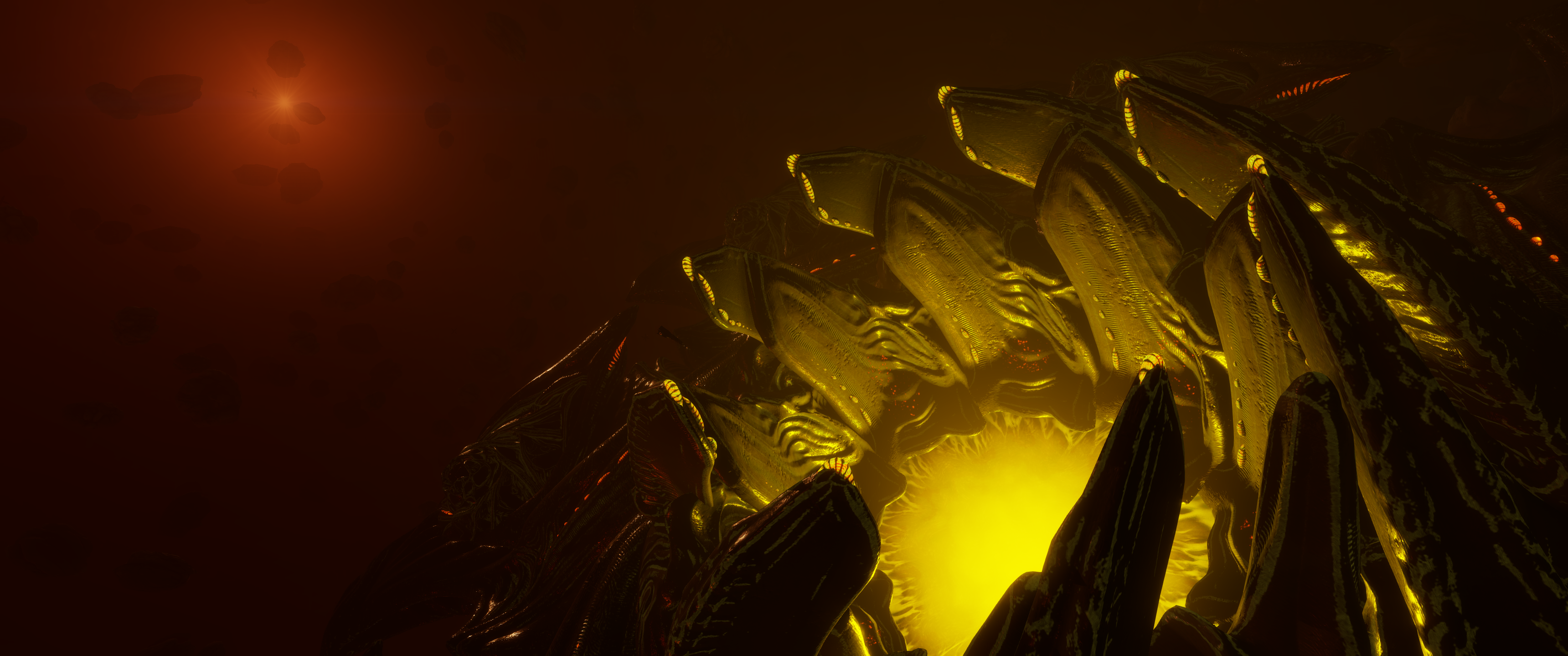
Lighting and colours pose unique challenges and opportunities. Overly dark or light scenes can be hard to discern. Contrasting light can be beautiful, as shown in the dull red of the star against the alien structure’s yellow below. Monochromatic scenes can be stark.

A thargoid titan from Elite Dangerous
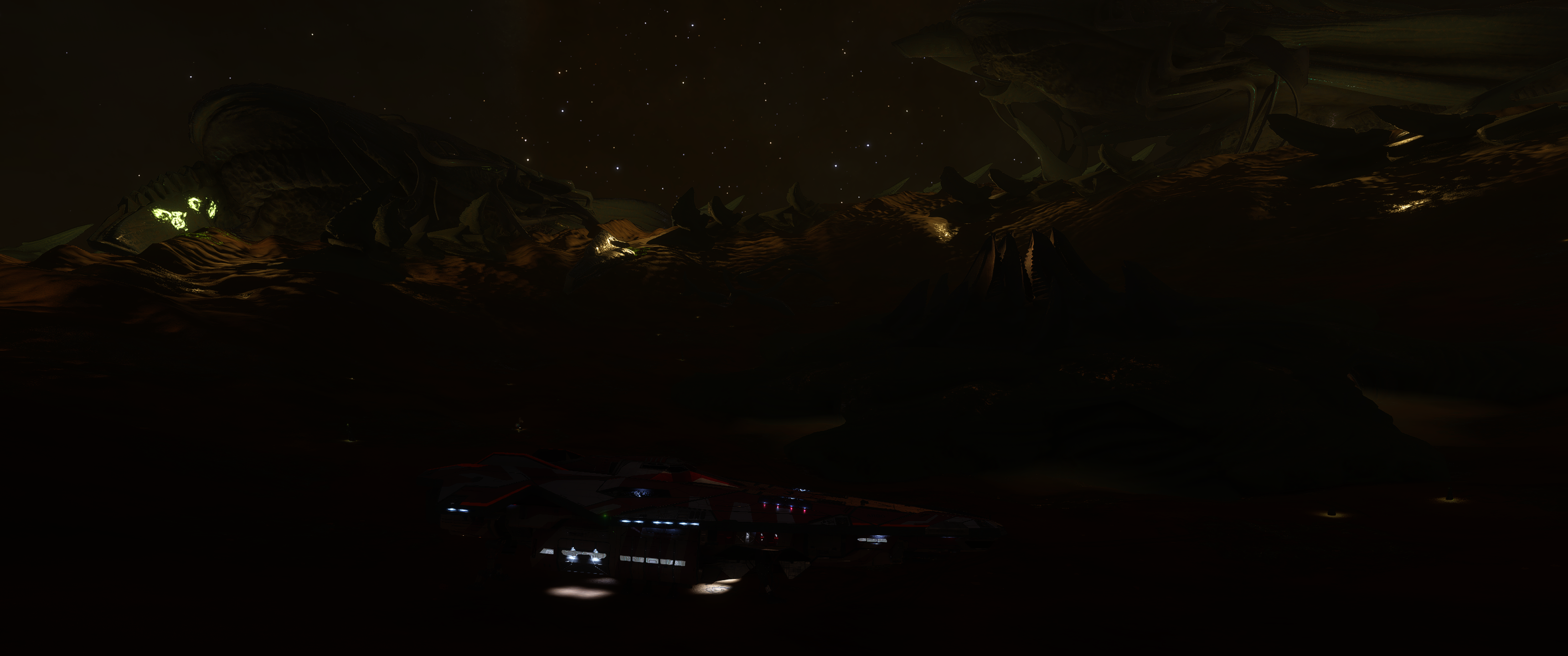
A dark HDR screenshot from Elite Dangerous

While the scene above has a lot of detail, it is too dark. This is a good example of an HDR scene losing too much contrast when rendered in standard displays.

Disable or remove any “heads-up display”, voice chat overlays or similar UI elements. They often distract from the scene unless they are the focus (“I survived at 1% health!”).

Modern games may have photo modes that temporarily use more screenshot-friendly graphics settings and give more camera control. Use these when you can. Controlling the camera angle or adding effects, such as vignettes or filters, can add a lot.

An alien world from No Man’s Sky

Tilting the camera turns the already alien world from No Man’s Sky, above, into something disorienting. The slight vignette helps focus the attention on the centre and adds depth.

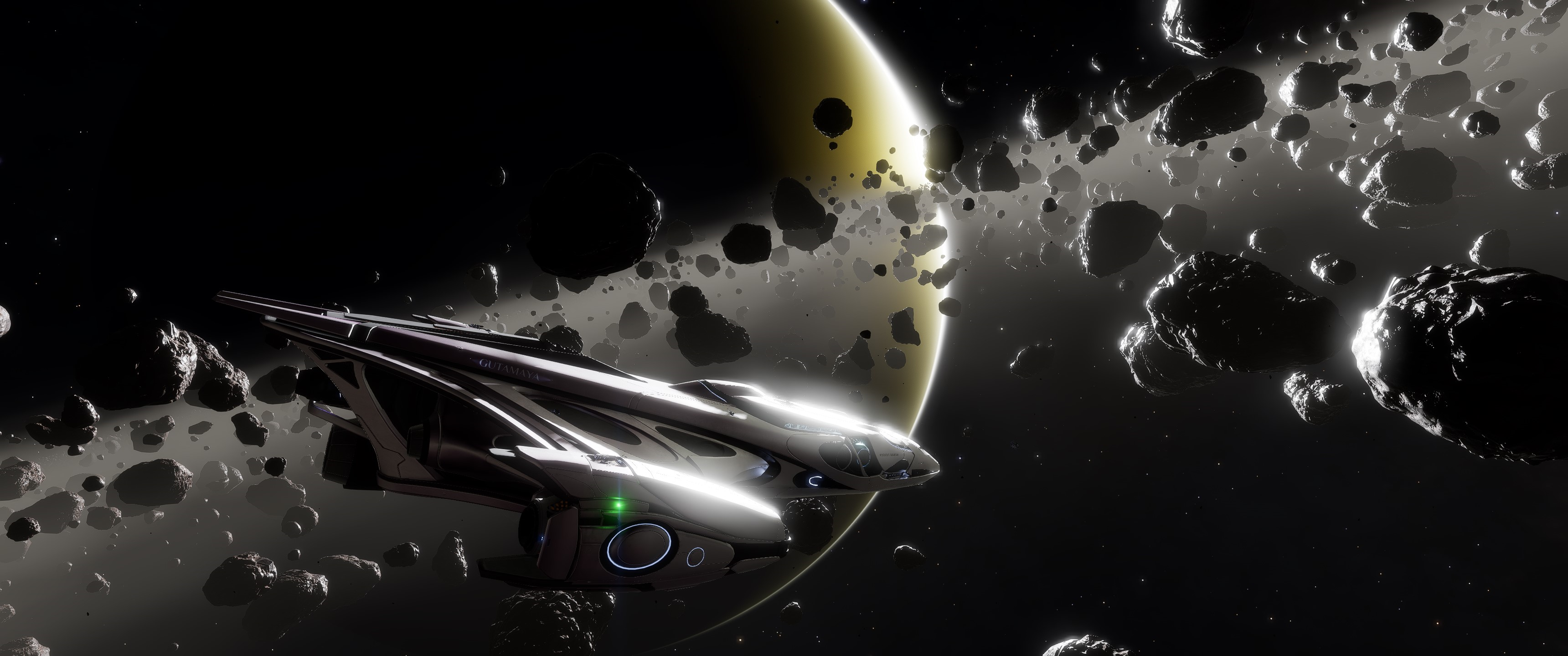
An Imperial Cutter (spaceship) amongst a gas giant’s ring in Elite Dangerous
Looking through asteroids toward a faint, distant star in Elite Dangerous
A thargoid interceptor at a barnacle site in Elite Dangerous

Effects like bloom, light rays, reflection or lens flare turn a scene into something magical, as shown above. If I ever want new backgrounds for my computer’s desktop, Elite Dangerous is a wonderful way of generating them. Unfortunately, players may have to turn effects off to improve frame rates or to run games on low-end graphics hardware.

A traveler admiring the nighttime bioluminescent display from No Man’s Sky
A traveler admiring an eclipse on No Man’s Sky

Sometimes, careful timing and placement are key. This can be as simple as waiting until night in the first screenshot above or finding a lens-flared eclipse’s exact moment and angle in the second.

Be careful of symbolism and logos in games. While these can be meaningful and emotive in games, they often lose context outside that game. Worse, games sometimes use real-world symbols that can offend.

Avoid modifying screenshots after taking them. Highlight the game developers’ artistry, not Adobe Photoshop skills. Modifications are often prohibited if you want to enter screenshots in competitions. However, each game and community will have its own rules.

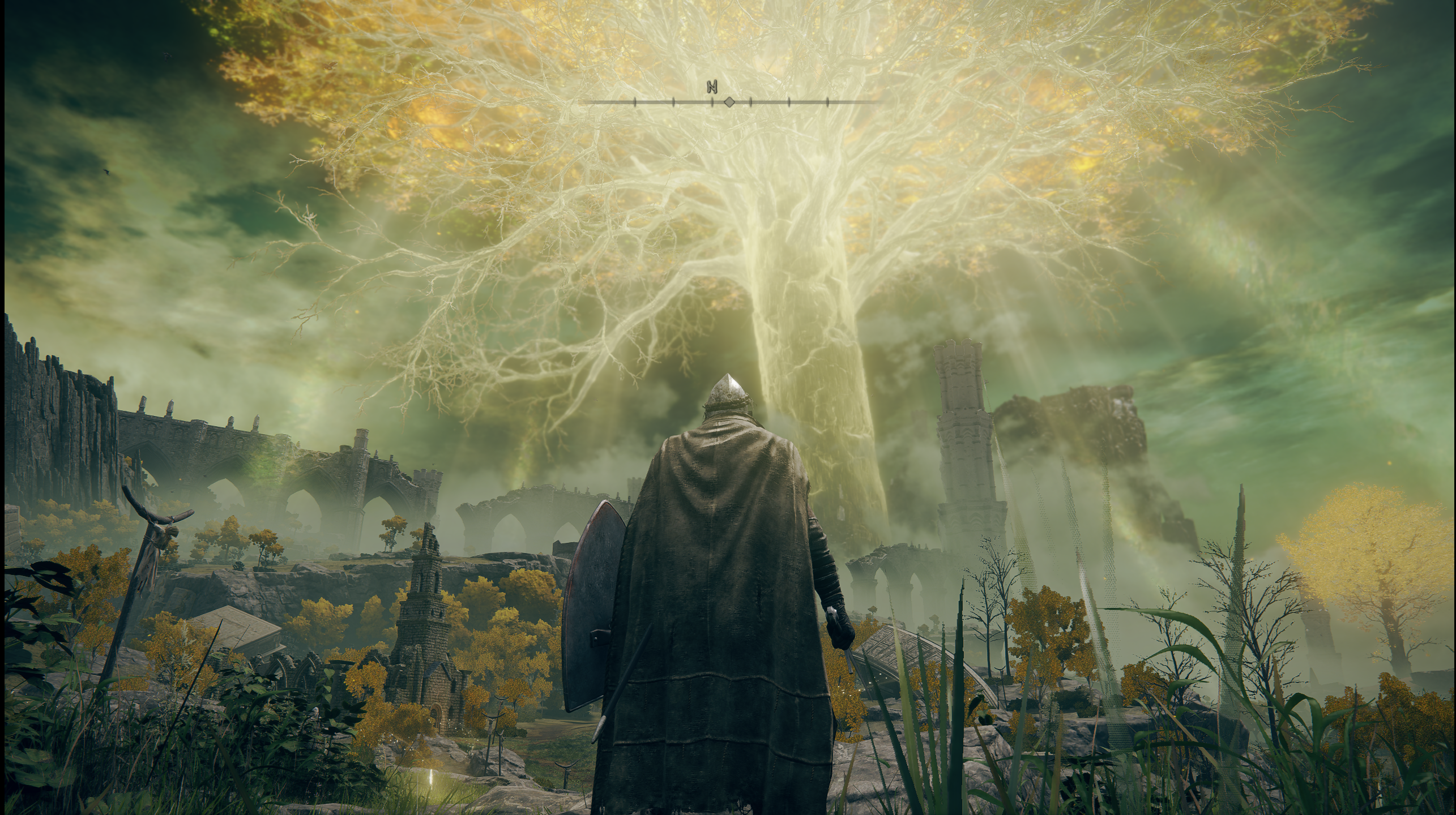
Many games have “vista moments”, where the player leaves a cramped, narrow area and enters a broader, almost agoraphobia-inducing wider world. If you are looking to start taking screenshots, finding these is a great place to start. The developers often make these look stunning.

Your first view of the Erdtree in Elden Ring

Your first view of the Erdtree in Elden Ring is a wonderful example of a panoramic “vista moment”, as shown above.

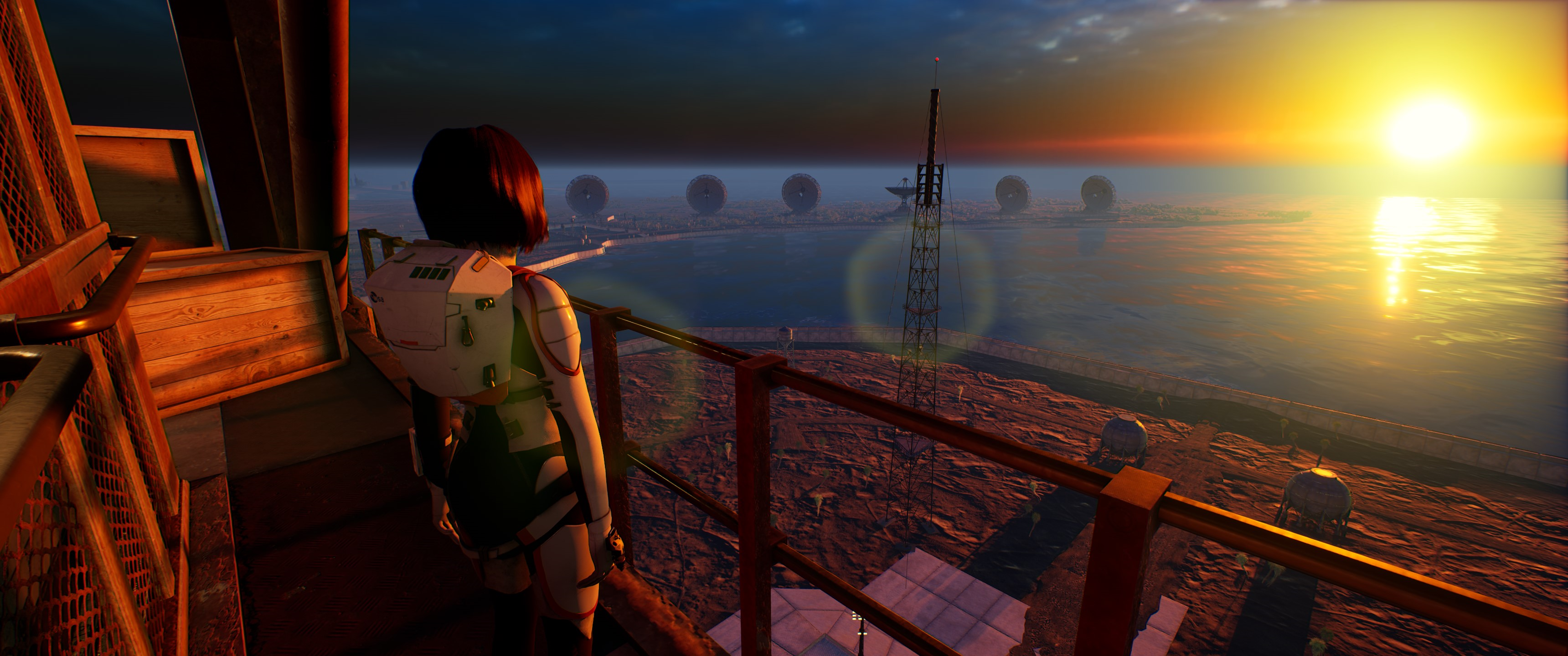
Looking over the water at dusk in Deliver Us Mars

The above scene showing the sun reflecting off the water is a wonderful change from the cramped corridors preceding it. In a setting where the Earth’s environment is collapsing, this reminds you what you are trying to save.

Graphics are arguably the most essential part of video games. While it is possible not to have any significant graphics, e.g. The Vale, video game developers spend much time and resources getting things right that players may only see for a few moments. Taking screenshots both helps share these moments and appreciate the effort and artistry that goes into video game development.