LEGO Builder’s Journey is a short, casual game about building with LEGO. However, the choice of characters and theme make this game shine.
You play alternately as a LEGO parent or a child in a LEGO world. You start with simple acts of bonding, such as the parent taking the child hiking. You return home, where the parent juggles the demands of a dull, repetitive job and playing with the child. Then something interesting happens.
The gameplay consists of moving bricks to traverse a level and solve puzzles. The controls are straightforward but sometimes frustrating, clearly borrowed the original mobile version. It can be hard to see whether a mouse click will place a brick or drop it. The game provides no guides or other indicators, presumably prioritizing realism.
The player learns and infers the simple mechanics through trial and error, even when facing new mechanics or goals. LEGO Builder’s Journey is a master class on teaching through subtle but effective hints and limited options.
Like many games in the LEGO franchise, LEGO Builder’s Journey is also a master class in expressing emotion through character animation. It establishes the parental bond through simple acts like cooperative play or extinguishing a campfire once the child is asleep. It also captures the frustration and conflict parents have with balancing work and family.
The graphics are gorgeous, using ray tracing on high-end graphics cards. The game looks just like playing with LEGO bricks in real life but animates some of them, like subtle waves in transparent blue water bricks or bubbles popping on brown mud bricks. It imbues otherwise sterile LEGO bricks with imagination and energy.
The soundtrack is ambient, ethereal and slightly upbeat. Extended, soft chords encourage contemplation. Occasional scale fragments sound like learning an instrument, just as the child is learning LEGO.
LEGO Builder’s Journey is short. It takes about three hours to complete, including all achievements. Some expect a longer game at its price. However, stretching it further risks diluting rather than enhancing it. I suspect the LEGO corporation also takes a significant cut.
LEGO Builder’s Journey is a brief, beautiful and heartfelt game about playing with LEGO. It celebrates a new generation growing up with a toy build around imagination and creativity. It is accessible to all ages. However, parents will appreciate the themes more. The game should be called LEGO Builders’ Journey, with the apostrophe after the “s”, to emphasize shared play and joy.
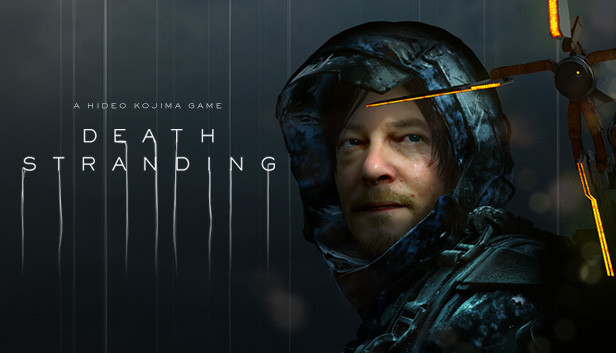
Death Stranding is an ambitious and heavily thematicgame that tweaked my curiosity. Given fifteen hours to play through it, I captured my initial thoughts.
You play as Sam “Porter” Bridges, a porter that carries cargo between human settlements in a post-apocalyptic world where the divide between the dead and the living has muddied. The remnants of human civilization live scattered and disconnected.
The gameplay chiefly consists of the mundane but meditative act of hiking. Initially, Sam focuses on balancing his cargo while avoiding rocks, steep inclines and deep water. He soon gains additional abilities, like constructing ladders and bridges, and encounters challenges like humans, the dead or worse.
The gameplay is refreshingly unique. It takes the oft-maligned “walking simulator” moniker given to games like Gone Home and Dear Esther then renders them all pretenders.
Graphically, Death Stranding’s world is a persistently overcast landscape initially of grey bogs and rock exposed through green moss, like Scotland or Iceland. Playing with ray tracing and DLSS, the images would be awe-inspiring if the world was not intentionally dull. The water effects are superb.
Thematically, Death Stranding’s world is Shakesperean and human-centric, with the natural environment reflecting problems of the human one. Crows plummet to the earth to herald danger, while seagulls represent safety and the assurance that being surround by life brings. Grey, beached dolphins and whales denote when the player is at the boundary between life and death. The black dead claw at the protagonist to drag them down into the hellish depths. An inverted rainbow subverts the usual happy connotations as an augur of doom. Elemental water tries to extinguish the fire of life while air and earth passively observe.
Mechanically, Death Stranding tries to be too many things. The horror, body horror, combat and stealth conflict with the more meditative and novel hiking, load management and exhaustion mechanics. The transitions between them can be jarring and sometimes occur outside the player’s control.
Does some of Death Stranding‘s symbolism have to be so unsettling? Umbilical cords link the living to the dead, like dehumanized BB (“bottle baby”), your companion. The handprints of the otherwise invisible approaching BTs (“beached things”) are textbook horror.
Death Stranding’s overt symbolism also borders on clumsy. Is handcuffs the best model for Sam’s communication device, something so dualistic and confronting even Sam mentions it? Was it necessary to call a device to connect settlements a “q-pid”, like Cupid?
The game explains everything in detail under the guise of world-building or tutorials. The journal entry explaining “likes”, used as experience points, is unnecessary given our increasingly complex relationship with them in the real world. Letting the player guess or infer may be more effective.
Playing Death Stranding is like someone meticulously explaining a comedian’s jokes, removing the player’s inference and agency. When the player carries no burden, unlike the protagonist, the meaning and achievement disappear.
Worst of all, the symbolism and heavy themes are unrelenting. Sam is an isolated, herculean, messianic figure carrying others’ burdens through a purgatorial landscape. There is no middle ground between hope and despair. There is no mundanity or humanity, like a local merchant or comic sidekick. Supporting characters lack personality, with thematic names like Heartman, Deadman or Fragile. Place names are functional, like “Central Knot” or “Middle Knot”. Even showering and using the toilet have in-game uses.
Death Stranding is not a bad game, despite the comments above. It is an allegory about how social media disconnects us, with Sam gaining “likes” for successful deliveries and giving or receiving likes for shared constructions like ladders or bridges. Most human detract from constructive discussion by stealing deliveries (attention or content) but distract us from real threats. The game’s tenet is we are stronger together and must never lose our compassion.
Death Stranding also blurs the line between cinema and games, with character models matching their actors. The prologue slowly rolls credits as the player trudges through the dreary landscape set to an alternative rock soundtrack.
I suspect the developers wanted to make a subtler, thematic game. However, a requirement for mass-market appeal and sales dictated compromises. Playing further may alleviate these concerns. Death Stranding introduces some novel mechanics and deals with timely themes. It is worth a look for anyone looking for novel gameplay or something emotional, if unsubtle.
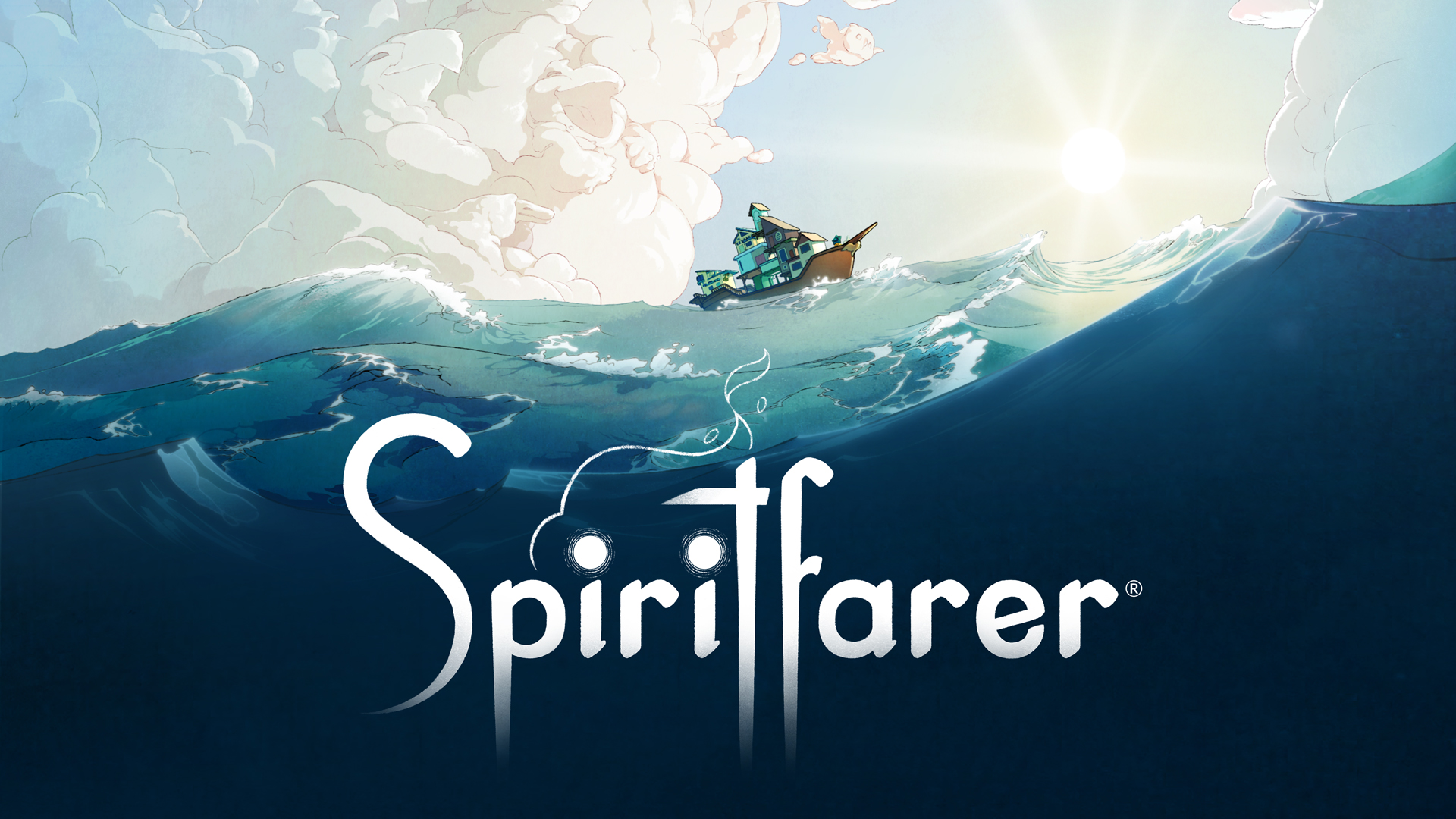
Spiritfarer is a game about dying masquerading as a disarmingly upbeat casual crafting simulation, like Stardew Valley or a less social Animal Crossing. It examines the emotional and social impact, a much rarer and more delicate topic than the usual in-game failure state that dying represents.
You play as Stella, the ever-smiling replacement for Charon, the Greek mythological figure who ferries newly departed “spirits” to their final ending. Stella and Daffodil, her feline companion and the avatar for optional cooperative play, travel between islands in their ship, finding spirits that need shepherding toward their last moments.
Each spirit has different needs, such as unique accommodation or favourite food, and introduces a minigame. Most of the gameplay revolves around Stella gathering word or ore, fishing or growing food, then processing these into ship upgrades or food. Exploration plays a part, both finding islands and navigating them, with light platforming puzzles.
Spiritfarer depicts spirits as animals, creating caricatures and personifications of their personalities and achievements. A picky and aloof art curator becomes a bird. A selfless housewife and mother becomes a cuddly hedgehog.
Each spirit spends their time with Stella to reminisce and work through final regrets, sometimes successfully and sometimes not. Much is implied, such as via quest names, leaving interpretation to the player. However, it also precludes judgement.
Spiritfarer’s music does a lot of emotional heavy lifting and context setting. Most pieces use soft, ethereal piano and flutes with support from the rest of the orchestra. The soundtrack is sometimes solemn, sometimes playful, sometimes mournful, and sometimes hopeful. It is almost as if the orchestra assembled to let each instrument remember its favourite motifs, inviting reflection and introspection.
The simple, clean, watercolor art style counterbalances the heavy themes and emotive music, preventing them from overwhelming the player. Some animations are absurdly funny, like the wide-eyed trepidation of a sheep about to be sheered or a hummingbird carrying a water buffalo. The writing also has some cheeky humour, like enjoying “fakinhage” for breakfast.
Spiritfarer’s setting is highly metaphorical. Stella travels an astral sea that bridges the nebulous time and distance between islands of memories. Her experiences, represented as awkwardly shaped and increasingly precarious buildings on her ship, accumulate in unique ways for each player, creating comforting chaos. The expensive baubles coveted in life, such as jewellery or art, are sold off as trash and replaced by items of emotional significance
Spiritfarer has a day and night cycle that initially feels like an artificial constraint around navigation, crafting and building. However, it soon recedes into something benign and dharmic. Like the seemingly self-absorbed other inhabitants, the world continues, oblivious to the gravity of the spirits’ final moments.
Spiritfarer shares a few similar themes with the movie Nomadland. Both deal with grief and the twilight of people’s lives. One’s taste and emotional state determine whether they are cathartic, triggering or introspective.
As for criticisms, Spiritfarer’s travel, resource gathering, and crafting can be repetitive. While these are non-challenging, meditative and provide recovery time between the weighty, emotional storytelling moments, Spiritfarer could be just as thematically effective with less busywork. It may expand the audience of the game, too.
Like Gwen’s or Astrid’s surprise when getting hugged, key animations are more impactful if not overused. Repeating these actions daily to increase a happiness score reduces them to something mechanical. Less may be more.
However, I applaud Spiritfarer’s heartfelt and restrained approach to a serious and sensitive topic. As each spirit departs, they leave behind an empty dwelling and a constellation, testaments to who they were. Hopefully, Spiritfarer will also remain. “After the artist has been long gone, turned to dust, the art remains,” as one spirit says. The game’s message is one of hope, allowing everyone to be at peace with themselves, leave a legacy and have sympathetic company at the final goodbye.
Like Nomadland, Spiritfarer is not always fun. Spiritfarer’s heavy themes and introspection will repel some, particularly those initially entranced with its casual gameplay and cartoony graphics. However, Spiritfarer demonstrates the power of games as a medium. The player is involved and not just a passive observer of the mundane but powerful acts of supporting and listening. Spiritfarer takes 30 to 40 hours to play and is worth it for players looking for something emotionally powerful or introspective.
Star Wars Jedi: Fallen Order, released at the end of 2019, is a single-player, action-adventure game. Think bits of Darksiders, Dishonored and Dark Souls combined with the Star Wars setting, music and visuals.
You play as Cal Kestis, a padawan that survived order 66. He etches a mediocre existence on the planet Bracca, salvaging spaceship parts to fuel the empire’s war machine, when an accident reveals his force powers. Cere Junda, a former Jedi, rescues him from the inquisitors, the empire’s Jedi hunters, then Cal embarks on a quest to protect other force-sensitive children from the empire.
Cal starts with minimal force powers. He learns or acquires new abilities by achieving in-game goals, which initiate cut scenes re-enacting parts of his childhood padawan training. These reflections contrast Cal’s old and current lives, help us empathize with his repressed grief and provide a temporarily safe learning environment for the player.
The levels are complex but well-designed. They are bi-directional, and the backward traversal often needs newly acquired abilities. Many short branches provide exploration opportunities. However, some require powers gained later, meaning the player must revisit old areas.
The level designers made each planet distinctive, such as the ochre sandstone and bright, yellow sun of Bogano; Dathomir’s reds, browns and sinister twilight or the vibrant, lush, green, humid Kashyyyk. Imperial interiors continue the original three Star Wars films’ styling with stadium-framed fluorescent lighting set into austere blacks and greys.
The parkour gameplay fits well with Jedi and Star Wars lore, going back to Luke’s training on Dagobah. Star Wars has always emphasized verticality to imply danger and declutter sets, such as in A New Hope’s death star.
The combat is defence-oriented, built around blocking and dodging to reveal short moments where you can attack. You eventually gain the expected gamut of Jedi powers, like pulling, pushing and jumping, and a double-bladed lightsaber.
However, you rarely feel comfortable enough to have a dominance or power fantasy. Once you can comfortably beat an opponent, the game throws in more or harder ones.
The soundtrack is standard Star Wars “John Williams-esque” orchestral, with playful woodwind and ominous brass and strings. However, other than a brief appearance from the Mongolian band “The Hu”, it lacks memorable musical moments.
Star Wars Jedi: Fallen Order is challenging. Repeatedly failing can be frustrating, but iterative learning is the path to the required and desired mastery. Dying is progress. Star Wars Jedi: Fallen Order is essentially a puzzle-solving game, whether learning and countering enemies or combining force powers and movement to reach a seemingly unnavigable goal.
Thematically, Star Wars Jedi: Fallen Order is about healing after trauma and loss. As Cere says, failure is part of the process and is not the end. For Cal, it is about the loss of his mentor and father figure. For Cere, it is about the loss of her padawan and estrangement from her master. For Trilla and Merrin, it is about abandonment and betrayal. These parallel the setting, both the fall of the republic/rise of the empire and the descent of the ancient Zeffo race, whose tombs you explore.
Almost all thematic treatment is during cut scenes, conversations between missions, journal entries or enemy banter during boss fights. Later cut scenes, in particular, effectively embody the “show, don’t tell” mantra, symbolism and abstractness reminiscent of Star Wars. Even the main menu theme is subdued and mournful.
Unfortunately, Star Wars Jedi: Fallen Order does not extend themes into missions. In other words, most of the game. It is not ludonarrative dissonance, more a missed opportunity. The player will repeatedly fail with the game’s challenging mechanics. However, respawning when you mistime a jump or an enemy defeats you may be frustrating but not a genuine loss.
Meanwhile, Star Wars Jedi: Fallen Order’s challenging game mechanics easily distract players from internalizing and examining themes. You are focused on how to get places or beat opponents, not what doing so means or its impact on the game’s characters.
One solution is involving other characters more during missions. They steal the show in their brief appearances with spot-on voice acting and scripts. Apart from BD-1, the R2-D2 substitute with the requisite cuteness and courage, Cal only briefly works with two other characters during missions
Cal’s personality is also underdeveloped. This “blank canvas” may make him a better player surrogate, but the developers could flesh him out beyond his withdrawal, grief, and the wide-legged swagger the animators gifted him.
That said, genuine love and attention to detail have gone into the game, whether it is the authentic motion blur and whoosh of a whirling lightsaber or the fantasy-fulfilling glee of briefly piloting an AT-AT. I laughed at the mundane stormtrooper banter, Cal not translating BD-1’s jokes or BD-1 beeping a Star Wars motif when hacking a security droid.
Star Wars Jedi: Fallen Order strives to be a good game and not just a faithful Star Wars game. Perhaps this is why it lacks the signature Star Wars initial text crawl and subverts the opening star destroyer camera pan. The game is a challenging but enjoyable 35 hours to finish, more for all achievements, and worth it for action-adventure fans, not just Star Wars fans.
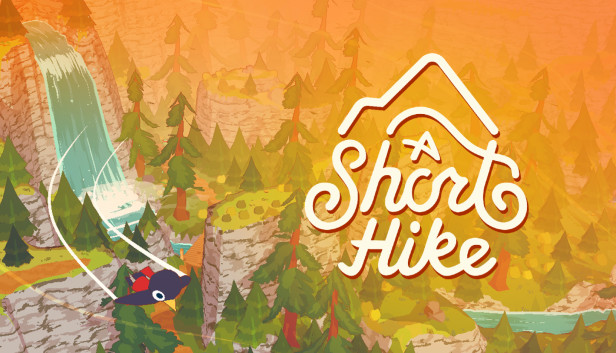
A Short Hike is an exploration game with resource gathering, light puzzling and a few quests. You play as Claire, an anthropomorphic bird, who travelled to an island with her Aunt May, a local ranger. The goal is to climb Hawk’s Peak, the island‘s mountain and namesake.
Connecting with people along the way is where this game shines. Fuelled by childish naivety and a good heart, Claire’s every interaction is curt but cheerful, helpful and lacks any conflict or aggression. She never judges people, even those ripping her off, with seeming silly superstitions or realising their shortcomings.
A Short Hike does not challenge the player, letting them explore, advance, or backtrack freely. Quests are not tracked in a quest log, reducing pressure to complete them. Most are completed by a keen eye when exploring or chatting honestly and openly to everyone you meet.
Some minigames, like “beachstickball” or parkour sections, require some effort but are optional and fun. Sometimes you just glide over the foggy landscape and relax. The light, upbeat soundtrack supports the cheery atmosphere, and the pixelated art style keeps the game non-serious, almost retro.
A Short Hike is an allegory on life. One may start with a goal (reaching Hawk’s Peak), but life happens on the way. We often need to deviate (such as to acquire golden feathers and learn how to climb, glide or run). We frequently get side-tracked to help others (quests) or satisfy short term goals (the many side paths or shortcuts). While others can appreciate our achievements, introspection determines how important a goal was. Everyone’s journey is different. Perspective and experience help tackle and cushion us from life’s ups and downs.
What elevates A Short Hike is its unashamedly uplifting outlook and minimalist but effective game design. It is a non-challenging and quickly completed (3 hours to see most of it) ray of sunshine that runs counter to the grit, darkness, or moral ambiguity common in modern media.
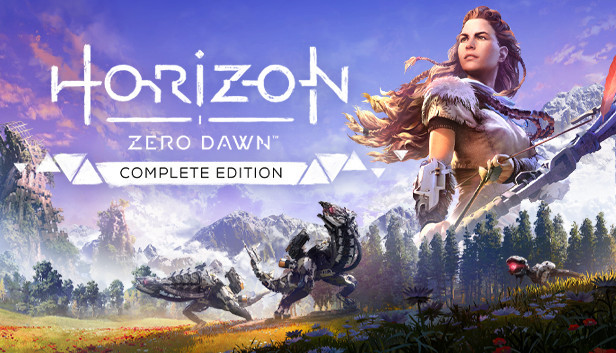
Without reading any of the copious reviews and material on Horizon: Zero Dawn, it is obvious the elevator pitch was akin to “bows and arrows against robotic dinosaurs”. If this game were just a first-person shooter, it would have been merely notable. However, it is so much more.
Horizon: Zero Dawn is a post-apocalyptic, action role-playing game with a third-person camera view. You play as Aloy, an outcast with an unexplained past. A chance encounter as a child in an ancient ruin provides a “focus”: a small, temple-attached device that interacts with ancient computers and detects nearby enemies. When she comes of age, Aloy initially tries to prove herself to her tribe but is then catapulted into a much larger story.
The combat system is the game’s main drawcard. The robotic targets are stronger and tougher than Aloy, particularly in melee. Success requires planning, stealth, laying traps, using terrain, targeting specific components revealed by Aloy’s focus or using particular damage types. Later, Aloy gains the ability to befriend temporarily or ride weaker robots.
These elements create a more cerebral combat system, requiring the forethought and timing of a true hunter. Learning strategies for specific enemy types through experimentation makes combat more straightforward and predictable. Successfully taking down larger robots for the first time is exhilarating.
However, the need for planning or enemy-specific strategies can be challenging early in the game. Limited save points (bonfires) can make the game unforgiving but ensures players do not expend too much ammunition when they fail.
Aloy will not get far without crafting or, more accurately, collecting resources. Aloy can craft ammunition and consumables, even in combat, and will need to do so for longer fights. However, besides giving the sense of “living off the land” and that robots are a resource humanity exploits, the game would have lost little by omitting it and increasing carrying capacity instead.
Exploration is a huge part of the game. Apart from providing crafting materials, exploration offers glimpses into the ancient world through ruins or still functional devices that Aloy can interact with using her focus. There are a few collection quests, and players can purchase maps to help.
The game contains vertigo-inducing but simple climbing puzzles, like the Assassin’s Creed series, and tracking via her focus, like Geralt from The Witcher series. These are integrated well into quests but add variety more than a challenge.
The second drawcard of Horizon: Zero Dawn is its story and themes. Unlike many post-apocalyptic games, Horizons: Zero Dawn isa game about hope. It portrays the apocalypse that befell the ancients with desperation, humanity and grim determination through ghostly holograms and diaries. However, Aloy describes these as “memories”, segregating them from her time as humanity finds its new footing.
The game’s environment reflects this hope. The new world is lush and vibrant. Unlike the muted greys and browns of the Fallout series, there are vivid greens during daylight, faerie-like moonlight and fireflies at night and beautiful reds, pinks and oranges at dawn and dusk. The highly saturated colour palette is more reminiscent of Terra 2 from The Outer Worlds.
The soundtrack, particularly “Aloy’s Theme”, simultaneously mourns the loss of the old world and holds quiet, resolute hope for the new one. The flutes, reed instruments and drums give it a tribal or primitive feel. Julie Elven’s wordless vocals give it a delicate solemnity befitting the game’s strong female protagonist.
The game uses perspective, both Aloy’s and the players, to demonstrate Aloy’s character and build the world around her. Initially, these perspectives are identical. The story starts with Rost, Aloy’s father-like stoic mentor, explaining little and frustrating both the player and Aloy. Aloy is an outsider, a literal outcast from the Nora tribe, and she slowly but resolutely learns about her tribe, fights for a place in it and then progressively the broader world. The player learns with Aloy.
However, the perspective soon diverges. The flashback storytelling mechanism granted by Aloy’s focus shows her insights into the ancient world like advertising or chats between Internet hackers. These would, at best, confuse her. However, the player can understand it and contrast the pre-apocalypse world with the real world.
The environment also invites a dual perspective. A chunk of twisted metal to Aloy is an abandoned car to the player. A strange stone outcrop to Aloy is a ruined building to the player. Is the function of a mug evident to someone who has never seen one?
This dual perspective is also apparent in Aloy’s interactions. For example, Aloy’s first encounter with Erend sees him try to chat her up. He thinks she is just a naive native girl. However, Erend’s intentions are lost on Aloy in this delightfully subtle exchange. Aloy is steadfast but not omniscient, giving her room to grow and making her sympathetic.
These perspectives converge as Aloy learns about herself and the world. This change is not just the bigger picture thinking common to RPGs as the protagonist gains levels, explores the setting and progresses the story. For example, Aloy initially considers Teersa, one of the Nora tribe’s high matriarchs, wise and compassionate. Later, Aloy and the player look at Teersa with wiser eyes, seeing Teersa’s limitations and ignorance.
Aloy’s primary motivation is compassion, even after being initially an outcast. She helps others, not for reward but because she intrinsically knows it is the right thing to do. I found this altruism interesting and refreshing. Modern games often try to give players different moral choices. I tend to pick the “good” option like many, but an “evil” or selfish Aloy would be inconsistent.
Contrast this with Sylens, revealed later in the story and one of the more memorable characters from an otherwise unmemorable cast. I initially saw a second Rost, mirroring Rost’s stoicism and refusal to explain his past and motives. Whereas Rost was a mentor to guide and assist Aloy with the new world, Sylens was one for the ancient world. However, Sylen’s lack of empathy and unforgiving nature hint at something else. He reflects the ancient world’s complexities and compromises.
Horizons: Zero Dawn also examines the decoupling of knowledge from wisdom. Knowledge without wisdom leads to greed and hubris (and the apocalypse that befell the ancients) or exploitation (Sylens). Wisdom without knowledge leads to vapid kindness or irrational cruelty (the Nora high matriarchs). It is easy to see modern parallels.
As for criticisms, those looking for something more gritty may find the altruism and use of the “chosen one” trope trite. Despite the original setting and robotic enemies, Horizon: Zero Dawn relies on many well-trodden RPG elements. Any inclusion of relatable primitive or tribal humans invites criticism. The PC port could have leveraged the keyboard better and relied less on the cumbersome combat wheel.
However, Horizons: Zero Dawn does so much right to be a “must play” for hopeful explorers looking for a slowly revealed but emotionally powerful story. The 30 to 80 hours required to play the game, depending on how sidetracked they get, is not something they will regret.



 The Single Player