Many were curious when Netflix previewed Wednesday as a reboot of the 1960s black and white The Addams Family. The Addams Family poked fun at those who are different, subtly reinforcing American cultural superiority during globalism’s infancy. Recent versions softened this stance but reduced the central family to a travelling freak show. Would Wednesday repeat the same mistakes?
Wednesday begins as Wednesday Addams starts at a new boarding school, Nevermore Academy, after being expelled from yet another traditional American high school. Her parents, Gomez and Morticia, also went to Nevermore Academy. Their legacy threatens to smother Wednesday’s emerging identity under her parent’s shadow. Meanwhile, Wednesday struggles to define herself in a world that wants to force her into a mold.
The first few episodes introduce the characters while entertaining the viewer with succinct and acerbic dialog, particularly from Wednesday herself. The main plot then starts to assert itself. A supernatural mystery threatens to overwhelm Nevermore Academy and the nearby town. Wednesday takes it upon herself to solve the mystery, guided by her psychic premonitions.
Jenna Ortega portrays the unblinking, monochrome titular character brilliantly. Wednesday outwardly revels in her isolation. She even convinces her nemesis that she cares little for others’ opinions. However, her black, frozen heart predictably melts after a visit from her uncle Fester, her feelings for Thing and young love.
Thing, Wednesday’s disembodied hand companion, is the most transformed character from the original The Addams Family, both by special effects and a new purpose. Thing moves from a recurring gag to the perfect companion and sidekick: loyal, competent, occasionally comedic but never taking the spotlight from Wednesday.
Enid, Wednesday’s werewolf roommate, plays Wednesday’s foil. Enid represents everything that Wednesday is not: colourful, energetic, warm, forgiving, technically savvy and extroverted. This tug of war plays out in the not-so-subtle contrast of their shared dorm room between Enid’s rainbow and Wednesday’s gothic drabness.
Wednesday eschews almost all classroom scenes typical to the Harry Potter-like genre. Weems, the stoic, long-suffering headmistress played by Gwendoline Christie, vacillates between dominance, patience and political correctness.
For original series fans, Wednesday subverts many tropes from The Addams Family, like snapping fingers twice or the adoring love between Morticia and Gomez. However, some merely lighten emotional moments and strengthen the bond between characters. Wednesday and Pugsley, her brother, casually fishing using hand grenades is a good example.
However, Wednesday has its frustrating flaws, too. Wednesday’s character sometimes veers into the Mary Sue trope. Her knowledge of macabre topics, archery or the cello is unmatched, dismissively besting others. Wednesday’s friends’ affection is unrequited and undeserved.
Wednesday also touches on the Chosen One trope. Her constant self-righteousness and lack of remorse grates. She would have been expelled and arrested for her actions in any other context.
Wednesday will resonate with young adults. It deals with social status, love triangles, the struggle to find one’s identity, the bravado and self-righteousness of youth and the changing relationship with parents from a dependent child to a semi-independent teen.
Wednesday is unashamedly feminist. Women play most main roles. The series reduces Gomez from a 1960s-style family head to a love-struck doter. Pugsly is a pot-purri-eating weakling constantly needing Wednesday’s protection. However, the series loses little from doing so, and the new perspective is refreshing and fundamental to the story.
Underneath that, by moving the spotlight away from the Addams family and onto Nevermore Academy, Wednesday can examine diversity and inclusion. The ridicule of Nevermore’s student “freaks” by the nearby town’s “normies” will appeal to anyone bullied or victimized.
The town’s financial dependence on Nevermore Academy forces an uneasy truce, preventing the resentment from escalating into open conflict. This arrangement gives more credibility and context while giving key characters more depth.
However, the series is sometimes one-sided. No one sympathizes with those Wednesday belittles or harms. The nearby townspeople are right to be wary, given the recent murders and Nevermore Academy’s students’ powers.
Wednesday is aimed at a modern audience, who consider a show a competition between writers and viewers. The plot moves quickly, never dwelling on any scene or character more than necessary. It foreshadows enough for the audience to feel clever predicting the next event, only for the plot to swerve at the last moment.
Ultimately, the original series riffed on medieval or occult tropes for comedic effect. Wednesday uses a modern lens, crisp dialog and a fast-paced, economic plot to tell a different story. It appeals differently but successfully to both newer and older generations. However, the latter may find Wednesday a tad self-righteous and superficial.
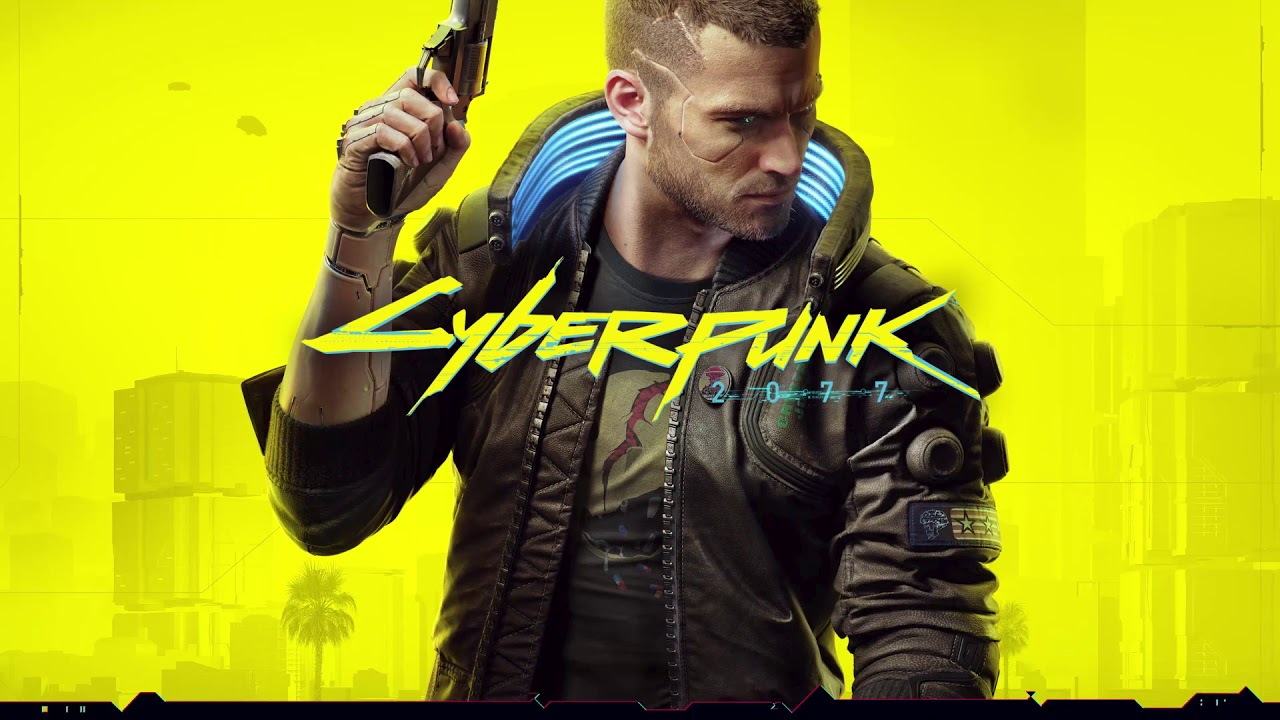
Cyberpunk 2077 is a role playing game (RPG) from CD Project Red, the same developers as The Witcher series. It had a rocky start but has since become a standout, particularly its immersive world, strong exposition and thought-provoking side quests.
Cyberpunk 2077 is a first person RPG using a similar ruleset and setting to the eponymous tabletop RPG. You play as V, a citizen of Night City, a pseudo-San Francisco or Los Angeles. V witnesses the murder of a megacorporation’s owner during a heist gone wrong. Forced to embed a stolen chip in his head while fleeing, V discovers it contains the personality and DNA of the long-dead rockstar and terrorist/freedom fighter, Johnny Silverhand. Now V must solve this mess one way or another before Silverhand takes over his body and mind.
Silverhand is V’s ever-present “lancer” and appears at pivotal moments to provide his perspective. While his self-confidence and aloofness give him superficial charisma, Silverhand is a self-righteous, narcissistic psychopath. You must decide whether V agrees with his single-minded anti-corporation and anti-establishment views, sympathizes with his deeply buried vulnerability or finds his incessant criticisms grating.
Just in case you missed the copious marketing for Cyberpunk 2077, Keanu Reeves provides Johnny Silverhand’s voice and likeness. Silverhand is the opposite of Reeve’s usual humble, softly spoken and slightly vulnerable protagonist. This typecasting sometimes detracts from Silverhand’s intended purposes: a constant reminder of V’s impending doom and a skewed moral compass fitting for an immoral setting.
Mechanically, Cyberpunk 2077 plays like most other RPGs and combines the best aspects of others. Cyberpunk 2077 uses a Witcher 3-like vision mode to scan for clues or interactable objects. The hacking and stealth feel like Deus Ex, although without the omnipresent paranoia. While it lacks police chases, it has the car driving and theft of Grand Theft Auto. “Braindances”, replaying people’s experiences, are similar to watching three-dimensional recordings in Tacoma.
The character advancement options can create unique or, in most cases, derivative characters, from stealthy, handgun-wielding assassins like John Wick to muscled, baseball bat- and minigun-wielding tanks like Arnold Schwarzenegger’s Terminator. Higher-end abilities are potent, fueling power and dominance fantasies.
Cybernetic augmentation is also vital. V starts with basic enhancements such as eyes that can zoom and a computer in his head to view mission briefings and act as a mobile phone. Early enhancements provide additional bonuses while later ones grant new forms of movement, powerful weapons or other surprises.
However, Cyberpunk 2077 goes much further. Cyberpunk 2077 uses cybernetics as a powerful exposition tool in a world where technology surpasses flesh and suppresses individuality. The alien-like dehumanizing enhancements to members of the Maelstrom gang, near interchangeable golden-skinned hotel attendants or the subtle, fashionable enhancements of the elite instantly communicate much about other characters without unnecessary dialog or explanation. Think clothes that you cannot easily change.
The residents of Cyberpunk 2077 even have slang for cybernetics: chrome. It has other jargon, too. People have “chooms” instead of buddies, pals, mates or bros. Only “gonks” (idiots) would rely on “deets” (details or information) that are not “preem” (premium or good). You get paid in “eddies” (eurodollars). The copious voice-acted dialog weaves them into conversations allowing players to infer their meaning and connotation.
Cyberpunk 2077‘sworld-building is broad and deep, and the internal consistency adds realism and believability. The frequent in-game news bulletins, for example, portray a dystopian, corrupt, technologically-dominated future similar to Robocop or Blade Runner. Amidst constant and desensitizing advertisements, radio and TV personalities openly call out the elite’s hypocrisy and power games while relishing the schadenfreude. In-game tobacco advertising has warnings probably only to comply with real-world laws.
The writing continually enforces the setting’s hypercompetitive and unforgiving nature. NPCs and factions have separate and consistent motivations, and V is usually just a tool for their advancement. A small child says your boxing opponent killed their father. Is it true or just a ruse to increase her betting earnings?
The layers of Night City’s neon lights distract from the copious, uncollected trash. The metaphor reflects how the razzle-dazzle barely hides society’s underlying malaise.
Even V’s little flat has no kitchenette. Instead, there’s a vending machine peddling whatever junk food the corporations of the moment deem fit while advertisements sprout insincere warnings about eating organic food.
Cyberpunk, as a genre, has always been more than an aesthetic or bucket for near-future science fiction. It is an avid social commentator, warning that compassion and ethics must bound and guide progress.
Cyberpunk 2077‘s world takes the ideals of right-wing political groups to absurdity. Guns are so prevalent that you can buy plastic, disposable ones from vending machines. The government merely provides services that corporations find unprofitable. Laws exist not to serve or protect society but as blunt instruments of the powerful or as proxies for corporate wars. Society is increasingly stratified. Eighty hour work weeks and forced cybernetic enhancements are considered reasonable. The natural environment crumbles, a necessary price for technological advancement and profit. As one in-game shop owner laments, open expressions of sexuality are considered a social menace, but we must accept murders on every street corner.
The world of Cyberpunk 2077 is different enough to the real world to avoid direct comparisons but is close enough for commentary to be relevant. Its cars are a good example. While there are analogs to real-world brands, all the makes and models are different. Many have a single headlight or brake light and no seatbelts, minimizing safety features to reduce cost or maximize aesthetics. Their barcode-like number plates are for computers to read, not humans. Cars lack indicators, showing a lack of empathy.
Cyberpunk 2077‘s setting is faithful to the 1980s roots of its genre. For example, Japanese corporations were ascendant in the 1980s. Many in the USA feared the conquered would become the conqueror, like in the second Back to the Future movie, and Cyberpunk 2077′sAsaka megacorporation realizes this.
However, some predictions diverged from subsequent real-world advancements and trends. Instead of adding credibility by incorporating forecasts of the future, these now further segregate the game’s setting from reality. Paper magazines with animated pages, for example, hijacked something familiar in the eyes of someone from the 1980s, showing technology’s subtle and insidious progression. However, paper magazines are becoming anachronisms, replaced by purely electronic versions. Much of the Cyberpunk 2077‘s music is 1980s-like electronic and synthpop and not the more urban hip-hop.
Thematically, Cyberpunk 2077‘smain storyline deals with questions of identity and legacy. V has to work out what to do with his (or her) remaining time. Does V go for one last grand heist, allow Silverhand to finish what he started or choose quiet life while still V? Does V rebel against a world where individuals rarely affect meaningful change, finding value in the attempt and the lives touched along the way? Multiple endings provide V with some choice about how to answer.
Beyond the unique premise offered by the setting, the storyline is suitably grand. It is unmistakably cyberpunk and could not exist in any other genre. Each step provides satisfying answers and more yearning questions. It does not always follow the “show, don’t tell” rule of storytelling, but that is more of a guideline.
However, Cyberpunk 2077‘s numerous side quests are far more interesting. For example, the series of Delamin quests deal with artificial intelligence (AI), what rights it has and how it interacts with humans. If an AI creates a copy of itself, are the two copies still one individual, or are they parts of the whole? In the game, AI has displaced many traditional human-only roles like writing novels or fashion design. Should humans fear what AIs can become?
Another recurring but subtle theme is religion and spirituality. It can be a dangerous subject, potentially offending many. However, Cyberpunk 2077 is a world where braindances provide visions as vivid as any religious miracle, moral guidance is greatly needed, and technology offers salvation more tangible than any deity’s promise.
The Sinnerman quest line is the game’s most confronting. A prisoner sentenced to death finds religion. He elects crucifixion and wants his experiences recorded as a braindance for fellow Christians to experience or endure. In a setting with commonplace and fetishized violence, this moment drove introspection more than any other in the game.
Meanwhile, a neon billboard shows a Jesus-like figure but wreathed with network cables instead of a crown of thorns. Do you want to confess your sins? Just visit your nearest automated “Confession Point” vending machine. Buddhist monks ponder whether virtualizing people is compatible with reincarnation or whether an AI can suffer. Tarot cards and imagery not so subtly steer V. AIs are god-like in their stature, facelessness and echoing voice.
Following the RPG trend, V has companions that provide side quests and potentially lead to romance options. Different companions fulfil different sexual orientations, including one that is trans, supporting modern sensibilities and inclusion.
However, some of the impactful companions share genuine vulnerability, contrasting with the setting’s uncaring and brutal reality. Letting kids win at an augmented reality shooting game, for example, has a delightful mundanity and affection that contrasts with the setting’s cynicism.
Cyberpunk 2077 has its share of imaginative and novel quests and environments. One involves SCUBA diving in a flooded town while reminiscing about the displaced inhabitants. You can ride a roller coaster, pilot a tank or riff a guitar solo while playing in a band.
References to other cyberpunk and science fiction media abound, showing light, fourth-wall-breaking humour. You can purchase Kaneda’s red bike from the anime Akira or the Rolls Royce-like FAB 1 from Gerry Anderson’s Thunderbirds. You can find advertisements for mnemonic couriers, similar to Keanu Reeve’s Johnny Mnemonic. The famous “tears in rain” quote from Blade Runner is a memory in the columbarium. One quest pays homage to Portal, using GLADoS’s voice actor and lines. The “baby in a bottle” from Death Stranding appears, and there is even a dig at Star Citizen‘s long development time.
Graphically, Cyberpunk 2077 is beautiful, particularly with ray tracing. I took screenshot after screenshot as the cyberpunk genre’s requisite neon signs and holographs dominated the skyline. Bright lens flares are common enough to make Michael Bay jealous. The sparse but hardy vegetation and red earth of the hills outside Night City resemble postcards of the US midwest. Rain is wonderfully dreary and leaves humble, reflective puddles.
Cyberpunk 2077 uses a “film grain” effect and vignette over its visuals. Like the gold filter used in the Deux Ex series, this effect makes the game visuals distinctive and slightly unreal. It also helps cover a few errant pixels caused by NVidia’s DLSS or similar compromises for the more demanding ray tracing.
The main criticism of Cyberpunk 2077 was the bugs present at the launch. Some were meme-worthy and game-breaking. These problems are common in the industry, especially in large, open-world RPGs or anything developed by Bethesda. However, recent updates have vastly improved Cyberpunk 2077’s quality, and my 100-hour playthrough starting on version 1.3 was practically glitch-free.
Some feel the sidewalk-infesting crowds should be persistent or that they add unnecessary clutter. Previous games eschewed clutter to reduce rendering costs and highlight the environment’s important parts. However, along with the omnipresent neon and holographic signage, the game intentionally visually assaults the player. It takes time in Cyberpunk 2077 to mentally adjust and filter out the noise of Night City, just like its inhabitants do.
Others complain the setting is unrealistic, a caricature of near-future USA. For example, the populace would rebel against corporations or that the claimed murder rate is higher than the birth rate. Debating sociology or economics is beyond the scope of this review. However, the setting provides opportunities where no one is uniquely or consistently good or evil, creating opportunities to side with or against anyone. The setting’s details are intentionally vague, meaning realism can be hand-waved or retrofitted if needed.
Similarly, the world of Cyberpunk 2077‘s technological inequality means MacGuffins and opportunities are plentiful, but society is still familiar. For example, the head of a megacorporation could live forever, while most live regular if not brutal lives. Meanwhile, the asymmetry offered by hacking allows a prodigious youngster to threaten the same megacorporation.
Some criticize the game’s mechanics as shallow. For example, having crimes without pursuing police or car chases feels unrealistic. However, this does not materially harm the game. It only means Cyberpunk 2077 is not Grand Theft Auto. People would have loved to see working trains for a deeper immersion. However, the development effort required is likely not worth the minimal increased sales or goodwill.
The sizable modding scene already addressed issues like police chases and working trains, anyway. Like Skyrim and other RPGs, many strive to fill the gaps or improve the game.
The most significant criticism I had was the awkward keyboard and mouse controls for driving. However, the racing side quests are forgiving, crashes are only minor annoyances, and you eventually compensate for the poor control scheme.
Like many long RPGs, Cyberpunk 2077 is a game you stop playing rather than merely complete. A game this long and involved becomes familiar. Leaving it is like ending a beloved television series.
CD Project Red has faithfully recreated the table top RPG’s setting in both form and spirit. It is fertile ground for many more engaging stories and insightful commentaries about modern social, economic and technology trends. It is a pity that Cyberpunk 2077‘s initial launch was so poor. Many will only recall the game’s early failures and not its world and potential for so much more.
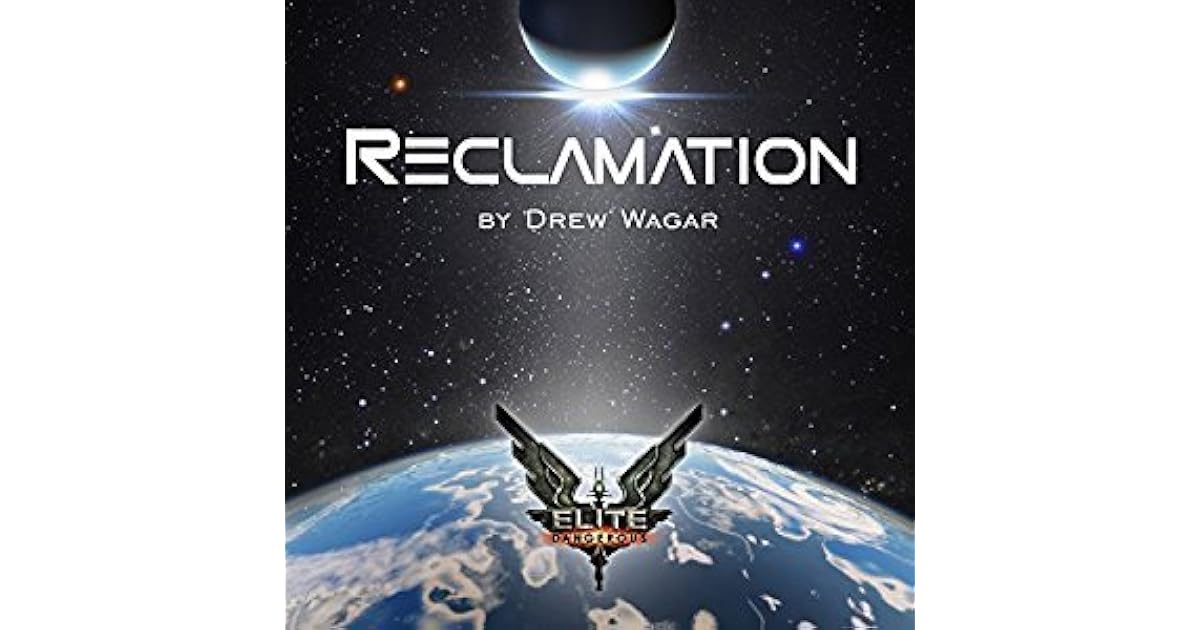
Reclamation is a military science fiction novel set in the galaxy from the computer game Elite Dangerous. It follows Kahina Loren, the unfavoured daughter of an Imperial senator. A coup thrusts her out of her cloistered world into a storm of competing political and economic interests.
Drew Wager wastes no prose. The book moves quickly, only dwelling enough on any topic to push the reader forward. Character roles and motivations are quickly apparent. Description and background are minimal but vivid.
The book demands little from its reader. Other than the context setting, nothing relevant happens outside the reader’s attention or in retrospect. The reader always knows as much or more than the characters.
Reclamation is faithful to its source material, the Elite Dangerous lore and universe, while not confusing or overloading newcomers. The game’s archetypical ships appear, as do Coriolis starports, frameshift drives and the Federation and Empire. Much of the plot involves flying in and fighting these ships, just like in the game.
Reclamation also helps fill that yearning void in Elite Dangerous around lore. Elite hints at so much but shuns story-driven content in favour of letting players tell their own.
Reclamation is light on themes and subtext. There is some eventual recognition that violence is less effective than diplomacy. Those looking for introspection or dialog other than to hurtle the plot forward will be disappointed.
Characters develop little and are unnuanced. Kahina, the protagonist, is part anti-hero and part reader surrogate until some rushed character development at the book’s end. The supporting characters are shallow and functional, mainly helping the protagonist progress.
However, I enjoyed the conversations between diplomats and patrons, each dripping with insincerity and occasionally wit. It allowed Drew Wagar to be more subtle, contrasting them with the rest of the cast.
The book is a fast but light read, accessible to many. In the small but crowded military science fiction genre, it holds its own, focusing on an action-filled and weaving plot. Elite Dangerous players looking for lore will enjoy Reclamation, as will anyone looking for a novel version of an action movie. Someone looking for something more profound or character development should look elsewhere.
The Vale: Shadow of the Crown, or The Vale, is an action adventure game from Falling Squirrel and Creative Bytes studios.
You play as Alex, a blind princess sent to a distant castle in her brother’s kingdom. After surviving an invading army’s surprise attack, you need to find your way back to safety while learning about the world, the war and your place in both.
The Vale is uniquely experienced only via audio. Its only visuals are particle effects indicating motion, weather, and time of day. The game even reads the menus aloud, presumably allowing people with visual disabilities to enjoy the game without aid.
Much of The Vale relies on the player deducing directions and distances using only sound. For example, enemy combatants telegraph upcoming attacks with yells, allowing you to raise a shield or time counterattacks in that direction. Evading enemy camps may require listening for their crackling fires or banter. Good headphones help, as does enabling any 3D or directional audio enhancement.
The Vale executes well. Most challenges are intuitive or quickly learned. You return to the challenge’s start if you fail, sometimes with a short hint. However, discerning multiple incoming attacks while using your abilities can be tricky in the more complex fights.
Communicating setting and dialog solely via voice can be slow. However, The Vale‘s script is tight. Descriptions are vivid and concise, and I never got bored or frustrated waiting for dialog. The choices of accents and voice acting are brilliant, immediately identifying the speaker.
The story is similarly tight and has many twists and reveals. Flashbacks teach skills and build relationships. “Flash forwards” unexpectedly show incorrect paths.
Removing visuals also awakens the player’s imagination. Like reading a novel, you wonder what characters and scenes look like based on accents and the occasional brief but lucid description.
The Vale makes you realize how visuals dominate games. Even for games that use stylized or simplified graphics, simple things like art and animation dominate the language used to describe them.
The Vale also reinforces that game accessibility is not about reducing the difficulty. Accessibility is about reimagining and redesigning game interaction and content.
That said, The Vale is still niche. Visuals are more effective at quickly communicating information and adding emotional context than sound. Using sound for feedback means the game cannot have a soundtrack. The Vale will not dethrone any AAA games from the top sellers’ charts.
The Vale is also short, requiring about eight hours to complete, including all side quests. The game introduces ideas, uses them a few times then moves on to the next ones.
The Vale succeeds as a game, experiment and tech demo, and it will appeal to those looking for something unusual, those with visual impairments or students of game design.
Hopefully, these ideas spread and are enhanced or included in other games. Imagine the same techniques applied to imaginative, story-rich, graphics-lite games like Disco Elysium or Planescape: Torment.
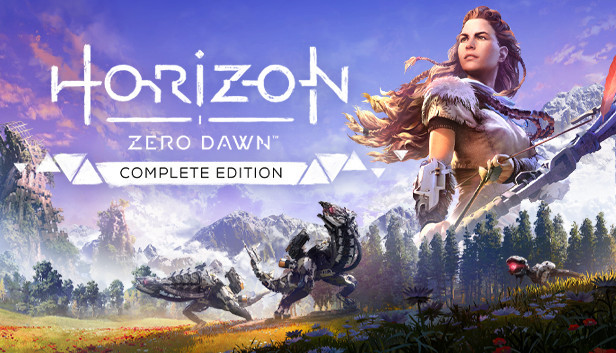
Without reading any of the copious reviews and material on Horizon: Zero Dawn, it is obvious the elevator pitch was akin to “bows and arrows against robotic dinosaurs”. If this game were just a first-person shooter, it would have been merely notable. However, it is so much more.
Horizon: Zero Dawn is a post-apocalyptic, action role-playing game with a third-person camera view. You play as Aloy, an outcast with an unexplained past. A chance encounter as a child in an ancient ruin provides a “focus”: a small, temple-attached device that interacts with ancient computers and detects nearby enemies. When she comes of age, Aloy initially tries to prove herself to her tribe but is then catapulted into a much larger story.
The combat system is the game’s main drawcard. The robotic targets are stronger and tougher than Aloy, particularly in melee. Success requires planning, stealth, laying traps, using terrain, targeting specific components revealed by Aloy’s focus or using particular damage types. Later, Aloy gains the ability to befriend temporarily or ride weaker robots.
These elements create a more cerebral combat system, requiring the forethought and timing of a true hunter. Learning strategies for specific enemy types through experimentation makes combat more straightforward and predictable. Successfully taking down larger robots for the first time is exhilarating.
However, the need for planning or enemy-specific strategies can be challenging early in the game. Limited save points (bonfires) can make the game unforgiving but ensures players do not expend too much ammunition when they fail.
Aloy will not get far without crafting or, more accurately, collecting resources. Aloy can craft ammunition and consumables, even in combat, and will need to do so for longer fights. However, besides giving the sense of “living off the land” and that robots are a resource humanity exploits, the game would have lost little by omitting it and increasing carrying capacity instead.
Exploration is a huge part of the game. Apart from providing crafting materials, exploration offers glimpses into the ancient world through ruins or still functional devices that Aloy can interact with using her focus. There are a few collection quests, and players can purchase maps to help.
The game contains vertigo-inducing but simple climbing puzzles, like the Assassin’s Creed series, and tracking via her focus, like Geralt from The Witcher series. These are integrated well into quests but add variety more than a challenge.
The second drawcard of Horizon: Zero Dawn is its story and themes. Unlike many post-apocalyptic games, Horizons: Zero Dawn isa game about hope. It portrays the apocalypse that befell the ancients with desperation, humanity and grim determination through ghostly holograms and diaries. However, Aloy describes these as “memories”, segregating them from her time as humanity finds its new footing.
The game’s environment reflects this hope. The new world is lush and vibrant. Unlike the muted greys and browns of the Fallout series, there are vivid greens during daylight, faerie-like moonlight and fireflies at night and beautiful reds, pinks and oranges at dawn and dusk. The highly saturated colour palette is more reminiscent of Terra 2 from The Outer Worlds.
The soundtrack, particularly “Aloy’s Theme”, simultaneously mourns the loss of the old world and holds quiet, resolute hope for the new one. The flutes, reed instruments and drums give it a tribal or primitive feel. Julie Elven’s wordless vocals give it a delicate solemnity befitting the game’s strong female protagonist.
The game uses perspective, both Aloy’s and the players, to demonstrate Aloy’s character and build the world around her. Initially, these perspectives are identical. The story starts with Rost, Aloy’s father-like stoic mentor, explaining little and frustrating both the player and Aloy. Aloy is an outsider, a literal outcast from the Nora tribe, and she slowly but resolutely learns about her tribe, fights for a place in it and then progressively the broader world. The player learns with Aloy.
However, the perspective soon diverges. The flashback storytelling mechanism granted by Aloy’s focus shows her insights into the ancient world like advertising or chats between Internet hackers. These would, at best, confuse her. However, the player can understand it and contrast the pre-apocalypse world with the real world.
The environment also invites a dual perspective. A chunk of twisted metal to Aloy is an abandoned car to the player. A strange stone outcrop to Aloy is a ruined building to the player. Is the function of a mug evident to someone who has never seen one?
This dual perspective is also apparent in Aloy’s interactions. For example, Aloy’s first encounter with Erend sees him try to chat her up. He thinks she is just a naive native girl. However, Erend’s intentions are lost on Aloy in this delightfully subtle exchange. Aloy is steadfast but not omniscient, giving her room to grow and making her sympathetic.
These perspectives converge as Aloy learns about herself and the world. This change is not just the bigger picture thinking common to RPGs as the protagonist gains levels, explores the setting and progresses the story. For example, Aloy initially considers Teersa, one of the Nora tribe’s high matriarchs, wise and compassionate. Later, Aloy and the player look at Teersa with wiser eyes, seeing Teersa’s limitations and ignorance.
Aloy’s primary motivation is compassion, even after being initially an outcast. She helps others, not for reward but because she intrinsically knows it is the right thing to do. I found this altruism interesting and refreshing. Modern games often try to give players different moral choices. I tend to pick the “good” option like many, but an “evil” or selfish Aloy would be inconsistent.
Contrast this with Sylens, revealed later in the story and one of the more memorable characters from an otherwise unmemorable cast. I initially saw a second Rost, mirroring Rost’s stoicism and refusal to explain his past and motives. Whereas Rost was a mentor to guide and assist Aloy with the new world, Sylens was one for the ancient world. However, Sylen’s lack of empathy and unforgiving nature hint at something else. He reflects the ancient world’s complexities and compromises.
Horizons: Zero Dawn also examines the decoupling of knowledge from wisdom. Knowledge without wisdom leads to greed and hubris (and the apocalypse that befell the ancients) or exploitation (Sylens). Wisdom without knowledge leads to vapid kindness or irrational cruelty (the Nora high matriarchs). It is easy to see modern parallels.
As for criticisms, those looking for something more gritty may find the altruism and use of the “chosen one” trope trite. Despite the original setting and robotic enemies, Horizon: Zero Dawn relies on many well-trodden RPG elements. Any inclusion of relatable primitive or tribal humans invites criticism. The PC port could have leveraged the keyboard better and relied less on the cumbersome combat wheel.
However, Horizons: Zero Dawn does so much right to be a “must play” for hopeful explorers looking for a slowly revealed but emotionally powerful story. The 30 to 80 hours required to play the game, depending on how sidetracked they get, is not something they will regret.



 The Single Player