“Obi-Wan Kenobi” Review

Obi-Wan Kenobi is the latest Star Wars series streaming on Disney+ in their seemingly unending desire to explore the edges of Star Wars characters and canon. It follows the fan-favourite Obi-Wan Kenobi ten years after Revenge of the Sith, covering events between it and A New Hope.

The series starts with Obi-Wan watching over a young Luke Skywalker on Tatooine and a young Leia chaffing against the life of a princess on Alderaan. While Obi-Wan’s life appears necessarily humble to avoid drawing attention to Luke, Obi-Wan’s dreary routine is more a penance as he hides from his responsibilities and abandons others in distress. Still driven by revenge, Anakin Skywalker/Darth Vader orders his Sith inquisitors to kidnap Leia to draw Obi-Wan out from hiding. Bound by duty, Obi-Wan hesitantly embarks on a rescue.

The series focuses on two main characters: Obi-Wan Kenobi and Reva, one of the inquisitors. We know Obi-Wan, Darth Vader and Leia survive, so the drama focuses on interactions and character development.

Obi-Wan follows the well-trodden path of the “hero’s journey”. Initially reluctant, he battles his self-righteous guilt at Anakin’s downfall and the inquisitors. Obi-Wan rebuilds himself and reconnects with the Force while rescuing Leia and confronting his past, namely the scene-stealing Darth Vader.

Obi-Wan spends much time with the adolescent Leia, an unexpected but welcome introduction of naive kindness, childish stubbornness and adolescent bravado that blossoms into true courage and resolve at the series end. Her lines and acting are excellent, particularly the quiet, tender moments between her and Obi-Wan.

Reva has a more nuanced and subtle storyline. Initially, she is rebellious and attention-demanding like a whiney teenager, as a colleague put it. Reva’s defiant successes make her feared by the Jedi but ridiculed by her fellow inquisitors. 

Unfortunately, Obi-Wan Kenobi (the series) gets bogged down in its middle episodes. The series needed to either spend more time developing secondary characters and the setting or skip them. The Path, saving the now hunted Jedi, or Haja Estree, a lovable conman with a heart of gold, deserved more screen time, but perhaps these are for future series.

Similarly, the shaky camera focuses too close to the characters during action sequences like in the Fortress Inquistories and on Jabiim. It increases the emotional intensity but loses perspective and, therefore, cause and effect. People shooting blasters or waving lightsabers seemingly randomly is less compelling and credible.

However, the climactic lightsaber duels with Anakin Skywalker/Darth Vader are Star Wars at its best. The choreography is distinctly different from the stilted awkwardness of the original trilogy and the energetic and frantic fights of the second trilogy. 

Like the Japanese mythos that inspired it, lightsaber fights in Star Wars have always been personal battles of wisdom and focus, not just martial. The first duel between a timid, shattered Obi-Wan and vengeful Darth Vader shows Vader terrorizing, dominating and torturing. Darth Vader’s battle with Reva demonstrates how vastly he outmatches the tunnel-visioned Reva, toying with her like a cat with its prey. The flashback to the training fight between Anakin and Obi-Wan during Part V is a compelling allegory that Star Wars should use more.

The final confrontation is the series’ crux and emotional pay-off. Similar to the moment in Return of the Jedi where Luke refuses to fight Vader until Vader threatens Leia, Obi-Wan’s desire to protect finally empowers him.

The image of Anakin’s scarred but recognizable face beneath the shattered mask of Darth Vader, as he alternates between James Earl Jones’ distinctive voice as Darth Vader and the more human voice of Anakin, is horrifying and sympathetic. It personifies the battle within Vader that Anakin lost.

However, despite the satisfying gravitas, one wonders whether these events were better left to headcanon. Was this moment different to the one people expected or imagined? Does every character and moment in Star Wars need a different series and detailed explanation?

Similarly, much of Disney’s Star Wars seems to orbit the Skywalkers, fuelled partially by the current fixation on nostalgia. However, Star Wars has many more stories to tell. Reva, for example, presents a fascinating character for future development.

Many were ready to dismiss Obi-Wan Kenobi (the series). The need to unrealistically break the previously resilient Obi-Wan to give him character development, Reva’s annoying early character flaws and the slow middle threatened to render this series a profit-driven vanity project. However, the last two episodes provide the emotional punch, plot twists and satisfying albeit predictable resolution that the series and franchise deserve and fans craved. Hopefully, it will springboard new and varied stories set in the Star Wars universe.

Why “The Mandalorian” Eclipses “The Book of Boba Fett”

The Book of Boba Fett follows the titular bounty hunter after The Mandalorian‘s second season. While fans will enjoy the Star Wars references, the series fails to reach the same heights as its predecessor.

The early episodes simultaneously tell two stories of Boba Fett trying to assert his new position as Daimyo amidst the turbulent criminal underworld of Tatooine and his escape from the sarlacc following Return of the Jedi.

The former story in the early episodes is more character- and scene-setting, reminding the audience of Boba taking over the throne once held by Jabba the Hutt on Tatooine. He saves Fennec Shand, who becomes his henchman and trusted confidant, and sets up the battle for the city of Mos Espa as the series’ central conflict.

The second story in the early episodes is more interesting, portraying Boba Fett’s messianic transformation as he escapes the Sarlacc pit, loses his armour, is rescued by Tuskan raiders then finds that saving others leads to acceptance and community. Amidst flashbacks of this father abandoning him on Kaminoa, he transforms from the ruthless bounty hunter seen in the original movies to someone that wants to free “his people” from the criminal warlords that rule Tatooine.

Unfortunately, this transformation is unconvincing. Boba’s past antagonistic actions, such as capturing Han Solo, and unsympathetic stoicism make it a hard sell. Even the symbolism of Cad Bane’s death, representing the end of the bounty hunter in Boba, lacks any credible build-up from earlier episodes.

The Book of Boba Fett is at its best when political complexities confront Boba. The slimy Mayor hiring assassins to kill Boba, talking his way out of it then double-crossing Boba again shows credible intelligence and cunning. The Pykes’ betrayal shows how ruthless and uncaring Boba’s opponents are.

However, the series often oversimplifies complex issues, making their plot points less credible. While Star Wars‘ fights have always been metaphors, the series assumes a 1930’s Batman-style naivety that Boba Fett can solve crime and poverty by eliminating all the bad guys. Enemies shown mercy suddenly and unrealistically become unshakably loyal, like Gamorrean guards, Krrsantan and the hoverbikers.

The series squanders chances at character development or insightful conflict. For example, Fennec Shand could have genuinely chaffed against Boba’s new, more benevolent direction, embodying the contrast with the unforgiving ways of a bounty hunter. Boba’s enemies could have offered her a considerable incentive to betray him, driving tension to the decisive moment. Instead, the character serves merely as a competent fighter and source of exposition. 

The Book of Boba Fett compares unfavourably with its predecessor, The Mandalorian.

Djin-Darin, the main character from The Mandalorian, is more sympathetic than Boba Fett. Both are armoured orphans. However, Djin-Darin’s armour hid his mysterious identity, while Boba’s was merely a tool. Djin-Darin battled for acceptance against a seemingly unfair creed, a code of honour that Boba lacked.

Both series deal with the noble theme of protecting the less fortunate. The Mandalorian brought that to the cute and relatable Grogu, a triumph of character design that appealed to parental instincts and fans longing for more Yoda. The Book of Boba Fett dealt with protecting the more nebulous and poorly supported “my people”. Thankfully, it avoided the “white saviour” trope with the Tuskan tribe, albeit under tragic circumstances.

Each series borrowed inspiration from different genres. The Mandalorian was like a Western or Japanese samurai movie, with a lone, honourable gunman/samurai wandering from town to town fleeing a tragic past. The Book of Boba Fett felt almost more cyberpunk, examining economic and technological inequality amongst powerful, mysterious criminal cartels in an urban environment. 

The Book of Boba Fett‘s hoverbikers are good examples of cyberpunk impinging on the Star Wars universe. The bikers’ deliberate and overt augmentation and brightly coloured bikes feel pulled from cyberpunk. However, the bikes feel out of place amongst the grungy, rusting, third-hand technology seen elsewhere. Cybernetics has long been canon but it has been a metaphor for trauma, like Luke’s hand or Darth Vader’s suit.

Structurally, The Book of Boba Fett is an interlude between seasons two and three of The Mandalorian. The series finishes the Boba Fett subplot introduced in season two. The short but vital subplots reuniting Djin-Djarin and Grogu ensure The Mandalorian can continue as before. 

There are many obscure references for Star Wars fans. They will like the Tuskan anthropology, a Wookie wrenching an arm off a Trandoshan in a cantina, Bantha riding, a rampaging Rancor, more Hutts and Luke building his Jedi school.

The special effects are also fantastic, like in The Mandalorian. Luke’s lifelike recreation shows how far special effects have progressed from the later Star Wars movies. 

The Book of Boba Fett is a fun romp through Tatooine, riffing on the edges of Star Wars canon. However, the series tries to fit too much into a short season. More character development and extending more plots between different episodes would have given it the credibility, heart and sympathy that its predecessor enjoyed.  

“Star Wars: Visions” Review

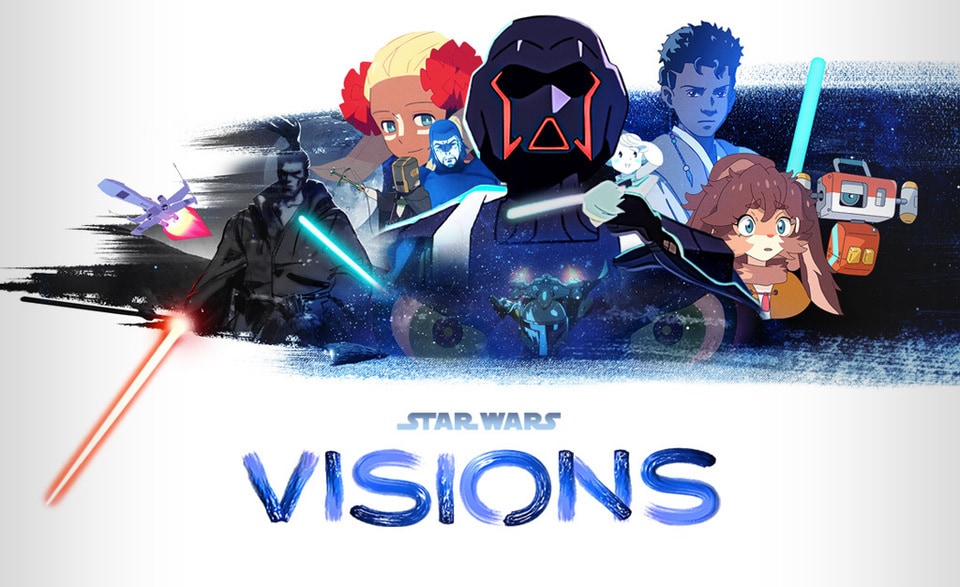
Star Wars: Visions is a series of short Star Wars-themed animations created by Japanese studios. It continues the rise of anime in Western culture and examines a beloved franchise through different eyes.

Not surprisingly, the episodes show a strong Japanese influence. Jedi ronin fight with lightsabre katanas or wakizashis. Fights embody arguments around ideals and purity. The environment mirrors the story’s mood, such as the foreboding rain in The Elder or lifegiving sunshine in TO-B1. The music uses characteristic flutes, strings and drums. Even the architecture and society in later episodes are distinctly Japanese.

However, the episodes are still unmistakably Star Wars. The Force and Jedi feature in every story, even if implied in Tatooine Rhapsody, and are almost overused. Sidekick droids are plentiful. Iconic star destroyers and X-wings appear although space combat is mainly absent.

Star Wars stories always centre around a human element despite the alien races and the untethering decrepit, rusting technology. Star Wars: Visions is no different, examining family in Lop & Orcho or The Twins or the coming of age in The Village Bride or The Ninth Jedi.

The niche audience also allows some episodes to stray from traditional Star Wars themes. 

I enjoyed the protagonist’s moral ambiguity (and the almost monochromatic colour palette) in The Duel and twists in Akakiri (meaning “red mist”). The Star Wars universe is known for balance. Does good always win, or is that just the way we tell the stories?

Tatooine Rhapsody’s premise is music can be as consequential and relevant as a Jedi. It would be laughable fan fiction if released stand-alone but contrasts other works in the compilation nicely.

The Elder deals with impermanence, a humbling and reflective theme. It is the opposite of Star Wars’ usual galaxy-shaking space opera. 

Star Wars has traditionally bypassed biases or prejudices by removing countries or times – by being set “a long time ago in a galaxy far, far away”.

However, a few Star Wars: Visions episodes also consider current themes like environmentalism. Sometimes it subtlely shows the Jedi religion’s animist roots, such as in TO-B1 and The Village Bride. Sometimes it underlies a political or economic divide, like in Lop & Orcho. Referencing a passionate and current political and cultural theme threatens to break the disarming isolation that Star Wars enjoys. 

The California-style alternative rock in Tatooine Rhapsody threatens the same reassociation. Music in Star Wars has always been passive, like the cantina scene in A New Hope, or foreign to western ears, like The Hu‘s theme to the game Star Wars Jedi: Fallen Order.

I enjoyed The Ninth Jedi the most. Its story weaves many subtleties, like Kara destroying the pursuer’s speeder bike but leaving the rider unharmed or the chilling danger revealed by the blue colour of Ethan’s lightsaber.

The shadow of famous anime casts long over some episodes. TO-B1 is very like Astroboy, with the Dr Elephant-like father figure and a naive boy robot protagonist with a heart of gold. The Twins has a strong Kill-la-kill vibe, with its loose and exaggerated animation style, casual and metaphoric destruction and focus on siblings.

I hope to see more nuanced and cerebral content like Star Wars: Visions revitalising and expanding the franchise. Japanese cinema and folklore famously inspired George Lucas. A Japanese perspective on Star Wars brings it full circle.

“Star Wars Jedi: Fallen Order” Review

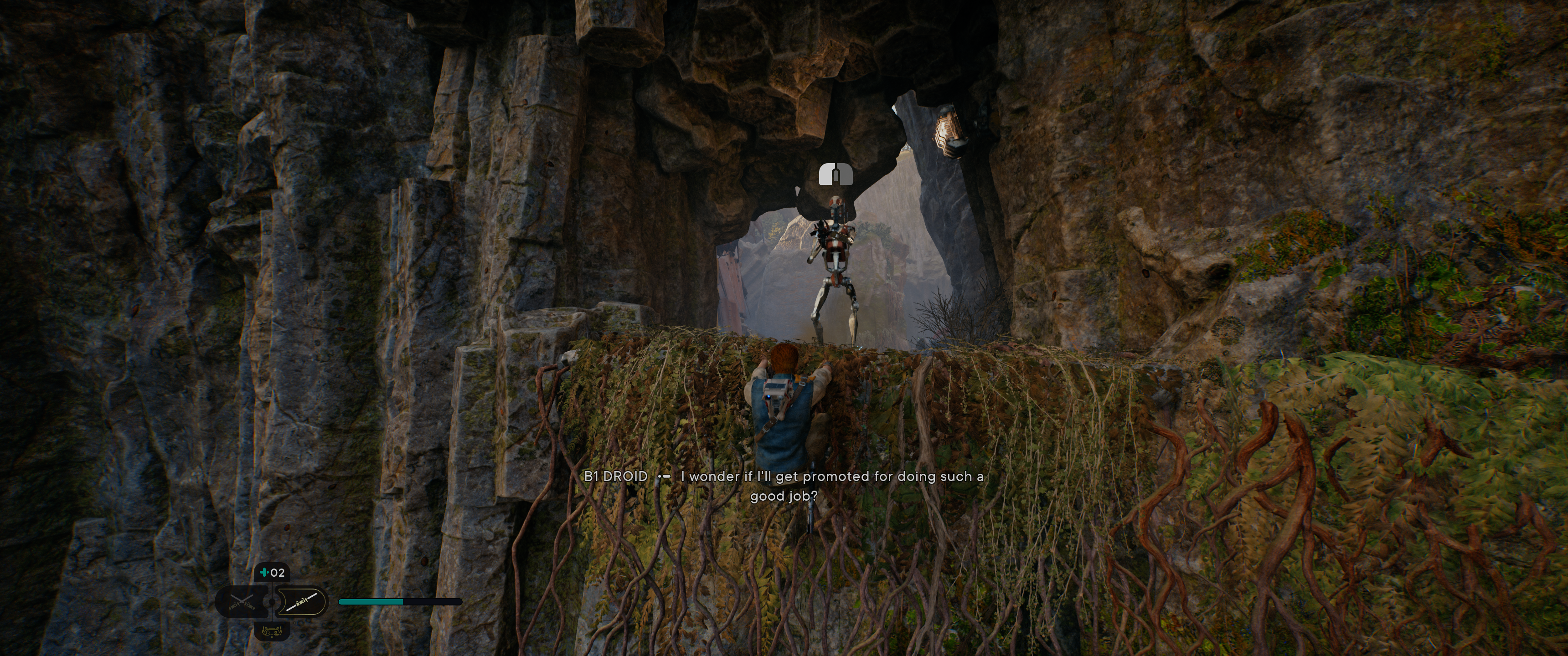
Star Wars Jedi: Fallen Order, released at the end of 2019, is a single-player, action-adventure game. Think bits of Darksiders, Dishonored and Dark Souls combined with the Star Wars setting, music and visuals.

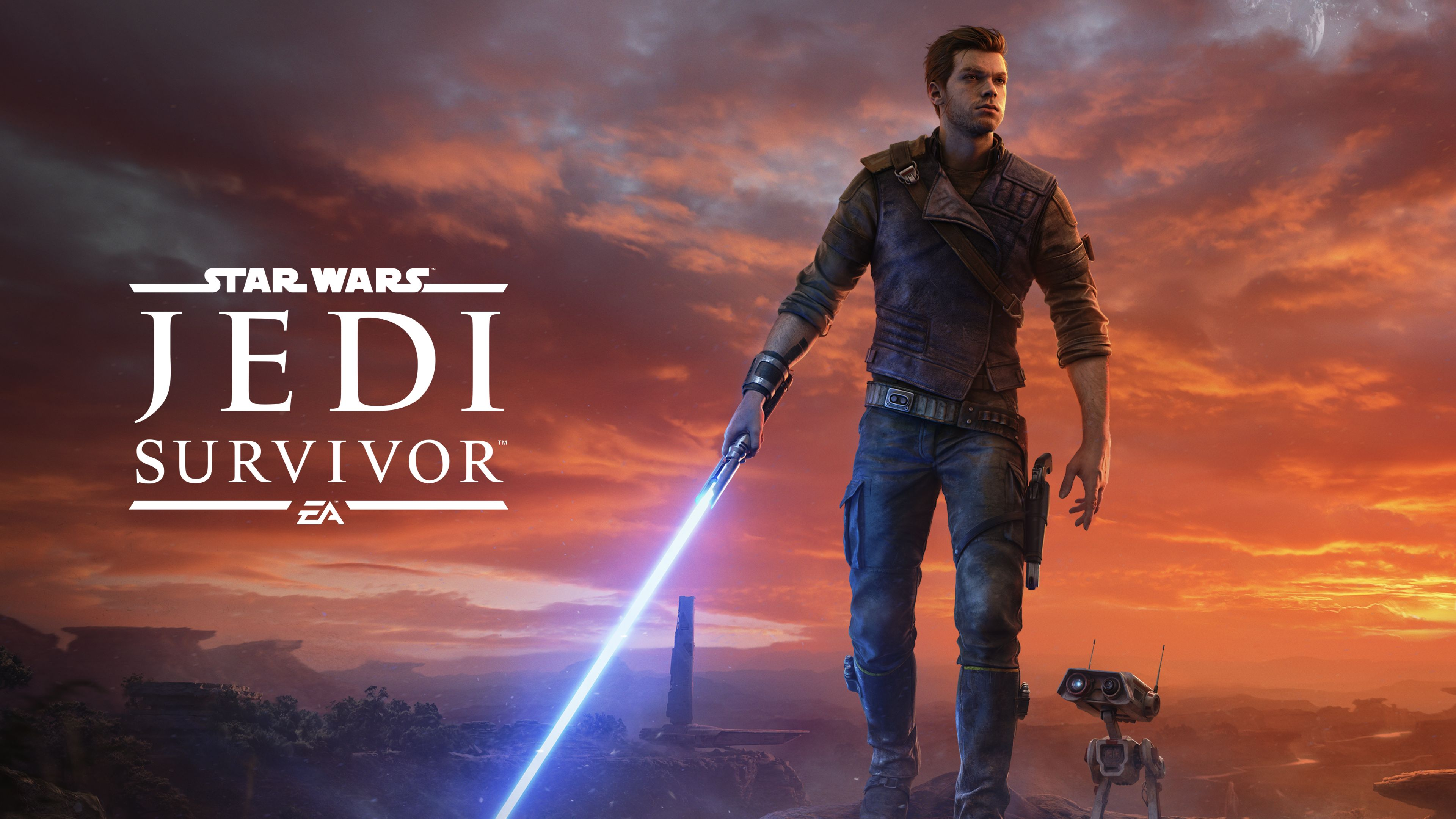
You play as Cal Kestis, a padawan that survived order 66. He etches a mediocre existence on the planet Bracca, salvaging spaceship parts to fuel the empire’s war machine, when an accident reveals his force powers. Cere Junda, a former Jedi, rescues him from the inquisitors, the empire’s Jedi hunters, then Cal embarks on a quest to protect other force-sensitive children from the empire.

Cal starts with minimal force powers. He learns or acquires new abilities by achieving in-game goals, which initiate cut scenes re-enacting parts of his childhood padawan training. These reflections contrast Cal’s old and current lives, help us empathize with his repressed grief and provide a temporarily safe learning environment for the player.

The levels are complex but well-designed. They are bi-directional, and the backward traversal often needs newly acquired abilities. Many short branches provide exploration opportunities. However, some require powers gained later, meaning the player must revisit old areas.

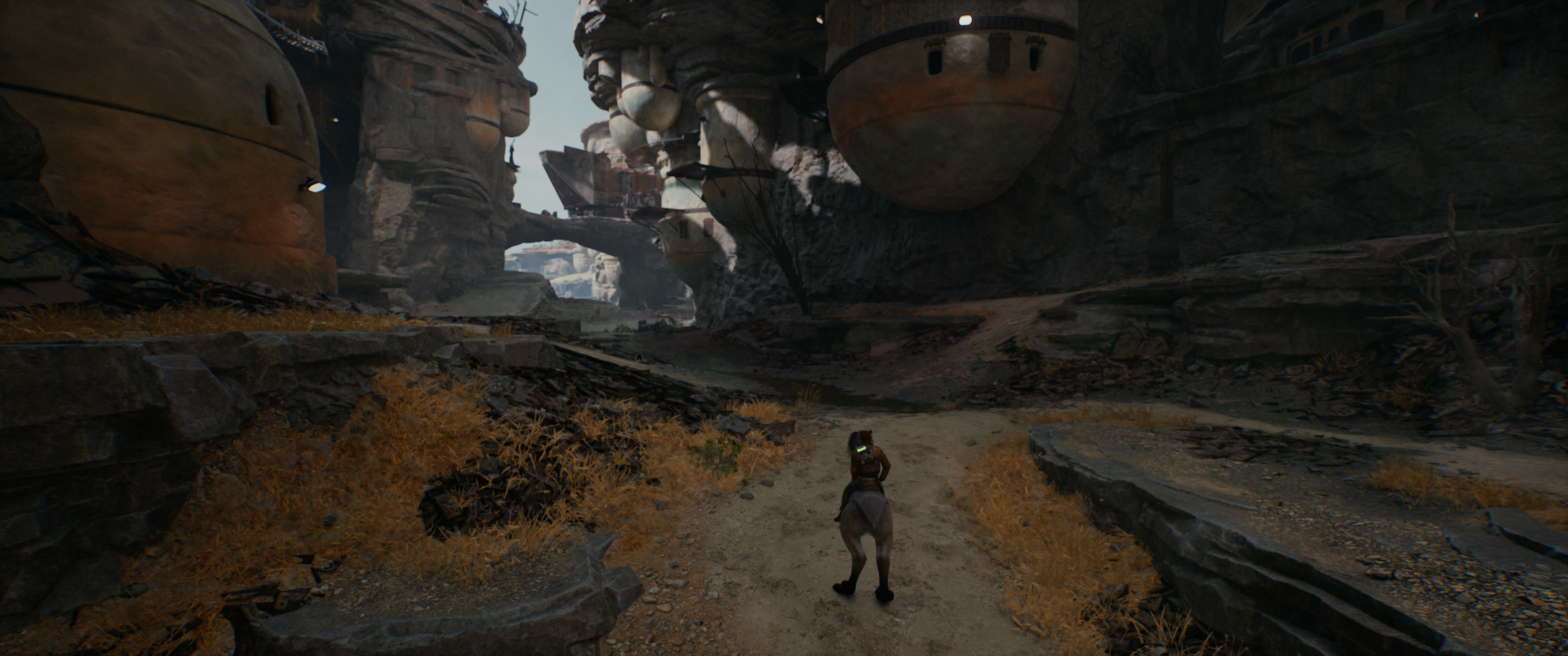
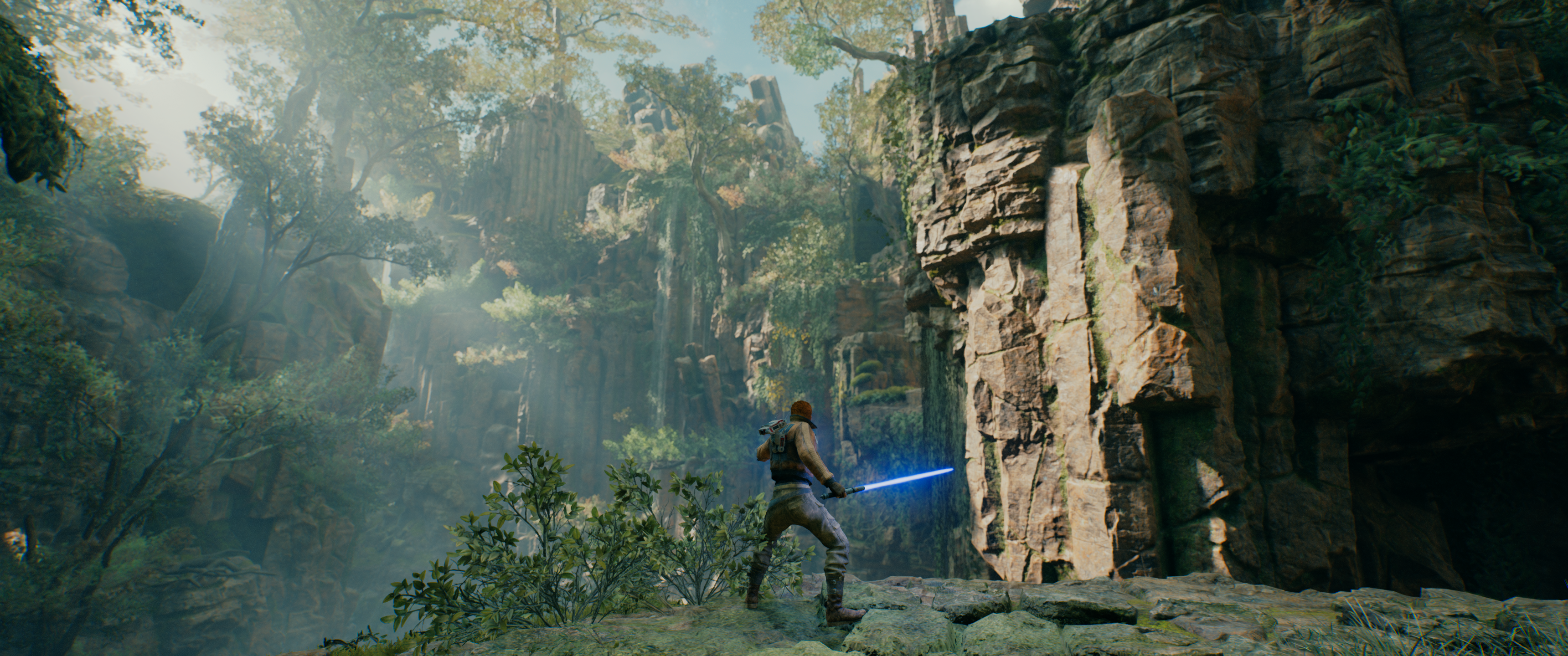
The level designers made each planet distinctive, such as the ochre sandstone and bright, yellow sun of Bogano; Dathomir’s reds, browns and sinister twilight or the vibrant, lush, green, humid Kashyyyk. Imperial interiors continue the original three Star Wars films’ styling with stadium-framed fluorescent lighting set into austere blacks and greys.

The parkour gameplay fits well with Jedi and Star Wars lore, going back to Luke’s training on Dagobah. Star Wars has always emphasized verticality to imply danger and declutter sets, such as in A New Hope’s death star.

The combat is defence-oriented, built around blocking and dodging to reveal short moments where you can attack. You eventually gain the expected gamut of Jedi powers, like pulling, pushing and jumping, and a double-bladed lightsaber.

However, you rarely feel comfortable enough to have a dominance or power fantasy. Once you can comfortably beat an opponent, the game throws in more or harder ones.

The soundtrack is standard Star Wars “John Williams-esque” orchestral, with playful woodwind and ominous brass and strings. However, other than a brief appearance from the Mongolian band “The Hu”, it lacks memorable musical moments.

Star Wars Jedi: Fallen Order is challenging. Repeatedly failing can be frustrating, but iterative learning is the path to the required and desired mastery. Dying is progress. Star Wars Jedi: Fallen Order is essentially a puzzle-solving game, whether learning and countering enemies or combining force powers and movement to reach a seemingly unnavigable goal.

Thematically, Star Wars Jedi: Fallen Order is about healing after trauma and loss. As Cere says, failure is part of the process and is not the end. For Cal, it is about the loss of his mentor and father figure. For Cere, it is about the loss of her padawan and estrangement from her master. For Trilla and Merrin, it is about abandonment and betrayal. These parallel the setting, both the fall of the republic/rise of the empire and the descent of the ancient Zeffo race, whose tombs you explore.

Almost all thematic treatment is during cut scenes, conversations between missions, journal entries or enemy banter during boss fights. Later cut scenes, in particular, effectively embody the “show, don’t tell” mantra, symbolism and abstractness reminiscent of Star Wars. Even the main menu theme is subdued and mournful.

Unfortunately, Star Wars Jedi: Fallen Order does not extend themes into missions. In other words, most of the game. It is not ludonarrative dissonance, more a missed opportunity. The player will repeatedly fail with the game’s challenging mechanics. However, respawning when you mistime a jump or an enemy defeats you may be frustrating but not a genuine loss.

Meanwhile, Star Wars Jedi: Fallen Order’s challenging game mechanics easily distract players from internalizing and examining themes. You are focused on how to get places or beat opponents, not what doing so means or its impact on the game’s characters.

One solution is involving other characters more during missions. They steal the show in their brief appearances with spot-on voice acting and scripts. Apart from BD-1, the R2-D2 substitute with the requisite cuteness and courage, Cal only briefly works with two other characters during missions

Cal’s personality is also underdeveloped. This “blank canvas” may make him a better player surrogate, but the developers could flesh him out beyond his withdrawal, grief, and the wide-legged swagger the animators gifted him.

That said, genuine love and attention to detail have gone into the game, whether it is the authentic motion blur and whoosh of a whirling lightsaber or the fantasy-fulfilling glee of briefly piloting an AT-AT. I laughed at the mundane stormtrooper banter, Cal not translating BD-1’s jokes or BD-1 beeping a Star Wars motif when hacking a security droid.

Star Wars Jedi: Fallen Order strives to be a good game and not just a faithful Star Wars game. Perhaps this is why it lacks the signature Star Wars initial text crawl and subverts the opening star destroyer camera pan. The game is a challenging but enjoyable 35 hours to finish, more for all achievements, and worth it for action-adventure fans, not just Star Wars fans.