

The Invincible is a science fiction thriller and adventure game developed by Starward Industries. Based loosely on Stanislaw Lem’s novel of the same name, published in 1964, does its premise still hold up after sixty years?
You play as Dr Yasna, an astrobiologist from the Interstellar Commonwealth spaceship Dragonfly. You awaken on a Regis III, a distant and desolate planet, with little memory of recent events. Your job is to discover what happened to your expedition while unravelling the planet’s mysteries.
The overused amnesia trope may dissuade some. However, given the source material’s age, the original novel likely inspired the trope. Yasna’s amnesia is also central to the story. Yasna regains some memories through flashbacks, but The Invincible‘s first hour or two asks more questions than it answers.
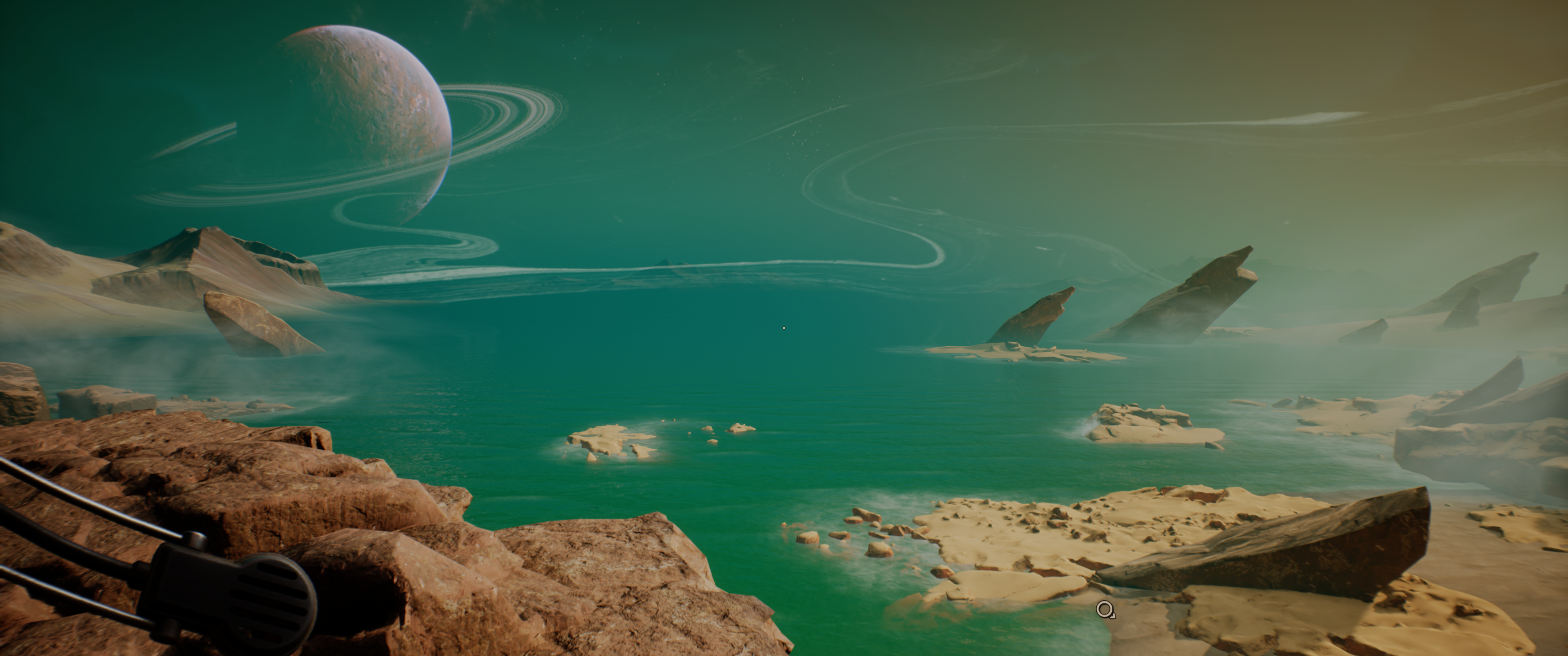
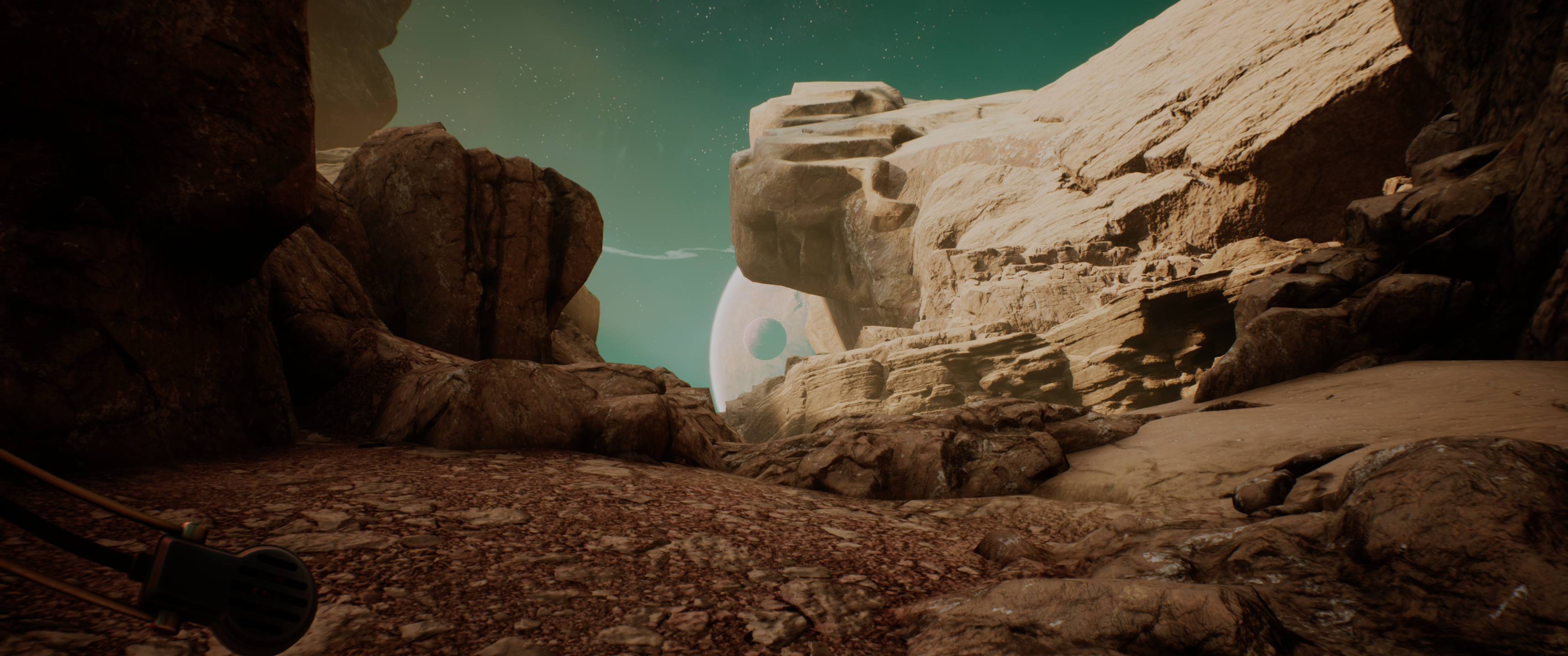
Mechanically, you walk and climb around the desert environment. You drive rovers, operate computers and navigate with a scanner and a metal detector. Dr Yasna automatically tracks important notes and maps in her journal, which you can refer to if lost. She talks over the radio with Novik, the Dragonfly’s “astrogator” or captain, getting context and guidance.
The Invincible has a fantastic retro-futuristic aesthetic, reminiscent of The Forbidden Planet, Gerry Anderson’s Thunderbirds or Space 1999. Controls are large and analog. Robots lack the modern pseudo-organic look. Spaceships are gleaming rockets. Technology is practical and grounded, electromechanical instead of electronic. Even futuristic inventions like force fields are just applied electromagnetism with bulky wires, magnets, and insulators.
The aesthetic makes The Invincible believable and distinct hard science fiction. It also reduces complex apparatuses to simple controls that require no instructions, which is perfect for a game.
The aesthetic grounds The Invincible to the late 1950s or early 1960s. The developers did not introduce modern sensibilities or conveniences. The characters smoke. They lack the equivalent of mobile phones, although you can find a bulky Pong game console. The developers even retained some esoteric names from the novel, like calling a spaceship’s captain an “astrogator”.
The soundtrack is unsettling, an often discordant mix of percussive and theremin-like synthesized instruments. It ensures you always feel on edge. Nothing is ever quite right. It recasts the barren scenery, often starkly beautiful, as alien and isolating. The instrument choice also reinforces the 1950s/60s science fiction feel.
The Invincible generates a comic of Yasna’s progress and decisions. It summarises the story and highlights important decisions. The game shows you the last panel when reloading a save to give the player context quickly. Once again, it fits with the pulp comics popular during the 1950s and 60s.
Thematically, The Invincible deals with humility and hubris. Humanity’s Ozymandian discoveries on Regis III challenge our understanding of life and intelligence. Our anthropomorphization and existing taxonomies can hinder as much as help. For example, the separation between biological and machine is not always clear. Yansa’s isolation means she has to resort to her basic wits and grit.
The Invincible shows us some things will always be beyond our mastery. Humanity’s weapons, for all their might, assume human constraints and thinking. Even humanity’s advanced medical science cannot regain lost memories. The significance and irony of the game’s title slowly becomes clear toward the game’s end.
Despite its futuristic setting and existentialism, The Invincible is ultimately about human nature. Amidst the Cold War-like paranoia and mistrust between Yansa’s pseudo-European Commonwealth and the pseudo-American Alliance, our similarities outnumber our differences. The Commonwealth’s and Alliance’s different technologies are interoperable. Human touches like sharing cigarettes can potentially unite us, as can challenges like those on Regis III.
The Invincible is short, taking six or seven hours to complete, but it is about the right length. There is some replayability. Most of the game is linear despite appearances, although you can make decisions at key moments to steer the remaining story and reach different endings. Achievements reward attention to detail or acting unpredictably.
The Invincible will appeal to those looking for contemplative science fiction with a strong visual and audio aesthetic. The developers have been faithful to Stanislaw Lem’s vision, which still holds up today. While humanity has not visited other planets as in the game, it is easy to consider humanity the master of its domain. The Invincible reminds us that the universe may have other plans.
 The Single Player