“Dorfromantik” Review

Dorfromantik, German for “romanticized town”, is a serene, relaxing tile placement game developed by Toukana Interactive. It follows on from their similarly causal previous games, like Townscaper.

In Dorfromantik, the player draws hexagonal tiles from a stack and places them adjacent to already played tiles. Each tile edge has a terrain type, such as buildings, forest, fields or plains. You gain points by aligning edges with identical terrain. Points track your progress and can add more tiles to the bottom of the stack. The game ends when the tile stack is exhausted, so the more points you accumulate, the longer you can play.

Besides passing the time and sense pleasure, Dorfromantik‘s enjoyment comes from having just enough of a challenge. Initially, the challenge comes from the randomized stack of tiles. Tiles with train tracks and water further restrict tile placement. Later, some tiles may give quests that give additional points for runs of identical terrain. Ghost tiles may appear that, when built on, reveal unique tiles with extra bonuses. 

Long term replayability comes from achievements, such as tracking tiles placed of each type or the longest continuous train tracks, and different play modes, such as “creative” with no stack limit.

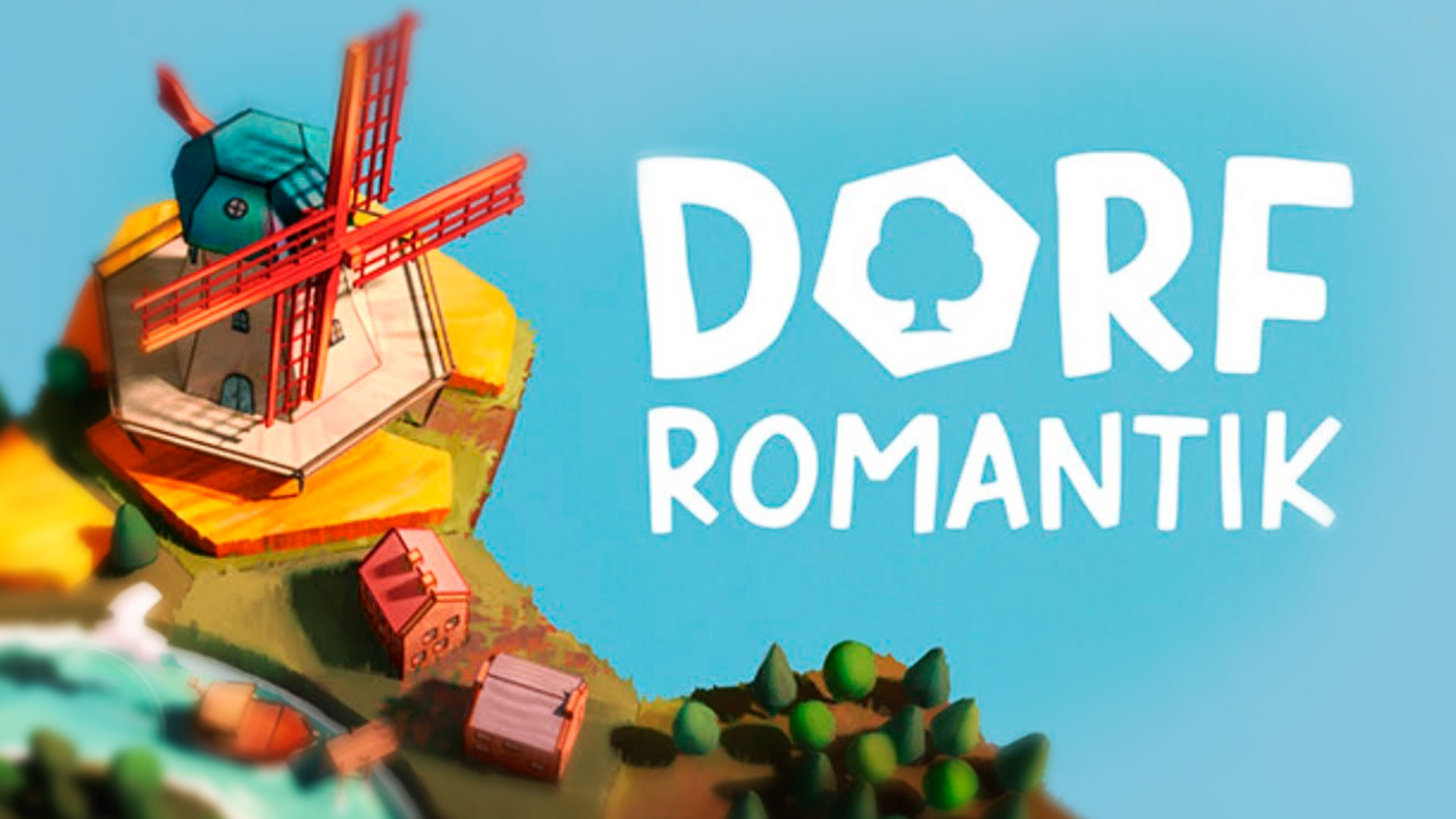
Two design choices make Dorfromantik stand out. The first is its uplifting, relaxing visuals and sound. The graphics are stylized and colours oversaturated, featuring picturesque country towns, pine forests and golden wheat fields. You get subtle animations like birds flying overhead or boats steaming down gently flowing rivers as you build out the landscape. The soundtrack is also perfect, with soft dynamics in major keys. You cannot help but smile during the first few games.

The second design choice is the total lack of pressure. There are no time limits, no need to pause the game, and you can switch to another game or start a new one without losing progress. You can undo moves, but mistakes are hard to pin down with the randomized tile order and not individually costly. There is no AI or human opponent to outsmart you. You will not have moments where you want to punch the monitor.

Unfortunately, you see most of the game’s mechanics in your first game, taking about an hour. The lack of variety or progression may dissuade some people from purchasing the game for its undiscounted price. While there are strategies to maximize points, the randomized tile stack constrains you. There is no multiplayer option.

However, if you want something meditative to wind down or want to relax while enjoying a sensual but minimal challenge, Dorfromantik is your game. It is for the player who enjoys making a gorgeous landscape over intense strategy.
“FAR: Changing Tides” Review

FAR: Changing Tides, a casual puzzle platformer developed by Okomotive, is the sequel to the popular FAR: Lone Sails. Set in the same world, you play a child on a sea journey whose purpose gradually reveals itself.

Most of the game’s controls and puzzles are straightforward and deducible by trial and error. Buttons or actionable items have a distinctive cyan colour and, later in the game, yellow lights direct the player’s focus. While movement feels unrestricted, most areas present only a few actual options to the player. Getting stuck is usually caused by insufficient exploration or wrong assumptions. “Breaking” a puzzle or losing required items is impossible.

The puzzles’ goals are usually progression, usually travelling from left to right. However, sometimes solving puzzles improves your ship, such as adding an engine or a new mode of transport. Sometimes they hint more about the world, such as revealing a diorama or a painting.

The game is short, containing about five to six hours of playtime. While that may dissuade some from its undiscounted price, the design of FAR: Changing Tides is economical and efficient. Mechanics are introduced, practised then the game moves on without overdoing them. Lengthening the game would not necessarily have made it better.

As with the previous game, FAR: Changing Tides separates puzzle areas with long stretches of travel. Your ship’s controls are puzzles themselves, like tacking the sails against the wind or powering the engine. Once the controls are mastered, these travel stretches give you short breaks, temporarily immersing yourself in the world via the backgrounds and soundtrack. 

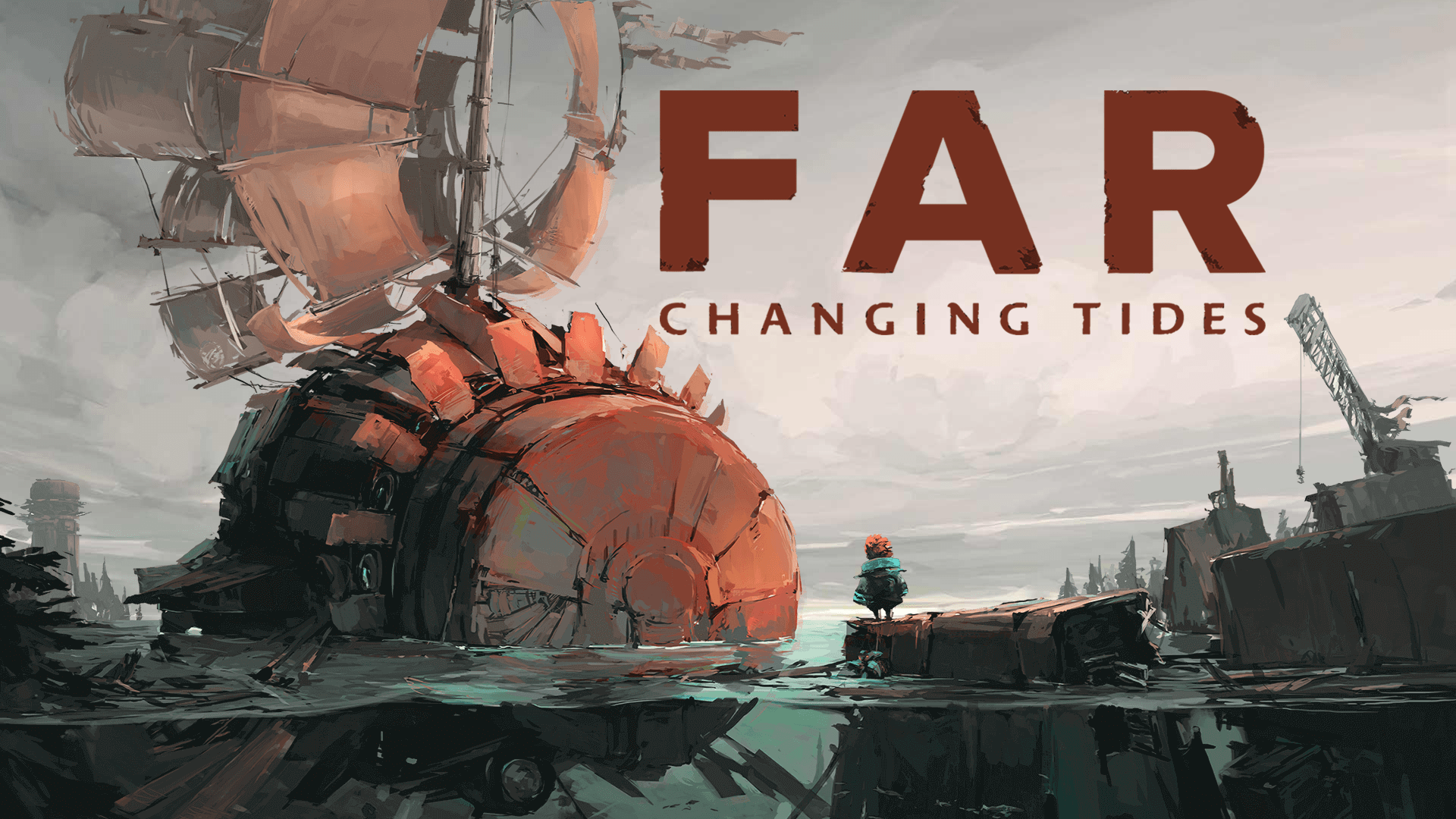
FAR: Changing Tides tells its story by implication and subtle reference. The flooded world drowned humanity’s cities and towns, but the strewn detritus shows the flood’s ferocity and suddenness. The unnamed protagonist encounters no living humans, only hints of their existence.

FAR: Changing Tides continues the retrofuturistic “dieselpunk” feel of FAR: Lone Sails, putting 1930s through 50s aesthetics on advanced technology. Desaturated colours and dull, rendered plaster buildings are typical of that era and make the world feel bleak. The rusting carcasses of humanity’s leviathan mechanical creations dot the landscape. Some are almost organic, and you can hear a faint heartbeat when nearby.

This desolation contrasts with the game’s naturalistic moments. Nature continues. The deer, birds and sea life are oblivious to your and humanity’s struggles. Glimpses of bioluminescent jellyfish or rays through your ship’s glass bottom or distant whales are wondrous moments.

FAR: Changing Tides, as implied, is about the younger generation reacting to contemporary issues like climate change. The protagonist is a child, forced to undertake a journey to build a better life. He or she finds toys like wooden stags, music boxes and stuffed ducks but cannot play with them, forced to grow up early to confront older generations’ hubris.

The protagonist demonstrates how the newer generation views the world. He or she does not blame technology – it is unclear in FAR: Changing Tides what caused the flood. Technology is something the new generation masters early and is vital to survival. The ship even looks like one a child might draw. The ending shows the new generation’s focus on each other and subversively ties it back to FAR: Lone Sails.

However, FAR: Changing Tides could have appealed to our senses more. While the game’s engine has moved from predominantly 2D to wholely 3D – and shows it off at the end – much of the extensive backgrounds are simple and blandly textured. The developers are going for a stylized, cheap-to-develop aesthetic. However, desaturated does not mean uninteresting. The soundtrack adds emotion and context to otherwise empty moments but lacks memorable motifs or consistency.  

The casual puzzle platform genre also has limits. Its puzzles are too simple for someone wanting a challenge. The storytelling is too subtle for those looking for clear themes. Experienced gamers enjoy these short diversions but the gaming landscape continues to expand and diversify beyond puzzle platformers.

That said, FAR: Changing Tides is a worthy successor to FAR: Lone Sails, developing its novel vehicle operation mechanic enough to feel different but still comfortable. Those looking for a casual but not overly taxing game will enjoy it, especially if you fondly remember FAR: Lone Sails.

“LEGO Builder’s Journey” Review

LEGO Builder’s Journey is a short, casual game about building with LEGO. However, the choice of characters and theme make this game shine.

You play alternately as a LEGO parent or a child in a LEGO world. You start with simple acts of bonding, such as the parent taking the child hiking. You return home, where the parent juggles the demands of a dull, repetitive job and playing with the child. Then something interesting happens.

The gameplay consists of moving bricks to traverse a level and solve puzzles. The controls are straightforward but sometimes frustrating, clearly borrowed the original mobile version. It can be hard to see whether a mouse click will place a brick or drop it. The game provides no guides or other indicators, presumably prioritizing realism. 

The player learns and infers the simple mechanics through trial and error, even when facing new mechanics or goals. LEGO Builder’s Journey is a master class on teaching through subtle but effective hints and limited options. 

Like many games in the LEGO franchise, LEGO Builder’s Journey is also a master class in expressing emotion through character animation. It establishes the parental bond through simple acts like cooperative play or extinguishing a campfire once the child is asleep. It also captures the frustration and conflict parents have with balancing work and family.

The graphics are gorgeous, using ray tracing on high-end graphics cards. The game looks just like playing with LEGO bricks in real life but animates some of them, like subtle waves in transparent blue water bricks or bubbles popping on brown mud bricks. It imbues otherwise sterile LEGO bricks with imagination and energy.

The soundtrack is ambient, ethereal and slightly upbeat. Extended, soft chords encourage contemplation. Occasional scale fragments sound like learning an instrument, just as the child is learning LEGO.

LEGO Builder’s Journey is short. It takes about three hours to complete, including all achievements. Some expect a longer game at its price. However, stretching it further risks diluting rather than enhancing it. I suspect the LEGO corporation also takes a significant cut.

LEGO Builder’s Journey is a brief, beautiful and heartfelt game about playing with LEGO. It celebrates a new generation growing up with a toy build around imagination and creativity. It is accessible to all ages. However, parents will appreciate the themes more. The game should be called LEGO Builders’ Journey, with the apostrophe after the “s”, to emphasize shared play and joy.