

Journey to the Savage Planet is a science fiction adventure game developed by Typhoon Studios. Tasked by Kindred Aerospace, the fourth-best interstellar company, your job is to exploit a new planet in the name of capitalism, err, I mean, explore a planet for possible human habitation.
You play an unnamed astronaut, sent to an alien planet to catalog its features and inhabitants. You explore the landscape, scanning flora and fauna, while gathering resources. Back on your ship, these resources unlock upgrades. These upgrades provide additional mobility and options, which open up more areas and so on.
Journey to the Savage Planet includes some combat. However, it is not the game’s focus. Instead, combat is a series of puzzles to keep areas unique and challenging. The boss battles gate content, ensuring you have certain upgrades and know how to use them.
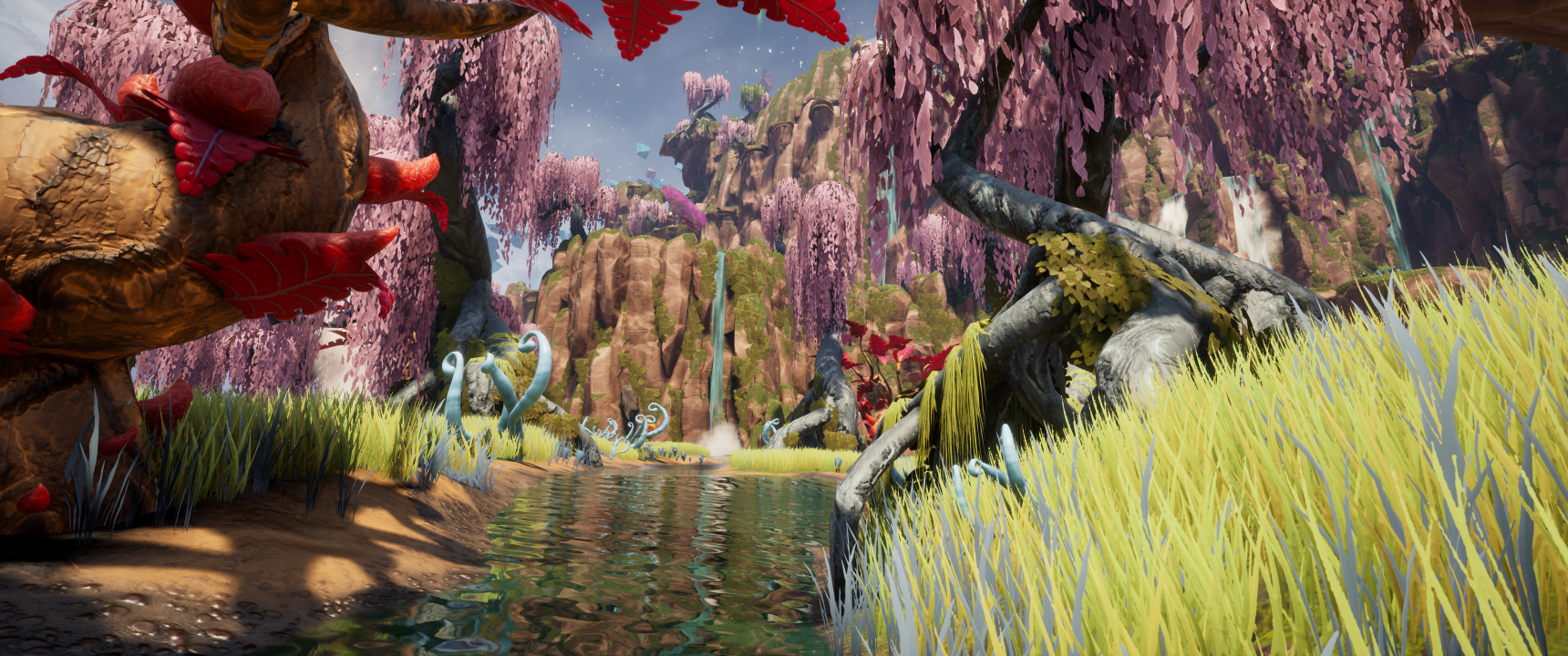
The level design is also economical. While regions feel huge at first, explorable areas are actually compact and densely packed with secrets and interesting tidbits. Early regions have areas only accessible with later upgrades, encouraging players to revisit content with more experienced eyes. You unlock teleportation early, removing a lot of tiresome travel.
Journey to the Savage Planet offers co-op play, your in-game “meat buddy”, for assistance or more social play.
Mechanically, the above sounds like a standard 3D exploration/traversal game. This is true. The game gradually exposes you to progressively more difficult puzzles that build on previous experience, like any good puzzle game. Turorialisation is usually subtle, although the game sometimes shows applicable controls as a hint. Unlike more linear puzzle games, the game’s open world allows players to switch to a different puzzle or area and return later, along with freeform exploration.
However, Journey to the Savage Planet coats this well-implemented but otherwise unremarkable gameplay with a thick layer of absurd, satirical, anti-capitalist humour. Your ship bombards you with ads that use familiar tropes and techniques to peddle ridiculous products. Periodic messages from the self-serving and insincere Kindred CEO echo the worst of an egotistical cult of personality. He savours sushi on his private jet while you eat ooze-like grob on your decrepit spacecraft. Even the feigned encouragement from your shipboard computer is sarcastic.
The humorous context gives purpose while downplaying negative aspects. It is hard to take your character’s death seriously if your CEO and ship’s computer do not. Killing and exploiting the wildlife is OK because it is in the name of “science”.
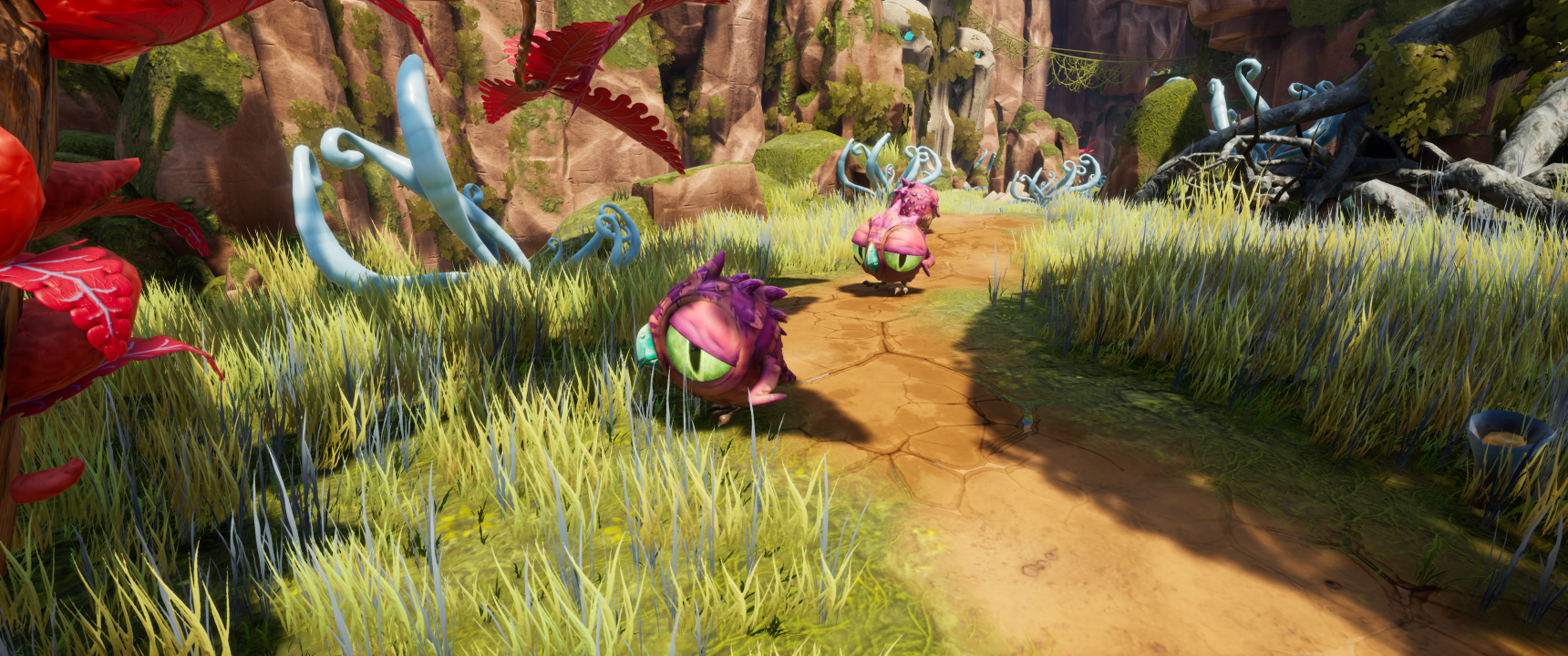
Journey to the Savage Planet‘s bright, saturated and cartoonish art style, creature design, and sound effects reinforce this. The cute, ball-like pufferbirds, for example, have large, anime-like eyes and emit high-pitched cheeps. Many-headed baboushkas scream comically as they dash around. Feeding aliens grob makes them fart collectable resources.
This art style also ensures plants, creatures and terrain features are recognisable, easy to differentiate, yet clearly alien. This style will not date as graphics capabilities improve and adapts well to lower fidelity devices.
The soundtrack is roots rock, heavy with guitars and stringed instruments. It gives the game a playful, blue collar, “Wild West” feel. I would have liked more variety between tracks, though, as it can become repetitive.
While there are challenging moments and your character will die often, Journey to the Savage Planet is not difficult. A new upgrade, using a previously overlooked environmental feature or rethinking the approach is usually the answer.
Even the various MacGuffins, such as orange goo to increase your health/stamina or alien alloy for upgrades, can eventually be detected using your scanner. These scanner upgrades replace a frustrating game of finding the obscure nooks and crannies with the fun traversal puzzles. You know where the desired objects are. You just need to find out how to get there. I usually find completing collections tedious, but Journey to the Savage Planet had me happily doing so without initially realising it.
Journey to the Savage Planet‘s anti-plutocratic and pro-environmental message becomes less subtle later in the game, particularly as you approach the last boss. It taps into the anti-“tech bro”, “save the planet” zeitgeist.
However, the game’s message takes a backseat to the fun, avoiding lectures and keeping things light. The game hides its message under an obvious corporate caricature. It avoids imposing moral quandaries or showing the heart-tugging broader effects on society, as in games with similar themes such as Cyberpunk 2077 or The Outer Worlds.
Journey to the Savage Planet takes around fifteen to twenty hours to complete and about five extra hours to find all the collectables. It will appeal to those looking for a light-hearted exploration and traversal puzzle game. However, those looking for genuine challenge or put off by satirical, cartoonish humour should look elsewhere. Many puzzles emphasise the vertical, giving sweaty palms for those afraid of heights, too.
 The Single Player