
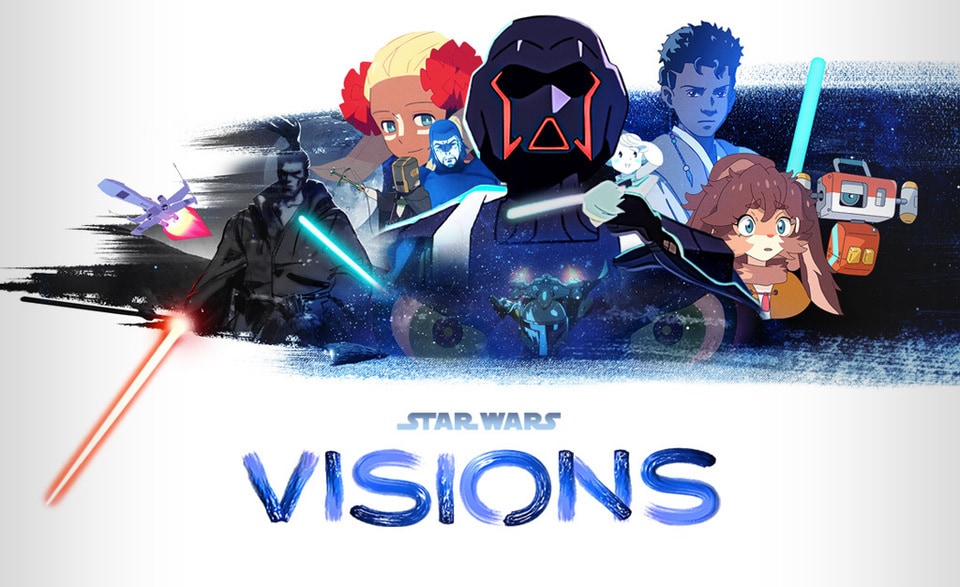
Star Wars: Visions is a series of short Star Wars-themed animations created by Japanese studios. It continues the rise of anime in Western culture and examines a beloved franchise through different eyes.
Not surprisingly, the episodes show a strong Japanese influence. Jedi ronin fight with lightsabre katanas or wakizashis. Fights embody arguments around ideals and purity. The environment mirrors the story’s mood, such as the foreboding rain in The Elder or lifegiving sunshine in TO-B1. The music uses characteristic flutes, strings and drums. Even the architecture and society in later episodes are distinctly Japanese.
However, the episodes are still unmistakably Star Wars. The Force and Jedi feature in every story, even if implied in Tatooine Rhapsody, and are almost overused. Sidekick droids are plentiful. Iconic star destroyers and X-wings appear although space combat is mainly absent.
Star Wars stories always centre around a human element despite the alien races and the untethering decrepit, rusting technology. Star Wars: Visions is no different, examining family in Lop & Orcho or The Twins or the coming of age in The Village Bride or The Ninth Jedi.
The niche audience also allows some episodes to stray from traditional Star Wars themes.
I enjoyed the protagonist’s moral ambiguity (and the almost monochromatic colour palette) in The Duel and twists in Akakiri (meaning “red mist”). The Star Wars universe is known for balance. Does good always win, or is that just the way we tell the stories?
Tatooine Rhapsody’s premise is music can be as consequential and relevant as a Jedi. It would be laughable fan fiction if released stand-alone but contrasts other works in the compilation nicely.
The Elder deals with impermanence, a humbling and reflective theme. It is the opposite of Star Wars’ usual galaxy-shaking space opera.
Star Wars has traditionally bypassed biases or prejudices by removing countries or times – by being set “a long time ago in a galaxy far, far away”.
However, a few Star Wars: Visions episodes also consider current themes like environmentalism. Sometimes it subtlely shows the Jedi religion’s animist roots, such as in TO-B1 and The Village Bride. Sometimes it underlies a political or economic divide, like in Lop & Orcho. Referencing a passionate and current political and cultural theme threatens to break the disarming isolation that Star Wars enjoys.
The California-style alternative rock in Tatooine Rhapsody threatens the same reassociation. Music in Star Wars has always been passive, like the cantina scene in A New Hope, or foreign to western ears, like The Hu‘s theme to the game Star Wars Jedi: Fallen Order.
I enjoyed The Ninth Jedi the most. Its story weaves many subtleties, like Kara destroying the pursuer’s speeder bike but leaving the rider unharmed or the chilling danger revealed by the blue colour of Ethan’s lightsaber.
The shadow of famous anime casts long over some episodes. TO-B1 is very like Astroboy, with the Dr Elephant-like father figure and a naive boy robot protagonist with a heart of gold. The Twins has a strong Kill-la-kill vibe, with its loose and exaggerated animation style, casual and metaphoric destruction and focus on siblings.
I hope to see more nuanced and cerebral content like Star Wars: Visions revitalising and expanding the franchise. Japanese cinema and folklore famously inspired George Lucas. A Japanese perspective on Star Wars brings it full circle.
 The Single Player