“Eve Online” versus “Elite Dangerous” Comparison

Eve Online image

As a long-time player of Elite Dangerous, Eve Online had always intrigued me. Being almost 20 years old, Eve Online is known for massive PvP battles and intrigue, ganking and its player-driven economy. I wanted to experience Eve Online to understand its design philosophy and re-examine Elite Dangerous with different eyes.

The goal was to only highlight the fundamental differences in design, intention, and appeal between Elite Dangerous and Eve Online. A detailed comparison would fill volumes. Developers also evolve mechanics and features so a detailed comparison would also quickly date.

Elite Dangerous is more intimate than Eve Online. Flying a ship in Elite Dangerous is like flying a modern-day fighter. Many use a HOTAS (hands-on thrust and stick) and enjoy the sensation of flight. Eve Online uses more abstract, high-level commands, such as fly to this navigation point, with a keyboard and mouse. Elite Dangerous has a first-person camera view. Eve Online uses a usually zoomed out third-person camera view to get a better tactical perspective.

Combat in Elite Dangerous involves manoeuvring the opponent into your weapon sights, lining up a shot and firing at the correct time. It occurs at a range of a few kilometres. Combat in Eve Online is more tactical, with the game aiming for you, and battlefields can span hundreds of kilometres.

Graphically, Elite Dangerous’ textures, models and effects are more detailed then Eve Online because you see them up close. Elite Dangerous‘ sound design is brilliant and immersive, with each ship having distinct sounds. Elite Dangerous is even more immersive in VR, which Eve Online does not support.

Eve Online focuses more on player-interaction. While both are MMOs, Elite Dangerous involves smaller groups of players and ships than Eve Online. While both have large squadrons (Elite Dangerous) or corporations (Eve Online), Eve Online has more tools for managing large corporations like alliances, inter-corporation war and in-game calendars. Eve Online’s corporate tax system sequesters a portion of each member’s income to support combined activities or reimburse members. Many play Elite Dangerous in solo mode, sharing the same galaxy but not interacting with players.

An Elite Dangerous player can exploit or ignore the in-game politics and universe around them. Eve Online players are the politics and universe, including building and destroying space stations. Before introducing Triglavians in Eve Online, the only endgame was large scale PvP. Elite Dangerous’ endgame is mainly PvE, including a detailed simulation of galactic politics called the “background simulation”.

Eve Online has a much more complex economy and industry than Elite Dangerous. You cannot construct or purchase ships or components from players in Elite Dangerous, the opposite of Eve Online. Building a ship from the blueprints you researched and from the ore you mined in Eve Online is a great feeling. At least, it is until you realize how uneconomical it is compared to specialist players.

Mining in Elite Dangerous is more involved than Eve Online, requiring prospecting individual asteroids and gathering the released ore fragments, but only translates time into credits. Mining in Eve Online is simpler, coining the phrase “AFK mining”, but provides the raw material for the broader economy and has specialist ships and skills.

Elite Dangerous is more forgiving. Non-consensual PvP is a fact of life in Eve Online – I lost more ships in my first two weeks of Eve Online to ganking than in thousands of hours of Elite Dangerous. Elite Dangerous, by comparison, has player groups like the “Fuel Rats”, who altruistically deliver fuel to players whose ships ran out of fuel. If you lose a ship in Elite Dangerous, you pay a rebuy price of 5% of the ship’s total cost and respawn in a fitted, engineered ship matching your original. If you lose a ship in Eve Online, you get back a smaller portion of the cost then must manually purchase and fit a replacement.

Eve Online comes from an earlier game design mindset where challenge and setback were necessary to contrast achievements and progress. Eve Online’s age also shows in its UI, reminiscent of Everquest, with many information-heavy windows. Elite Dangerous’ UI is less cluttered and simpler, partially driven by Elite Dangerous’ console support, but deals with less information than Eve Online. Elite Dangerous replaces Eve Online‘s sometimes ambiguous warning buzzes and tones with an unambiguous and science fiction-style cockpit voice assistant.

While both games provide tutorials, both require experimentation, help from third parties or patience to learn and master. Various tools and websites support both games, supplementing the game UIs.

Mechanically, a significant difference between the two is Eve Online’s skill system. Elite Dangerous allows any pilot to fly any ship, assuming they have sufficient credits and reputation. However, Eve Online’s skills both determine what the pilot can do and how effective they are.

Eve Online’s skill system means players can specialize in a role or type of ship. For example, one player may specialize in missile weapons and one race’s destroyers. Another may specialize in laser weapons and a different race’s cruisers. Another may specialize in mining ships and industry. This system means there is no “one size fits best” ship or fit, unlike Elite Dangerous. It creates niches and encourages cooperation. Skills are easy to learn but hard to master, so experimenting or role switching is still possible.

However, the only in-game way to increase skills is time. Skill points accumulate at a constant rate, even when not playing. The player’s actions neither predispose nor increase the rate of accumulation. Long-time players benefit, even if absent. Eve Online’s developers get a revenue stream through new players purchasing skill boosts.

This contrast highlights the different revenue models. You pay for the Elite Dangerous game upfront then, optionally, cosmetic upgrades. Eve Online has a limited free mode but frequently nags to upgrade to a monthly subscription. You can earn enough in-game currency to upgrade to the paid tier. However, it is only possible in the late game and requires a significant time investment.

Another key mechanical difference is exploration. Exploration in Elite Dangerous consists of flying to unexplored star systems, scanning then selling the cartographic data. Players have discovered less than one percent of Elite Dangerous’ over 100 billion star systems in a 1:1 model of the Milky Way galaxy. In-game photography is common, particularly when players find beautiful rings or other stellar vistas. You can land on planets and experience a “Neil Armstrong moment” as you walk on them.

Exploration in Eve Online consists of scanning known star systems for points of interest that do not appear in regular scans. These points of interest could be wormholes, hidden bases, wrecks (destroyed ships) or players not at warp. The latter is an important part of PvP in Eve Online compared to Elite Dangerous – other players can easily find you and attack you. Players can salvage wrecks for crafting components. Wormholes lead to unmapped star systems with a higher risk/reward.

These different approaches reinforce and support existing gameplay. Elite Dangerous’ exploration spreads the players out and encourages more individual play. Eve Online’s exploration supports PvP or industry.

Eve Online is influenced by the Homeworld series and Warhammer 40K with the larger fleet battles, constructing huge engines of war and trade, and emphasis on rediscovering ancient or abandoned technology. Elite Dangerous owes more to Freelancer or the Wing Commander series – a single pilot surviving and thriving in a space “wild west”. Both games have extensive lore that serves mainly to give context to the current world. Neither game is story-based or examines themes.

I liked Eve Online’s “try before you buy” model by playing an Alpha (unpaid) for a while then upgrading to Omega (subscription) temporarily with a starter kit. Elite Dangerous has a high upfront cost. However, once purchased, Elite Dangerous lacks any “pay to win” mechanics or nagging.

I also liked Eve Online’s complex industry and economy, which has no equivalent in Elite Dangerous. It opens whole new play styles, earning the moniker “spreadsheets in space” from its depth and complexity.

However, Eve Online’s Darwinian environment was frustrating. The solution, and a tenet of Eve Online, is cooperation. Whereas Elite Dangerous leans toward meditative soloing and slow constant progression, Eve Online is more tribal and brings together communities to play and progress with and against other players.

Eve Online and Elite Dangerous scratch different itches. Both games have withstood the test of time and flourish, despite a few bumps with Elite Dangerous’ recent expansion.


“Subnautica: Below Zero” Review

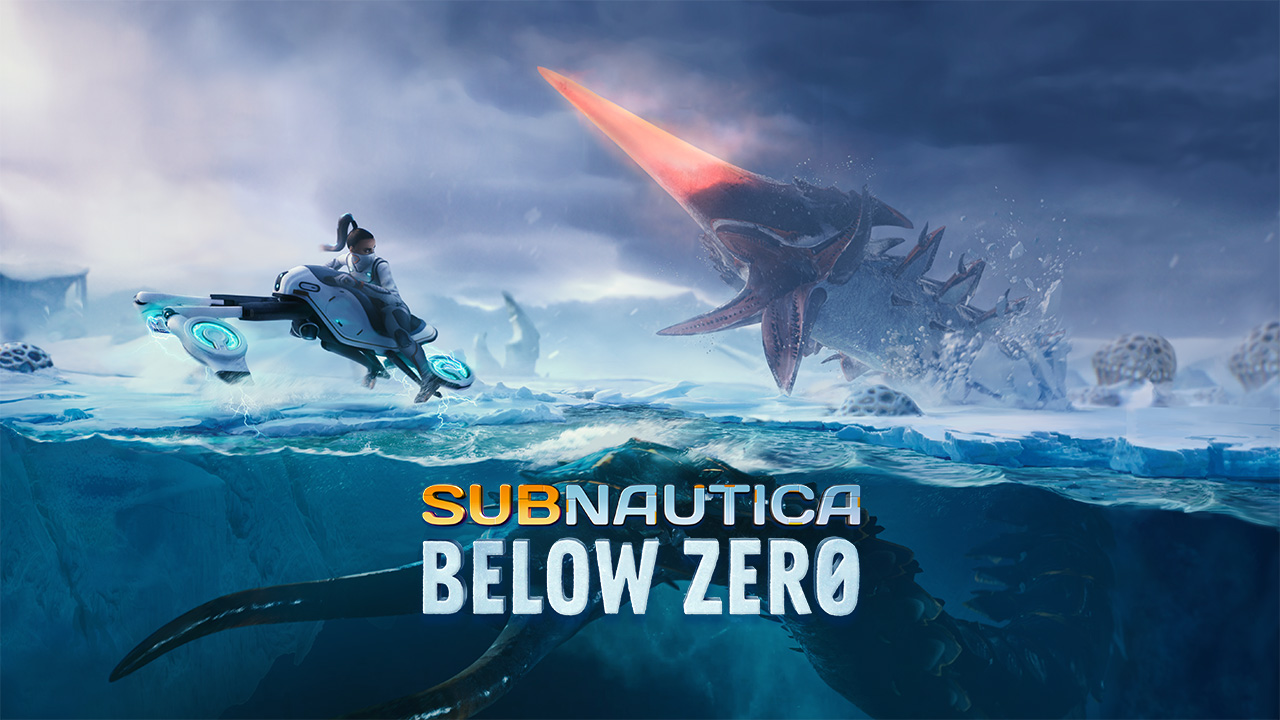
Subnautica: Below Zero

Subnautica: Below Zero is the latest survival horror game from Unknown Worlds. Originally a mod for the successful Subnautica, this game is more evolutionary than revolutionary. However, it continues to deliver the almost perfect combination of exploration, tension, frustration, achievement and wonder as the original.

You play Robin Ayou, a xenologist investigating her sister’s death. The game starts by jumping out of an orbiting spacecraft over planet 4546B, the same as Subnautica, amidst a meteor shower. After a quick scramble to the safety and warmth of the ocean, the game settles into a more sedate pace driven by the player.

While Subnautica: Below Zero has a storyline, it only serves to bookend the core game loop. The player’s curiosity and experiences drive the real story. While the voice-acted log entries from previous inhabitants flesh out the world and give context, a narrow escape from a leviathan is far more memorable.

The game loop consists of exploring the environment, avoiding threats, gathering materials then crafting tools, vehicles and bases to venture further. Robin starts with minimal resources and capabilities but has a Star Trek-like fabricator to prepare food and create tools.

The game loop’s freedom occasionally frustrates. If you miss a cave that leads to the next area or a fabricator blueprint to progress, there may be few hints to guide you.

The game’s setting moves from the sunny tropics into the frigid arctic. Some biomes are familiar from Subnautica, like the safe shallows and kelp forest, and some are new, like the vertical ecosystem of the lilypad islands and fantastic, disorienting crystal caves. The move allows some rebalancing. For example, the oxygen plant replaces brain coral, switching a permanent source of oxygen for a temporary one when doing “the bends”-defying freedives.

However, the main reason for the move is mechanical. The game needs equivalent challenges on land as underwater. Moving the setting to the arctic replaces the standard underwater oxygen meter with a hypothermia meter and oxygen plants with steam vents. Add aggressive fauna, exploitable flora and the Snowfox, a hoverbike, and you have a challenging, rewarding and intuitive environment to explore.

The flippancy implied above does not mean the on land environment lacks thought or care. For example, the thermal lillies found near Robin’s initial crash site keep Robin warm, subtly teach the player to leverage their environment, provide something to scan and reinforce the planet’s alienness. There is a trick to counter each land predator, which Robin can discover through trial and error, old logs or fabricable blueprints. Pengwings and penglings are cute, and the robotic spy pengwing has the right mixture of retro-futurism and novelty. The fast-changing weather means players must be on their toes or risk disorientation.

As for below the water, the map is smaller both laterally and vertically than Subnautica. Many areas are claustrophobically narrow and maze-like. Getting lost is easy. Players should carry extra food, water and supplies just in case. Beacons and scanning rooms also help.

The smaller map and narrower spaces dictated vehicle changes from Subnautica to Subnautica: Below Zero. The modular and practical sea truck replaces the mammoth cyclops, which would be too large to manoeuvre, and the zippy sea moth, whose speed would highlight the smaller map. Sonar, required to navigate the open spaces of the original game at night, is no longer needed.

The developers have crafted a sensory experience similar to games like Abzu or Beyond Blue. I often stopped and listened to the gentle sound of rain on the water’s surface, swam with the glow whales or marvelled at aurorae. The colours are oversaturated, making the world feel vibrant and “larger than life”. Each biome also has a distinct colour palette, helping segregate them or the player locate themselves at a glance.

The soundtrack is very similar to the original. Extended, sweeping chords give the impression of the vast unknown. The initial songs use electronic instruments, providing a science fiction feel. “Artic Peeper”, for example, reminds me of the Mass Effect series’ citadel music. However, later tracks give way to xylophones, claves and drums, creating a more primitive, haunting and naturalistic feel.

Subnautica: Below Zero’s themes are subtle. When zipping along in the sea truck, failing to dodge the oblivious and slow swimming fish, I considered humanity’s impact on planet 4546B. Experiencing the natural wonders through Robin’s eyes is only possible because her technology and resource gathering did not materially impact the environment. Can humanity have its cake and eat it, too? The game’s nonviolence and the lack of weapons are also well-publicized.

While the game’s genre is “survival horror”, Subnautica was more effective at generating tension and dread. Perhaps this was my meta-game thinking, but the predators and environmental hazards felt more challenging than frightening. No biomes matched the old blood kelp biome. Predator roars lost their impact from overuse and could have been more distinct.

The relative lack of Subnautica: Below Zero’s new content and ideas is more a testament to the original’s strength than the new game’s unoriginality. The third-party music tracks discoverable for the in-game jukebox are a tribute to the original’s popularity and impact. Those looking for an encore with a new map, residents and story will be pleased. A straight play through the storyline takes about 20 hours. However, most will take far longer as they explore every inch of the environment at their own pace. Remember to play with the pengwings!

“Horizon: Zero Dawn” Review

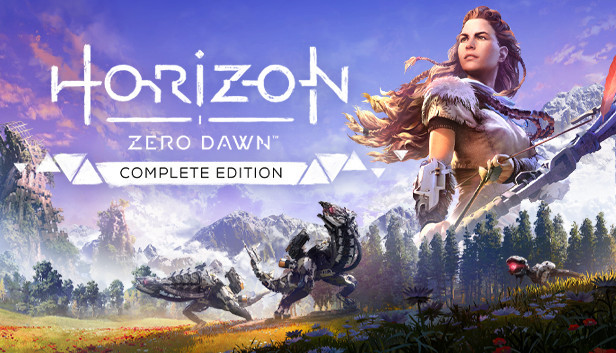
Horizon Zero Dawn™ Complete Edition on Steam

Without reading any of the copious reviews and material on Horizon: Zero Dawn, it is obvious the elevator pitch was akin to “bows and arrows against robotic dinosaurs”. If this game were just a first-person shooter, it would have been merely notable. However, it is so much more.

Horizon: Zero Dawn is a post-apocalyptic, action role-playing game with a third-person camera view. You play as Aloy, an outcast with an unexplained past. A chance encounter as a child in an ancient ruin provides a “focus”: a small, temple-attached device that interacts with ancient computers and detects nearby enemies. When she comes of age, Aloy initially tries to prove herself to her tribe but is then catapulted into a much larger story.

The combat system is the game’s main drawcard. The robotic targets are stronger and tougher than Aloy, particularly in melee. Success requires planning, stealth, laying traps, using terrain, targeting specific components revealed by Aloy’s focus or using particular damage types. Later, Aloy gains the ability to befriend temporarily or ride weaker robots.

These elements create a more cerebral combat system, requiring the forethought and timing of a true hunter. Learning strategies for specific enemy types through experimentation makes combat more straightforward and predictable. Successfully taking down larger robots for the first time is exhilarating.

However, the need for planning or enemy-specific strategies can be challenging early in the game. Limited save points (bonfires) can make the game unforgiving but ensures players do not expend too much ammunition when they fail.

Aloy will not get far without crafting or, more accurately, collecting resources. Aloy can craft ammunition and consumables, even in combat, and will need to do so for longer fights. However, besides giving the sense of “living off the land” and that robots are a resource humanity exploits, the game would have lost little by omitting it and increasing carrying capacity instead.

Exploration is a huge part of the game. Apart from providing crafting materials, exploration offers glimpses into the ancient world through ruins or still functional devices that Aloy can interact with using her focus. There are a few collection quests, and players can purchase maps to help.

The game contains vertigo-inducing but simple climbing puzzles, like the Assassin’s Creed series, and tracking via her focus, like Geralt from The Witcher series. These are integrated well into quests but add variety more than a challenge.

The second drawcard of Horizon: Zero Dawn is its story and themes. Unlike many post-apocalyptic games, Horizons: Zero Dawn isa game about hope. It portrays the apocalypse that befell the ancients with desperation, humanity and grim determination through ghostly holograms and diaries. However, Aloy describes these as “memories”, segregating them from her time as humanity finds its new footing.

The game’s environment reflects this hope. The new world is lush and vibrant. Unlike the muted greys and browns of the Fallout series, there are vivid greens during daylight, faerie-like moonlight and fireflies at night and beautiful reds, pinks and oranges at dawn and dusk. The highly saturated colour palette is more reminiscent of Terra 2 from The Outer Worlds.

The soundtrack, particularly “Aloy’s Theme”, simultaneously mourns the loss of the old world and holds quiet, resolute hope for the new one. The flutes, reed instruments and drums give it a tribal or primitive feel. Julie Elven’s wordless vocals give it a delicate solemnity befitting the game’s strong female protagonist.

The game uses perspective, both Aloy’s and the players, to demonstrate Aloy’s character and build the world around her. Initially, these perspectives are identical. The story starts with Rost, Aloy’s father-like stoic mentor, explaining little and frustrating both the player and Aloy. Aloy is an outsider, a literal outcast from the Nora tribe, and she slowly but resolutely learns about her tribe, fights for a place in it and then progressively the broader world. The player learns with Aloy.

However, the perspective soon diverges. The flashback storytelling mechanism granted by Aloy’s focus shows her insights into the ancient world like advertising or chats between Internet hackers. These would, at best, confuse her. However, the player can understand it and contrast the pre-apocalypse world with the real world.

The environment also invites a dual perspective. A chunk of twisted metal to Aloy is an abandoned car to the player. A strange stone outcrop to Aloy is a ruined building to the player. Is the function of a mug evident to someone who has never seen one?

This dual perspective is also apparent in Aloy’s interactions. For example, Aloy’s first encounter with Erend sees him try to chat her up. He thinks she is just a naive native girl. However, Erend’s intentions are lost on Aloy in this delightfully subtle exchange. Aloy is steadfast but not omniscient, giving her room to grow and making her sympathetic.

These perspectives converge as Aloy learns about herself and the world. This change is not just the bigger picture thinking common to RPGs as the protagonist gains levels, explores the setting and progresses the story. For example, Aloy initially considers Teersa, one of the Nora tribe’s high matriarchs, wise and compassionate. Later, Aloy and the player look at Teersa with wiser eyes, seeing Teersa’s limitations and ignorance.

Aloy’s primary motivation is compassion, even after being initially an outcast. She helps others, not for reward but because she intrinsically knows it is the right thing to do. I found this altruism interesting and refreshing. Modern games often try to give players different moral choices. I tend to pick the “good” option like many, but an “evil” or selfish Aloy would be inconsistent.

Contrast this with Sylens, revealed later in the story and one of the more memorable characters from an otherwise unmemorable cast. I initially saw a second Rost, mirroring Rost’s stoicism and refusal to explain his past and motives. Whereas Rost was a mentor to guide and assist Aloy with the new world, Sylens was one for the ancient world. However, Sylen’s lack of empathy and unforgiving nature hint at something else. He reflects the ancient world’s complexities and compromises.

Horizons: Zero Dawn also examines the decoupling of knowledge from wisdom. Knowledge without wisdom leads to greed and hubris (and the apocalypse that befell the ancients) or exploitation (Sylens). Wisdom without knowledge leads to vapid kindness or irrational cruelty (the Nora high matriarchs). It is easy to see modern parallels.

As for criticisms, those looking for something more gritty may find the altruism and use of the “chosen one” trope trite. Despite the original setting and robotic enemies, Horizon: Zero Dawn relies on many well-trodden RPG elements. Any inclusion of relatable primitive or tribal humans invites criticism. The PC port could have leveraged the keyboard better and relied less on the cumbersome combat wheel.

However, Horizons: Zero Dawn does so much right to be a “must play” for hopeful explorers looking for a slowly revealed but emotionally powerful story. The 30 to 80 hours required to play the game, depending on how sidetracked they get, is not something they will regret.

“Elite Dangerous” Review

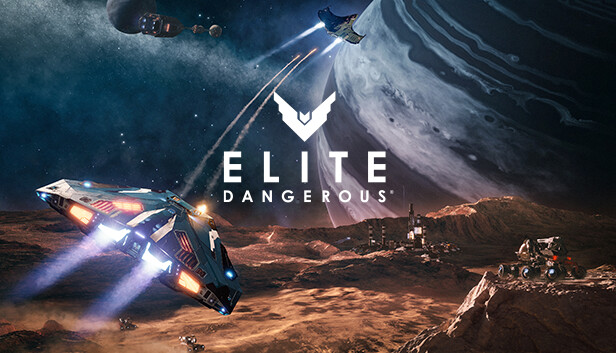
Elite Dangerous promotional image

Elite Dangerous is a space trading, exploration and combat simulator released in December 2014 and regularly updated since then. Based on the 1984 Elite that seemingly crammed a galaxy into 64KB, Elite Dangerous expands this to a massively multiplayer online (MMO) game with modern graphics and gameplay.

You play a pilot flying a single spacecraft. You start with a small fighter, then work your way up via combat, exploring, trading, mining, ferrying passengers and completing missions to earn larger, better or more specialized ships. The Horizon expansion adds landing on planets, driving a ground vehicle and limited multi-crew. The upcoming Odyssey expansion adds “space legs”, allowing pilots to leave their vehicles and walk around space stations and some planet surfaces.

Elite Dangerous is set in the Milky Way galaxy. All of it. As you zoom out on the galaxy map for the first time, its sheer enormity becomes apparent. The game is set a bit after the year 3300, where humanity has colonized “the bubble” around 150 lightyears from Earth, encompassing over 20,000 inhabited star systems. However, 400 billion stars are accessible, backed by hard science, where possible, and procedural generation, otherwise. Looking at the sky and realizing you can travel to most visible stars is a humbling experience.

Life in the Milky Way is not static. Like many space trading games, an economic and political simulation underpins Elite Dangerous. Perform enough missions for your favourite faction or fight along one side in a war and see the borders shift and economies wax and wane. Although more as a backdrop to weekly in-game events than a narrative, there are also ongoing events and lore.

While the original Elite’s graphics were appropriate for their time, it left a lot to the imagination. Elite Dangerous’s renders planets, nebulae, gas clouds, asteroids and other stellar objects beautifully. It has spawned a whole stellar cartography and photography community.

Stations’, settlements’ and ships’ beautiful graphics have an industrial, semi-realistic aesthetic. Space stations are gorgeously detailed, with triangular reinforcement struts, flashing warning lights and BladeRunner-like holographic advertising. Ships’ thrusters fire realistically as they manoeuvre. Lasers rake glowings arcs of molten yellow-orange metal on ships’ hulls.

The sound design is also exemplary. Ships have distinctive sounds. You can hear the subtle creaks and vibrations as a ship decelerates into a planet’s atmosphere or the shudders and groans as a landing pad retracts into a space station. Closing your eyes as you dock with a station reveals many small sound effects that add so much.

Unlike many games, Elite Dangerous’ soundtrack is more atmospheric and ambient than inspiring and memorable. One notable exception is the rousing orchestral choral theme for a capital ship jumping into a conflict zone. It is reminiscent of John Williams’s scores to any of the Star Wars films. Another exception is Straus’s “Blue Danube”. It plays whenever auto-docking and is a nod to the similar scene in 2001: A Space Odyssey and the original Elite.

While I play with neither, Elite Dangerous is considered one of the premier examples of virtual reality (VR) and using a HOTAS (Hands-On Thrust and Stick). Using both apparently creates an immersive experience few games can match.

I usually choose single-player games (note the blog’s name) with more apparent stories or themes. At first glance, Elite Dangerous does not fit that mould.

Instead, Elite Dangerous is an example of great game design. Despite some lingering bugs, Elite Dangerous consists of many different games strung together. At the lowest level are the simple mechanics like targeting, shooting and manoeuvring. The game combines these into dynamics like combat, exploration and trading. Above them, you have more abstract and strategic activities like advancement, supporting in-game factions or galactic superpowers. It reminds me of how Paradox Interactive, the developer of games like Crusader Kings and Europa: Universalis, builds games.

This breadth allows players to construct their own goals. One goal could be working toward an expensive or reputation-locked ship. Another could be travelling to the edges of the galaxy. Many choose to focus on the combat, whether it be against NPC opponents or other players.

While Elite Dangerous is an MMO, you can still play solo or with small groups of friends. I spent my first several weeks solo, but I still rarely interacted with a human even after “graduating” to open play. Almost all content is soloable. Even PvE content seemingly made for cooperation, like fighting aliens introduced in the recent expansion, is frequently soloed.

That does not mean players are absent. While the game economies and politics are not player-centric like in Eve Online, there are many thriving squadrons and player groups, both for good and bad. PVP-focused players frequent star systems where others congregate, praying on the weak. By comparison, the “Fuel Rats” is a group of volunteer players who help those that have run out of fuel.

Meanwhile, Elite Dangerous’s greatest strength and biggest weakness is its demand for self-discovery. While there are some tutorials, players must learn most of the game’s mechanics themselves, either through player-generated content or trial and error. Even seemingly basic things like landing a spacecraft are difficult for first-time players. This demand attracts some but repulses many.

Elite Dangerous delivers a form of retro-futuristic nostalgia. The crackly radio transmissions you overhear are reminiscent of the attenuated analogue radio used during the moon landing. Spacecraft fly like World War II or Korean era fighters, at least until you turn off “flight assist”. All text in the user interface is uppercase like early computers.

With a few exceptions like faster than light travel, Elite Dangerous is about a realistic simulation of the future as you can find. In its future, artificial gravity does not exist, meaning spinning space stations or. Physics rules spaceflight and spaceship modifications. Make it heavier and your spacecraft will be slower and less manoeuvrable. Space is big. Travelling, even with a faster than light drive, takes time.

Elite Dangerous is a game for serious space fans willing to invest time learning the game. It is also for those comfortable setting their path. Those looking for something thematic or more casual will find it unfulfilling.

Why did I play this game? I remember watching Carl Sagan’s Cosmos as a young child. He talked of a ship of the imagination, allowing you to travel to only dreamt places. Elite Dangerous provides that. I felt the joyous wonder when I first jumped into a system, seeing the kineticism of hurtling toward a star when decelerating. I felt it when I saw my first black hole and the light lensing around it. I felt it seeing starlight reflecting off an alien gas giant at sunrise, illuminating a ring of asteroids. Elite Dangerous is for those happy to head to the “second star to the right and straight on ‘til morning”.

“The Outer Worlds” Review

The Outer WorldsThe Outer Worlds, a science fiction action adventure role playing game, is a spiritual successor to Fallout: New Vegas. While Bethesda developed most of the revamped Fallout series, Obsidian Entertainment developed Fallout: New Vegas, widely considered to be amongst the best of them. Obsidian has done it again.

The “Fallout” series contrasted blithe advertising against bleak nuclear devastation to show how consumerism had detached us from reality, like a subtler Rad Bradbury’s There Will Come Soft Rains. This contrast was particularly evident of the pro-industry, pro-American optimism and nationalism of the 1950’s, whose aesthetic the “Fallout” series borrowed for its retro-futuristic style.

However, The Outer Worlds takes this in a different direction. It retains the futurist 1950’s aesthetic but immediately confronts the player with capitalist authoritarianism. What starts as kitsch descends into absurdity then horror as the bureaucratic oppressiveness and repetitive, vapid advertising jingles grate.

Meanwhile, the almost surreally vibrant alien landscapes replace the bleak, practically monochromatic art style of the “Fallout” series’s post-nuclear war America. The scene is relatable enough with plants and water and clouds. However, the plants are strange puffballs and oversized mushroom trees. While the pinks and oranges of clouds in a sunset are beautiful, they are set beneath the red rings of an alien gas giant.

This alienness extends to its soundtrack. As the character first steps onto a planet, the music has sequences of solos followed by answers from the broader orchestra after unsettling, awkward pauses. Even the title theme played over the main menu starts with two flutes playing at their lowest register, giving an ethereal feel, followed by a subdued, almost mournful but resolute motif.

Both the music and art differentiate scenes and anchor the player in a location. For example, a visual overload of neon assaults the senses as the door to the promenade on the Groundbreaker recedes. The bass riffs with subtle harmonica overtones played when entering the Edgewater are reminiscent of the wild west. The intense primary colours of Terra 2 (green grass, blue water or red lava and rings) contrast against the yellow, sulphurous tones of Monarch and the dull, monotonous grey of Byzantium.

Like the “Fallout” series, The Outer Worlds thrusts the player as an outsider into a plot that subverts the status quo. Whether this subversion is for the better or worse is determined by the player’s choices. The ultimate enjoyment of the game is exploring choice and effect. A cathartic, offensive approach is an option but finding the best outcome, typically a non-violent compromise, is often harder, requiring exploration and lateral thinking.

Mechanically, The Outer Worlds is generally an evolution from standard science fiction RPG fare. As the character advances through levels, they increase skills and choose special abilities, called perks, that give bonuses. A time dilation mechanic replaces “Fallout”’s VATS, allowing the player to aim at discrete body parts to inflict penalties like blindness for a headshot. There are crafting mechanics for those so inclined.

However, the “flaw” system is noteworthy. They allow taking penalties for a bonus perk. As tabletop RPG game designers have known for some time, imperfect characters are often more fun to play than perfect ones. Flaws enshrine role playing decisions into mechanics and give a greater challenge. They are optional but must be earned. For example, you can gain phobia of a particular species, represented by temporary penalties, by fighting them too often.

The Outer Worlds also adds a new stealth mechanic by adding a personal holographic projector. Instead of save scumming your way around guards, after finding the appropriate MacGuffin, you disguise yourself as one of them but with a strict time limit. When it expires, you can renew the time limit by convincing a guard to let you pass, a task that becomes more difficult each time you try. It makes a welcome change of pace.

As for side quests, the inclusion of Pavarti’s love affair with Junlei as most fleshed-out companion quest will wrinkle the nose of some as political correctness. However, her endearing awkwardness, the relationship’s slow build and the absence of physical love scenes create a restrained and mature approach often lacking in earlier RPGs like Mass Effect.

Including Scientism, a religion to underpin the authoritarianism is a brilliant piece of world-building. Why justify people’s caste-like working conditions when you make it religious duty? Why circumvent science like other religions when you can justify fate with mathematical determinism? More exploration of these through the eyes of your companion Vicar Max or the NPC Graham would have been fascinating.

However, the purpose of religions like Scientism and its polar opposite, Philosophism, is not existential introspection like in Nier: Automata. Instead, they are contrasting strawmen, both with good and bad points. They allow the player to plot themselves on a spectrum and appreciate significant decisions are often between imperfect options.

The Outer Worlds is also not without humour. While it eschews overt pop culture references to emphasise the setting’s remoteness, it does not take itself too seriously. The deadpan sarcasm of ADA, your ship’s onboard computer, sometimes takes a moment to process but leaves a wry smile. The conversation options to persuade guards to let you pass alludes to Obi-Wan Kenobi’s “these are not the Droids you are looking for” from Star Wars. The name of your ship, the “Unreliable”, is self derogatory. There is even an achievement for shooting at opponent’s crotches during time dilation.

The Outer World’s single-player campaign as twenty to thirty hours of gameplay, depending on how much you explore or indulge the side quests. This game, a homage and evolution of the “Fallout” series, is lovingly crafted and I look forward to the inevitable sequel.

“Stellaris” Review

Stellaris

Stellaris is Paradox Interactive’s entry into the science fiction 4X (eXplore, eXpand, eXploit, eXterminate) genre. Now almost four years old and after many patches and DLCs, I decided to revisit it.

The Paradox Interactive formula combines multiple simple but faithful systems into a challenging whole. For example, historic Paradox Interactive games like Europa Universalis IV or Hearts of Iron IV deal with decisions and challenges appropriate for their periods. You can recreate historical events, experiencing similar pressures and choices to historical figures, or rewrite history.

Science fiction lacks historical references. Some science fiction-based 4X games substitute a particular narrative or setting. Instead, Stellaris creates a stage with elements drawn from many and varied science fictions settings, not to mention a plethora of lesser-known, seminal science fiction authors.

For example, you can build a “Death Star” from Star Wars. You can play out the clash of ancient empires, taking sides or uniting the younger races against them, like in Babylon 5. You can try to assimilate the galaxy like Star Trek’s “Borg”. You can build a ringworld, like in Halo, or an ecumenopolis (cover a planet with a single metropolis), like “Coruscant” from Star Wars. You can defend the galaxy from Warhammer: 40,000’s Tyranid-like scourge. You can form a Star Trek-like federation, defending more peaceful empires from militaristic ones while taking advantage from cooperation.

However, the choices do not end there. You can play as a corporation and build branch offices on other empire’s worlds. You can play as a robotic empire that keeps its biological creators as pampered trophies. You can play as lithovores (rock eaters) that colonize planets by hurling asteroids at them. You can unearth remnants of precursor empires. If you conquer another race, you can shower them with utopian wealth, evict them, kill them, chemically sedate them, enslave them, eat them or calmly welcome them as fellow citizens. The choice is yours!

All 4X games are about telling stories, whether they be faithful recreations or your own. However, Stellaris enables a breadth and depth of stories rarely seen in 4X games. Stellaris also tells stores at the grandest scale, showing an evident love for galaxy-spanning science fiction. Some games are triumphant victories, with grandiose achievements emerging from in-game decades of planning. Some games are tragedies, succumbing to your enemies’ fleets or backstabbing politics.

Like many Paradox Interactive games, Stellaris requires a significant time investment, both to learn the mechanics and run a game (20 hours or more). Despite recent improvements, it also noticeably slows towards the end of a game. However, if you have the time and desire to climb the learning curve and write new stories amongst the stars, Stellaris is a game for you. Consider investing in DLCs, too, which have improved the game markedly over the years since its release.