Unknown's avatar

About Anthony Langsworth

I am a self-motivated, adaptable, outcome-focused enterprise and solution architect that gravitates toward technical leadership roles. I am adept at building relationships and translating between business and technology practices. My experience covers architecture, management, security and software development roles over 20 years, from multiple startups to global technology companies. I am a frequent innovator with many patents; maintain many architecture, agile and security certifications and contribute to open source software.

“The Artful Escape” Review: A Rock Fairytale

The Artful Escape is a rock opera masquerading as a musical platforming game from the Australian development studio Beethoven & Dinosaur. 

The Artful Escape follows Francis Vendetti, a teenage guitar prodigy bristling under others’ expectations. An improbable encounter catapults him into a universe-spanning, mind-expanding adventure. Francis sheds his past and discovers who he wants to be.

The gameplay shifts between three loops. The first is exploration and conversations with NPCs. The second is light platforming. The third is playing music by copying button presses, emulating playing different notes.

However, the gameplay is almost unimportant. It is more something to do while gawking at the supersaturated visuals and basking in the music. Holding “X” on the controller allows Francis to improvise on the guitar (“shred”) as he runs, leaps and slides through alien landscapes. I could not wipe the grin off my face from the sheer joy and spectacle. 

The Artful Escape‘s universe has a Douglas Adams-like absurdity and comedy. For example, Francis Vendetti flies a warp turtle through the cosmic extraordinary to a starship called The Galactic Lung. He visits the Hyperion Wailzone, where the danger level is “dolphin”. 

The game’s music is a love letter to the 1980s, particularly psychedelic rock. Much of the inspiration and music come from Johnny Galvatron, one of the developers. He fronted the band “The Galvatrons” in Australia and the UK in the late 2000s. The Artful Escape is part celebration, parody and critique of the music industry.

Unfortunately, The Artful Escape is short, taking about five hours to finish. Those looking for challenges or meaningful choices will be disappointed. Sometimes holding “X” while jumping or moving is awkward.

However, The Artful Escape is bursting with spectacle, absurdity and glee. Its message is hopeful and empowering. It is a fairy tale for the rock era, a monument to the joy of music and self-actualization.

How the Barbie Movie Made Me Resent Transformers

My wife and I saw the second Michael Bay Transformers movie about fourteen years ago. She hated it and swore that, if they ever made a Barbie movie, I had to see it with her. So I did.

Barbie is a movie of its time. It is superficially absurd – a story of dolls in a pink plastic world that need to break out of it. It introduces and then preemptively answers criticisms of Barbie and the culture wars that surround it. It is self-aware enough to be fourth-wall breaking. 

The Barbie movie also helped me understand why I resent the early Transformers movies. 

The early Transformers movies are the embodiment of boys’ fantasies. They focus on militaristic themes of honour and sacrifice, plots revolve around saving the world or galaxy, and the villains are often alien or evil corporations. 

There is nothing inherently wrong with this. I love escapist military science fiction. I enjoyed seeing the toys I played with fight as I had imagined. I cheered for Ironhide’s rocket jump in the 2007 movie and Optimus Prime regularly kicking butt.

However, the boys that first played with the toys and the world around them have grown older. As subsequent Transformers movies were released, they merely revisited the same ground. 

Frustratingly, the Transformers universe has the potential to tell meaningful stories. Immigrants fleeing persecution to fight for their adopted country speak to core American values. The benefits of industrialization, coopting technology to work against us, and the challenges of alienation promise much. 

The Transformers movie’s characterization is also poor. Most Transformers are unmemorable robotic cannon fodder. If only the toys had “tech specs”, including personalities, relationships, strengths and weaknesses. 

No characters grow or change in any significant way. For example, take the audience’s point of view character, Sam Witwicky. He is constantly caught between ogling and saving Megan Fox’s damsel in distress while real men fight around him. He is a child thrust into an adult world.

One could argue that Transformers plays it safe with its plot and characters. Staying away from anything remotely political means not alienating your audience. Much of the franchise’s revenue has come from China. American values have much less of an appeal there. 

However, contemporary Marvel movies demonstrated how to write Transformers movies better. For example, “soldier” and “leader” are roles, not personalities. Flaws make heroes relatable, not unworthy. You can write compelling stories that appeal to Transformers‘ target audience and markets, have relevant themes and good characterization. 

Part of the problem is Transformers comes with age-appropriate lore and narrative. Autobots wage war against Decepticons as they flee their homeworld, Cybertron. Michael Bay had to retell the expected stories.

Barbie lacks established lore, and any girl-friendly story would likely devolve into another unremarkable, saccharine kids’ holiday special. 

However, the Barbie toy has been a centrepiece in the ongoing debate around women’s rights, self-image, commercialization, sexualization and the competing pressures to excel and conform. Ample social commentary is the only way such a modern Barbie movie could be made. Besides paid car and milk placements, Transformers can happily exist in an almost pretentious bubble.

The Barbie and Transformers movies were created for the generations that grew up with the toys. The Transformers franchise is happy to replay and recreate that world. It appeals to boys and boys-at-heart alike. 

Barbie is aimed at women, particularly mothers playing with their daughters. These women are caught between Barbie‘s seductive simplicity and innocence and the impending complexity of adulthood that will shatter them.

For some, particularly men, these different views of nostalgia can feel threatening. Barbie‘s poignant feminist monologues can feel like clumsy lectures. 

However, Barbie‘s themes are close to real life for many. As much as Margot Robbie’s Barbie would like to, you do not zone out into fantasy and return at the movie’s end, as with Transformers

The silly, shallow portrayal of men like Ryan Gosling’s Ken or Will Ferrel’s CEO of Mattel can also feel disingenuous. Thrust into a matriarchy, some feel the satire punches down at them.

However, most characters in Barbie are disarming caricatures, allowing frank criticism. It is similar to the fawning regulator and blind rating agency in The Great Short.

The Barbie movie is as much a journey for Ken as it is for Barbie. Ken evolves from an accessory to someone not defined by his relationship with Barbie or his superficial understanding of masculinity. It is more than Sam Witwicky ever did.

While profound, Barbie says nothing we have not heard before. Acknowledging feminism and Barbie‘s place in it does not devalue other concerns or issues. The movie uses feminism to advance the plot like the power of honour or duty regularly used in Transformers.

I will remember early Transformers movies with boyish glee for their special effects and escapist fantasies. However, from the opening scene that subverts 2001: A Space Odyssey, I will remember Barbie treating its audience as adults. 

The Michael Bay Transformers movies seem content to fool a generation of men that mindless shooting is sufficient entertainment. Even the 1986 animated Transformers movie had more heart and memorable characters. Transformers fans deserved better.

“The Unfinished Swan” Review: Painting with Heart

A monochrome frog in a swamp looking overlooking the title "The Unfinished Swan".

The Unfinished Swan is a first-person exploration and traversal game developed by Giant Sparrow, the same developer that created What Remains of Edith Finch. The Unfinished Swan is not new, having released in 2012 on PlayStation 3 and then on PC in 2020, but I only now got around to playing it.

You play as Monroe, a newly orphaned boy, inheriting from his mother a single painting depicting an unfinished swan. One night the swan leaps out of the painting. Monroe follows it, embarking on a magical journey through a surreal, dream-like world.

The Unfinished Swan‘s world is initially wholly white. However, Monroe can hurl paint drops onto it, revealing details like walls and furniture. The game’s world is a blank canvas that only solidifies when painted. For example, what was formless white is suddenly a black frog that leaps into a nearby pond.

As the game progresses, it introduces new mechanics, such as the physics-defying, AntiChamber-like puzzles; buttons and levers to activate ladders and bridges; or hurling water to encourage the growth of climbable vines. You can also find hidden balloons that unlock upgrades and additional material.

The game slowly reveals a fairytale-like story through narration, about or from the world’s prodigious but eccentric king, and storyboards, complete with child-friendly line art. The music is also ethereal, consisting of glockenspiels and light strings, reminiscent of Tchaikovsky’s Dance of the Sugar Plum Fairy.

Thematically, The Unfinished Swan views grief and impermanence through a child’s imagination. The normally mischievous act of splattering paint allows Monroe to find certainty, meaning and agency where there is none. The shared act of painting links Monroe with his mother. Metaphors have power.

The Unfinished Swan is also moving because, by seeing the world through Monroe’s eyes, we can experience things both superficially, as he does, and with an adult’s experience and context. Implication and inference also have power.

Despite its age, The Unfinished Swan still holds its own as novel and thought-provoking. It is short, taking under four hours to complete, and wraps up its story positively but with restraint. Those looking for something contemplative and unusual will enjoy it.

“Cloudpunk” Review: Heart in the Sky

Standing outside the Cloudpunk office in game. The neon "U" is dimmed.
Outside the Cloudpunk office in-game, with the neon “U” dimmed

Cloudpunk, developed by Ion Lands, is a third person, story-based exploration game set in a future, dystopian city. It has a distinctive voxel art style that is both beautiful and distinct.

You control Rania, an out-of-work musician and recent migrant to the city of Nirvalis. Destitute and desperate, she signs up for Cloudpunk, a pseudo-legal company that delivers packages away from law enforcement’s often-corrupt eyes. Like the player, she knows how the world works but is new to Nirvalis, becoming a compelling point-of-view character.

The game takes place over a single long, rainy night shift. Most gameplay involves piloting Rania’s flying car, or “HOVA”, like the Delorean from the Back to the Future series. Occasionally you disembark and walk around the elevated streets, picking up or delivering packages and talking to other inhabitants. 

However, you get the most out of Cloudpunk by taking the time to explore. Nirvalis’s verticality can be disorienting, and the HOVA’s controls can take some getting used to. Wandering reveals NPCs with interesting stories or discarded items you can sell. You can even decorate your flat.

This premise is excellent. It allows Cloudpunk to start on seemingly random deliveries, drip-feeding details about the world and its various strata. Delivering parts to someone doing illegal street racing? Check. Delivering food to the impoverished? Check. Delivering a pizza to an executive? Check. You just need to follow the rules: never miss a delivery or ask what is in the package.

However, Rania quickly gains some agency. Do you deliver a ticking package to the recipient, knowing it could be a bomb? Do you return a replaced HOVA part to the garage or sell it? While no choice branches the story, there are consequences.

This premise also allows for telling longer and broader stories. You visit some characters multiple times, slowly revealing their tales. Can you help a detective solve a case? What about unearthing more about Nirvalis’s history?

Outside the plot, Cloudpunk‘s voxel graphics are disarming but expressive, reminiscent of Minecraft. Volumetric lighting and lens flare render life-like graphics. You only notice the blockiness close to individuals or HOVAs, giving Cloudpunk a unique charm.

The city of Nirvalis is beautiful, even when rendered in voxels. The streams of HOVAs act like the city’s arteries, providing a relaxing, constant buzz and stream of lights. The Bladerunner-like neon signs and periodic audio advertisements for virtual holidays and insurance against computer viruses help make the world consistent and believable.

Cloudpunk‘s synthwave soundtrack is atmospheric, on-point for the genre and sets the mood well, such as the more meditative pieces when driving, the pressure of an urgent delivery or a club’s upbeat, drum-heavy dance track. The track names read like cyberpunk staples, like “Neon Rain”, “Sleepless City”, and “A Million Different Faces”. One important track is different, though.

Cloudpunk keeps the mood in a deliberate balance. Like in many cyberpunk stories, they wanted Nirvalis to be distant enough from the modern day to be disarming but close enough to be relevant.

On the one hand, there is depressing, omnipresent exploitation and inequality. Rapid gentrification means rents can rise by the hour, evicting people instantaneously. The ruthless and efficient debt corps practically enslave without remorse, if needed. It is easy to despair at the environmental damage and the crumbling city.

On the other, there are many lighter moments. Advertisements warn about the unlicensed playing of jazz or retro computer games. Gang members build children’s playgrounds to be subversive. Vendors sell cherry pies with “real” cherries. You could not taste the difference, anyway. 

Canus, your AI canine assistant uploaded into your HOVA, also plays a vital role in setting the mood. Part researcher, part moral compass and isolation-busting companion, Canus’s naivety is endearing. The contrast with Rania’s world-weariness also subtly focuses the player’s attention on the moment’s moral quandary.

While full of cyberpunk tropes, it leverages them to reflect on important questions, not just as a lazy crutch. For example, how do we treat each other in a world where we value humans and intelligent AIs by their wealth? Can we learn to love those with whom we vehemently disagree? At its core, Cloudpunk is a game about heart. Nirvalis has never needed Rania, a Arabic name meaning queen, and her music more.

Cloudpunk takes about ten hours to finish, not outlasting its novelty. It will appeal to fans of the cyberpunk genre or those looking for something unusual, pensive and emotional.

“Diablo IV” Beta Review: Having It Both Ways

Lilith holding Diablo’s skull next to the Diablo IV logo

The recent free “server slam” weekend was an excellent chance to experience a late beta version of the upcoming Diablo IV. After my Path of Exile foray, I wanted to see Blizzard’s forthcoming offering and how it compared.

Action Role Playing Games (ARPGs), a genre that the first Diablo practically founded, has come to be dominated by live service, “forever games” aimed at hardcore players. The story, characters, and world-building take a back seat to optimising character progression and end-game power, like in Diablo III and Path of Exile.

Diablo IV aims to put the “role playing game” back into “action role playing game”. It delivers Blizzard-standard fantastic cut scenes. It promises a long campaign with biblical, mysterious, dangerous antagonists and prophetic dread. Those wanting immersion in atmospheric and sometimes squeamish gothic horror will not be disappointed. Memorable and relatable characters are back. Saving the world (again) gets old. Saving someone you care about means more.

The success of Diablo IV will likely depend on how you measure it. The buzz created by a large existing player base, previous goodwill, social media-friendly cut scenes and copious beta programs will likely ensure significant initial sales. 

However, Diablo IV‘s longevity and long-term player counts depend on appealing to the hardcore crowd. Those focused on the story will play through the campaign and then move on, perhaps revisiting occasionally. MAU (Monthly Active User) or DAU (Daily Active User) targets require people to keep playing (and paying). 

Thankfully, Blizzard is trying to create a game that appeals to both story-driven casual and optimisation-driven hardcore audiences. The server slam demonstrated the appeal to the former. Unfortunately, the server slam’s level 20 cap makes judging late-game content, important to hardcore players, harder. 

The potential is there. Diablo IV promises a huge paragon progression path after level 100 and seasons. Adventure mode allows players who have completed the campaign to bypass cut scenes and the main quest line for new characters.

However, Blizzard also needs to get the basics right. Many have written about Diablo IV‘s uneven class balance. Sorcerors were considered overpowered, barbarians underpowered, and necromancer pets were both at different times. 

The classes shown in the server slam are unlikely to be their final versions. Balance adjustments will continue before and after the release. However, resource limitations and risk prevent the designers from changing much before the June release date.

Many other design changes since Diablo III are both good and bad. For example, automatic enemy scaling always ensures an appropriate challenge. This auto-scaling means players can advance through the content at their own pace. Yet, not having the opportunity to be over- or under-powered can reduce the feeling of achievement or challenge.

Diablo IV procedurally generates dungeons like most ARPGs, but the above-ground world is fixed. This decision allows incidental player interactions, whether cooperative, social or PvP, instead of just at hubs. However, these interactions may not be always welcome.

The designers then leveraged this fixed, open world to facilitate and reward exploration. They hid temporary events or dungeons in corners. The reputation mechanic rewards focusing on particular zones. This decision, at odds with recent ARPGs, appeals to the less mechanically-focused players. However, it forces mechanics-oriented players or speed runners to waste valuable time.

Some design decisions make mechanical sense but threaten to break immersion. Limiting healing potions to four helps the designers balance fights. It simplifies healing and inventory management for newer players. However, boss fights broadcasting when they will drop potions on their health bar seemed too convenient. Non-boss creatures dropped health potions like rain, too, which seemed excessive.   

What I enjoyed most during the server slam were the little things. Revisiting Tristram, hearing its spine-tingling motif and being chased by the Butcher reminded me of the best bits of early Diablo games. The reveal of Inarius after ascending the long, ivory-coloured staircase was wonderful. I loved Sanctuary’s (literal and metaphorical) cold and unforgiving nature. 

That probably puts me in the more story-driven audience, focused on the lore and the world. Diablo IV may not be a “forever game” for me. Diablo III‘s early focus on the auction house and repetition put me off. However, the server slam made me impatient to see Diablo IV‘s story unfold. I hope Blizzard realises the game’s potential for both audiences, not just me.

“Path of Exile” Review: An Optimization Challenge

Path of Exile is an action role playing game and a proud Diablo II clone. At almost ten years old, Path of Exile has ballooned from its original three acts. It now groans under the weight of ten acts, different game modes, seasons and crafting. It is “free to play” but, thankfully, not “pay to win”. 

Path of Exile is not the typical game type I play or review. I prefer role playing or adventure games with dialog, characters, settings and stories that I can analyse and deconstruct. However, as an old-time Diablo player and with Diablo IV on the horizon, it was time to hark back to a genre that I sank many hours into years ago.

For those unfamiliar with the Diablo formula, Path of Exile‘s setting is a magical fantasy world consisting of connected, randomly-generated maps. You control a single character’s movements and abilities via a fixed, isometric camera. You kill monsters and upgrade gear, occasionally levelling up, allowing you to defeat more powerful monsters and equip better gear. You play online to mitigate cheating and allow optional interactions with other players.

Path of Exile follows not just the Diablo formula but its style. Few games will match that haunting musical motif and unmistakable gothic vibes from the town of Tristam back in Diablo I. However, Path of Exile comes close, whether it be the claustrophobic shadows revealing maze-like passages or the pseudo-Christian iconography.

That said, Path of Exile is also distinct from Diablo. Different upgrade items are used as currency instead of gold. Potions refill with damage dealt instead of being consumed on use. Abilities, represented as gems socketed in items, can be easily swapped out. The number, type and connections for item gem sockets are almost as significant as the item’s various enhancements and bonuses.

I initially approached Path of Exile as I would an RPG. I took my time to explore each randomly generated map, making sure I missed nothing. I collected and sold all the dropped gear. I spoke to each NPC and absorbed the lore. I often spent too long in lower-level areas, trying to ensure I could handle whatever the game threw at me next. 

However, there are better ways to approach Path of Exile. Like most RPGs, many will say Path of Exile is a power fantasy about defeating endless swarms of creatures while saving the world. That is only superficially true. Death is a temporary setback outside hardcode mode, respawning you a short distance away without losing life or equipment. Quests are few, and bosses serve only to gate progression. The names of NPCs and the various opponents matter little. Most gear dropped is trash. 

Instead, Path of Exile is closer to a factory game like Satisfactory or Factorio. You construct a factory (your character) to convert raw materials (gear, abilities and skills) into increasingly complex processed goods (better damage and survivability). In both game types, players are motivated by speed and efficiency and enjoy tinkering with new tactics to eke out increasingly small improvements.

The only actual failure state in Path of Exile is a character that cannot progress due to poor skill and gear choices. While you can refund some individual skills purchased via level-ups or some quest rewards, the designers intentionally made rebuilding difficult, if not impossible. Perhaps better factory game analogies are those less forgiving of early mistakes, like Frostpunk or Ixiom.

Path of Exile also suffers from many of Diablo‘s inherent problems. Items are randomly generated and dropped liberally, often filling the screen with useless gear. Creatures, spell effects, and darkness can devolve fights into indistinguishable chaos, making important details hard to discern. The game does not explain its mechanics, relying on experimentation or third-party guides. Its randomly generated maps provide some exploration opportunities but do not increase replayability.

Path of Exile also often introduces side content in the early or midgame, like Delves or Heists. This timing means players can only progress through them a little, and their rewards are unclear. It sometimes requires metagame thinking to distinguish them from the main quest.

These problems make Path of Exile challenging for new players. For example, the passive skill tree and the number of interacting mechanics are meme-worthily huge. The choices can paralyse novice players. Creating an underpowered character whose progression grinds to a halt midgame is easy.

However, that challenge is just the way that hardcore players like it. Path of Exile is a game unapologetically designed for players that enjoy creating new characters, spending ever-decreasing hours to speed them through the game and test them against the end-game challenges. The designers aimed at those who enjoy spending hours farming rare drops to find that minor upgrade.

You can still play Path of Exile as a power fantasy, at least until the last few acts, and it is worth the price, considering it is free. The game can be fun for a quick, meditative play session or longer, such as when starting a new character. 

However, Path of Exile is due for an overhaul. Its systems need streamlining, and its plot is straining under the weight of numerous expansions. Path of Exile II, currently in development, will likely address these.

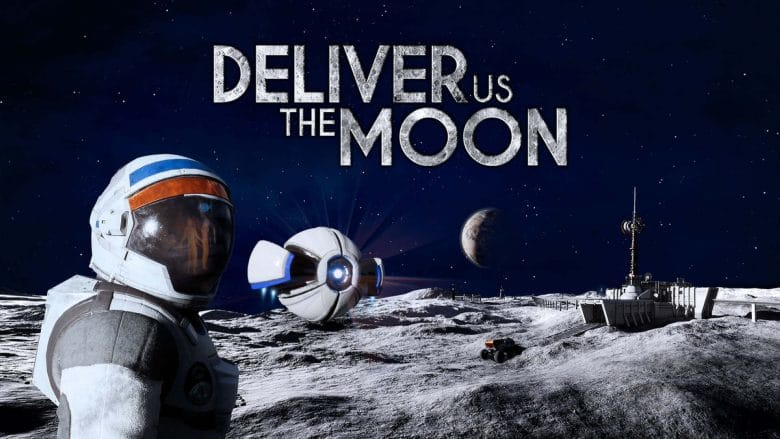
“Deliver Us the Moon” Review

An astronaut and robot standing in front of a lunar landscape.

Deliver Us the Moon is a first-person interactive fiction game similar to Tacoma, Event[0], The Station or Stardrop. You play an astronaut blasting off an environmentally-devastated, near-future Earth to restore the energy transmission from the moon after it mysteriously shuts off. 

Deliver Us the Moon could be called a walking simulator, a genre uncharitably named for its simplicity and monotony. Like many walking simulators, much of Deliver Us the Moon involves the lone player exploring their immediate area, finding notable objects to scan or historical scenes to review then solving simple puzzles to unlock progress to the next area. There is no branching narrative or progression.

However, unlike some walking simulators, Deliver Us the Moon packs variety. It includes multiple mini-games like docking spaceships, driving moon rovers, repairing robots or aiming radar dishes. Its space scenes impart the feeling of weightlessness, potentially disorienting the player with “up” only denoted by the occasional sign, screen or seat. Limited oxygen makes scenes in space or on the lunar surface tense. Sometimes you lose yourself staring at the desolate but beautiful lunar surface. Sometimes you are just desperately surviving. It is more What Remains of Edith Finch than Dear Esther.

Like many interactive fiction games, Deliver Us the Moon is short, taking seven to eight hours to finish. However, given its weighty story, it feels about the right length. Its brevity and economy contrast with unending contemporary live service games. It also becomes more accessible – you complete it in a few gaming sessions.

The success of an interactive fiction game depends on how well it resonates with the player. The key is the adage, “Show, don’t tell”. Rather than telling you how you or some player surrogate acted or felt, it places you in that situation, drip-feeding you background and context. When the game finally asks you to care, it feels natural after surmounting challenges and discovering lore organically.

At first, Deliver Us the Moon‘s setting and premise may seem far-fetched. Climate change is a genuine problem. However, Deliver Us the Moon‘s world exhausts natural resources and desertifies sooner than even pessimistic climate projections. Extended stays in space or on the lunar surface require huge, Earth-side teams to support them. Given our understanding of physics, beaming sufficient energy from the moon to power the Earth is impractical.

However, Deliver Us the Moon is not a game about environmentalism, technology or space. Its puzzles are never hard enough to frustrate or block progress.

Deliver Us the Moon is about how personal connections drive us, such as protecting family or camaraderie. It is about how alienating disconnection can be, even when the world is a stake. Amidst space’s vastness, alienness and hostility, the small things matter.

Deliver Us the Moon will appeal to those who enjoy empathising with a good story and can relate to its themes. You will enjoy Deliver Us the Moon if you enjoyed Firewatch or Gone Home but want more interactivity, some tense moments or a science fiction setting. Like other interactive fiction games, those looking for something challenging, action-filled or longer should look elsewhere.

“Greedfall” Review: How Focusing on Strengths Creates a Great RPG

The silhouette of a tricone hat wearing, saber wielding figure overlooking a misty Celtic forest with a volcano in the background

Greedfall is a third-person, action role playing game set in a unique world reminiscent of colonial, magical-filled seventeenth century Europe. You, de Sadet, accompany your cousin to Teer Fradee, a newly discovered island. You act as an ambassador, investigator and troubleshooter to help him manage and expand the colony while dealing with other factions and native inhabitants. You also seek a cure for the Malichor, a disease ravaging the continent’s populace.

The standout aspect of Greedfall is its setting. Beyond the tricorne hats, flintlock pistols and galleons, colonial Europe is a time of contradictions. Great advances in science and technology promise much, but religious and social views evolve much slower. Greedfall embraces this contradiction instead of safely shying away from it. 

Greedfall‘s world contains several main factions. These include the Bridge Alliance, a mix of Arabia and India that pursues science above all else. It wars with the highly devout Theleme, which has clear influences of Spain and Italy. The Congregation of Merchants, de Sadet’s faction, is a pseudo-France, sitting politically between and trading with each. Teer Fradee is an England-like island populated by natives with a Celtic-inspired language. 

The setting and factions create a stage for Greedfall’s cutting commentary. The Bridge Alliance grapples with the ethics of its research, Theleme struggles with zealotry and the Congregation with bureaucracy. Watching Theleme’s Ordo Luminous slaughtering innocent people under the false accusation of heresy, the Bridge Alliance comparing human test subjects to lab rats, and wealthy merchants from the Congregation dismissing laws as obstacles bypassable by modest bribes are all confronting.

Greedfall is also clever and respects its inspiration. It depicts organized crime as intelligent and insidious, not something solved by defeating the nearest “bad guy”. The native inhabitants of Teer Fradee have different reactions to the newcomers. Some fight them. Some ignore Some trade with them. Some use them as pawns in their own political games. This pluralism creates interesting dynamics between the various tribes and factions.

Greedfall also knows that constructing emotional investment in characters and a setting takes time. It takes time to build relationships and drip-feed exposition. When the game finally asks you to care, it feels natural and not forced.

Many play RPGs for their tactical combat. You control persistent characters through multiple combat encounters who improve over time. The enjoyment comes from mastering the mechanics and overcoming the challenge.

Unfortunately, Greedfall does not deliver in-depth combat. It hints at a more action-oriented parry and riposte-style melee combat. However, at least when playing as a magic-wielding character, abilities like Stasis and Storm quickly relegate most fights to mere speed bumps — fun but probably not what the designers intended.

The exceptions are the fights against Nadiag (“guardians”). These add an unexpected, welcome, but initially frustrating challenge. When you first encounter one, none of the fights beforehand prepare you for discerning telegraphed attacks, careful positioning and resource management. 

A higher difficulty setting will likely flatten the difficulty curve or increase the challenge. A melee-oriented character might have been a different experience, too. However, those seeking a combat-oriented RPG should look elsewhere.

Between quests and fights, you spend much time exploring Greedfall‘s world. Teer Fradee is split into discrete areas, unlocked as you reach the edge of known ones. Crafting ingredients are spread liberally around the map. Alleys and scaffolding in cities reward the curious. 

Your character, de Sadet, is joined by several companions. Each hails from a different faction and fulfils a combat archetype. Each also has a unique quest line and can be romanced. You can have up to two at a time but can switch them when fast travelling or at camps. However, their perspective and hints are most useful, especially when taking a companion on their faction’s quests.

Non-combat skills, or talents, provide multiple ways to solve most quests. For example, you may rescue someone from prison by using your “lockpicking” talent to pick the lock, “intuition” to convince the jailor he should let the prisoner go or by using your “science” talent to brew and place an alchemical mixture to blow a hole in the wall. 

However, talents are all about early- and mid-game trade-offs. While some items, upgrades, and befriending companions help, you obtain talents slowly, and not every one is helpful in every situation. Otherwise, you may be forced into reputation decreasing threats or violence.

Graphically, Greedfall is no Cyberpunk 2077. It lacks ray tracing and DLSS. A 4K display resolution is unkind to some models and textures. Looking down on grass reveals three flat surfaces arranged like an asterisk.

However, for a non-AAA RPG initially released in 2019, Greedfall is still a pretty game. The game uses light/dark contrast heavily, such as the moment it takes to adjust to the dim lighting indoors or the pale shards of light illuminating caverns. I often stopped to admire the detailed rigging on the moored tall ships. Sunbeams shone down from the golden afternoon sun through the trees or buildings, shedding a warm red glow between the shadows or reflecting from puddles.

Greedfall‘s music is ambient and atmospheric. The encounter music with Teer Fradee’s native inhabitants focuses on percussive and woodwind instruments, giving a musical shorthand to help identify who and where you are. The voice casting is excellent, and only a few strange pronunciations using native accents mar the collective vocal performance.

Some have complained about Greedfall‘s glitches and bugs. Post-release patches may have fixed these, but I counted only a few in my playthrough. Most were low-resolution textures or an NPC struggling to walk around an obstacle – nothing significant or immersion-breaking.

Some have also complained about the lack of animations for minor events. Instead of an NPC drinking a potion or a magic seed growing into a tree, the game fades to black and then shows the result. I do not see this as significant. There needs to be sufficient cost benefit for a small studio to animate these.

For a non-AAA RPG, Greedfall focuses on its strengths to punch above its weight. Greedfall will not satisfy those seeking boundary-pushing graphics, a thumping soundtrack or consistently challenging combat, at least not at the normal difficulty level. However, the novel setting, meditative exploration and great quest design made my sixty hour playthrough thought-provoking and reflective.

“Dungeons & Dragons: Honor Among Thieves” is Finally a Good D&D Movie

"D&D Honor Among Thieves" movie logo

Dungeons & Dragons: Honor Among Thieves is a comedy and action fantasy movie based on Dungeons and Dragons (D&D), the tabletop role playing game. You follow Edgin and his adventuring band as they attempt to rescue Edgin’s daughter. They are betrayed, then drawn into something larger and more insidious that threatens the whole city of Neverwinter within the Forgotten Realms.

One challenge with bringing D&D to the screen is that D&D is a game system upon which different locations and characters are built and played. It is not a single place with known characters. Even the game’s themes vary with different settings, such as Dark Sun’s post-apocalyptic rebuilding, the pseudo-Middle Earth of Greyhawk and the intrigue-filled Forgotten Realms.

Another challenge is what makes D&D successful and enjoyable, like the many tabletop role playing games that followed it, is active participation. While there is a Dungeon Master that guides play, D&D is about cooperative storytelling and spontaneity over fixed character development arcs and well-developed plots. It is camaraderie. It is living popular tropes, not just passively consuming them.

By comparison, fantasy and science-fiction movies and novels usually adopt the setting to disarm the reader for some form of social commentary. For example, J. R. R. Tolkien’s The Hobbit was about conflict between the English upper, middle and lower classes. Robert E. Howard’s Conan warned against the evils of unrestrained technology. Characters develop and events occur to support that aim, all under the director’s or author’s strict guidance. 

Previous D&D movies and many novels failed because they took the settings or signature creatures, spells and classes from D&D and put them in heroic and epic but themeless fantasy stories. They inherited the disadvantages of both D&D and movies or novels without either’s advantages.

Thankfully, Honor Among Thieves learns from these mistakes and recent successes, like the Marvel franchise. It works for four reasons.

The first is respecting the soul of D&D. D&D is about heroic fantasy, where inspiring good and terrifying evil exist. Players raise sword and spell to defend those who cannot.  

However, the players or audience need to feel emotionally invested. It has to be personal. Without emotional grounding, gravitas becomes self-importance and the solemn becomes cringeworthy. Honor Among Thieves starts at the most basic, with a husband pining after his wife and daughter, routes through betrayal and only then ups the ante to something epic. The movie has heart.

The second reason is respecting D&D as a beloved, forty-year-old IP. Players will recognise iconic spells, classes and creatures. Those familiar with the Forgotten Realms setting will enjoy the references, from the overt, like Baldur’s Gate and the Harpers, to the subtle, like Selune’s Tears. The adventurers from the 1980s Dungeons and Dragons cartoon appear in the arena. There are not one but two dragons.

Honor Among Thieves feels like a D&D “campaign” or sequence of play sessions. It is long at around two hours but keeps the pace moving, jumping locations quickly without labouring. Locales include medieval cities, the Underdark and eponymous dungeons. The swerving plot gives the feeling of spontaneity and improvisation. The special effects and fight choreography are on point, giving each character a chance to shine. The final climactic battle demonstrates the power of the adventuring group at its satisfying culmination.

To be fair, Honor Among Thieves is not always faithful to the D&D rules. Paladins making Handle Animal skill checks and druids wild shaping into The Incredible Hulk-like owlbears will leave D&D rules lawyers shaking their heads. Under the guise of a relatable audience surrogate, the movie strips Edgin’s bard of his magic and combat prowess. However, these transgressions are minor and forgivable.

The third reason is not taking itself too seriously without being disrespectful. Often, an unexpected joke or an Instagram-worthy lousy dice roll can be a highlight of the session. Honor Among Thieves contains plenty of humour, from accidentally setting off traps, underestimating the literal wording of spells or the questionable tastes of intellect devourers. Without it, this movie would be a sequence of action-heavy fights having to one-up itself each time. It keeps the tone light.

For example, Xenk, the Paladin, could easily be overplayed to the point of ridicule. He literally and metaphorically does not swerve from his path of righteousness. However, his misunderstanding of irony is endearing. His aloofness opens room for forgiveness. He simultaneously contrasts the more chaotic nature of the rest of the party and inspires them toward greatness. Edgin, his adventuring band and the audience want to make fun of Xenk but cannot.

The fourth reason Honor Among Thieves works is its themes. Like Guardians of the Galaxy and The Avengers, it deals with family and self-realisation. You know the good guys are going to win. The question is how and whether they can overcome their relatable self-doubt and dysfunction to realise their potential. Seeing heroes struggle with the same fears as us brings the audience and players closer, humanising the heroes and subtly suggesting that we can all be heroic.

Honor Among Thieves is fun. It is fast and flashy enough to keep the audience’s attention and sassy enough to be credible without disrespecting D&D. You will enjoy Honor Among Thieves if you like the recent Marvel movies, heroic fantasy or play any tabletop role-playing game. If not, it will continually imply that you are missing something. Honor Among Thieves will not win any awards but is a solid cross-over that players have been waiting decades for.

“Sable” Review

Sable is an exploration and light platforming game developed by Shedworks. You play the titular character during her “gliding”, a coming-of-age ritual. Sable leaves her tribe to explore the desolate desert world and its people to determine her future and satiate her wanderlust.

Sable is a game about exploration and curiosity. It is about discovering new areas and finding dusty corners. It is about uncovering the lore and history of the world. It is about Sable finding her future place in society.

Thankfully, Sable‘s world is intriguing and wonderful. Visually, the world’s deserts are beautiful and varied, from sterile flat salt fields to the Utah-like eroded towers of red sandstone. Zipping around on your hoverbike, a technological marvel teasing what you can discover about the world’s history, is fun and relaxing.

Mechanically, Sable relies on familiar game loops like fetch quests and collection challenges with optional fishing. The quests are interesting and unique, like climbing through a gigantic wyrm, collecting precarious lighting crystals or gathering beetle poo. Sable restrains itself, avoiding the blatant exploitation of people’s curiosity and completionist instincts in other games.

Two things make Sable stand out. The first is its distinctive and vibrant cell-shaded, cartoon-like art style. The solid blocks of colour and black outlines simplify the landscape and scenes, immediately drawing attention to points of interest. It also gives the world an unreality, reinforcing Sable and her journey as fable of self-discovery.

The second is that everyone wears masks, signifying their place in society. Sable starts with a child’s mask but earns new ones by completing others’ tasks. She chooses one to wear when she finishes her gliding.

Interestingly, Sable glosses over the depersonalisation that such a practice would bring. Sable can still recognise people and see smiles or other facial expressions beneath the masks. The game ignores possible commentary on Western society’s fixation with employment as identity or portraying fake versions of yourself.

Avoiding such commentary is a good decision. It would have been too heavy. Sable is self-driven and self-paced, placing little pressure on the player. There is no combat, death, failure state or even conflict.

This decision means Sable fits nicely into the “wholesome game” genre. It also means the game has a positive and uplifting vibe. The world is not scary. Something interesting could always be around the next corner.

One minor gripe is the game’s graphics default to thirty frames per second. Unfortunately, some animations, such as Sable’s running, are limited to that rate. This noticeably contrasts with swaying grass and wind effects that are not.

Sable‘s content also gets more obscure as it progresses. The game may be unchallenging, but you need to work hard, be very curious, or both to complete everything.

That said, Sable does not encourage or require you to do anything. There is no main questline or overarching story. Sable’s mask, and her future, is her decision to make. She can return after getting her first mask or take as long as she wants.

Instead, the focus is on how Sable’s meanderings transform her. Her conversations with her tribe mates at the end are very different to those at the start. As the menu theme’s lyrics say, Sable eventually returns to her tribe as someone else.

Sable is a game for those that enjoy self-guided exploration on multiple levels. It does not outlive its novelty at eight to twelve hours to complete. Those wanting something challenging, story-driven or longer may get bored. However, those looking for something introspective, meditative, uplifting, and positive will enjoy it.