
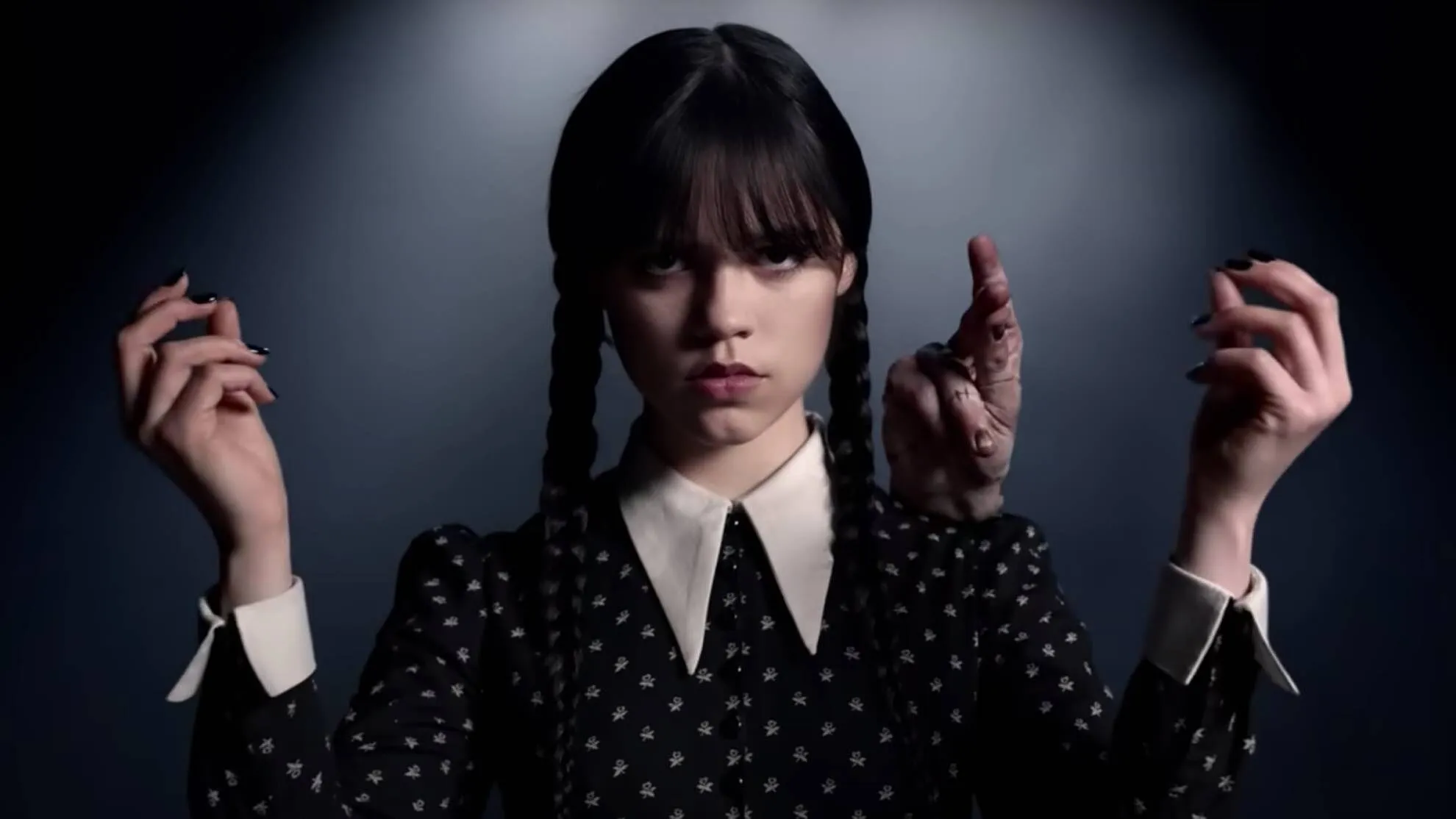
Many were curious when Netflix previewed Wednesday as a reboot of the 1960s black and white The Addams Family. The Addams Family poked fun at those who are different, subtly reinforcing American cultural superiority during globalism’s infancy. Recent versions softened this stance but reduced the central family to a travelling freak show. Would Wednesday repeat the same mistakes?
Wednesday begins as Wednesday Addams starts at a new boarding school, Nevermore Academy, after being expelled from yet another traditional American high school. Her parents, Gomez and Morticia, also went to Nevermore Academy. Their legacy threatens to smother Wednesday’s emerging identity under her parent’s shadow. Meanwhile, Wednesday struggles to define herself in a world that wants to force her into a mold.
The first few episodes introduce the characters while entertaining the viewer with succinct and acerbic dialog, particularly from Wednesday herself. The main plot then starts to assert itself. A supernatural mystery threatens to overwhelm Nevermore Academy and the nearby town. Wednesday takes it upon herself to solve the mystery, guided by her psychic premonitions.
Jenna Ortega portrays the unblinking, monochrome titular character brilliantly. Wednesday outwardly revels in her isolation. She even convinces her nemesis that she cares little for others’ opinions. However, her black, frozen heart predictably melts after a visit from her uncle Fester, her feelings for Thing and young love.
Thing, Wednesday’s disembodied hand companion, is the most transformed character from the original The Addams Family, both by special effects and a new purpose. Thing moves from a recurring gag to the perfect companion and sidekick: loyal, competent, occasionally comedic but never taking the spotlight from Wednesday.
Enid, Wednesday’s werewolf roommate, plays Wednesday’s foil. Enid represents everything that Wednesday is not: colourful, energetic, warm, forgiving, technically savvy and extroverted. This tug of war plays out in the not-so-subtle contrast of their shared dorm room between Enid’s rainbow and Wednesday’s gothic drabness.
Wednesday eschews almost all classroom scenes typical to the Harry Potter-like genre. Weems, the stoic, long-suffering headmistress played by Gwendoline Christie, vacillates between dominance, patience and political correctness.
For original series fans, Wednesday subverts many tropes from The Addams Family, like snapping fingers twice or the adoring love between Morticia and Gomez. However, some merely lighten emotional moments and strengthen the bond between characters. Wednesday and Pugsley, her brother, casually fishing using hand grenades is a good example.
However, Wednesday has its frustrating flaws, too. Wednesday’s character sometimes veers into the Mary Sue trope. Her knowledge of macabre topics, archery or the cello is unmatched, dismissively besting others. Wednesday’s friends’ affection is unrequited and undeserved.
Wednesday also touches on the Chosen One trope. Her constant self-righteousness and lack of remorse grates. She would have been expelled and arrested for her actions in any other context.
Wednesday will resonate with young adults. It deals with social status, love triangles, the struggle to find one’s identity, the bravado and self-righteousness of youth and the changing relationship with parents from a dependent child to a semi-independent teen.
Wednesday is unashamedly feminist. Women play most main roles. The series reduces Gomez from a 1960s-style family head to a love-struck doter. Pugsly is a pot-purri-eating weakling constantly needing Wednesday’s protection. However, the series loses little from doing so, and the new perspective is refreshing and fundamental to the story.
Underneath that, by moving the spotlight away from the Addams family and onto Nevermore Academy, Wednesday can examine diversity and inclusion. The ridicule of Nevermore’s student “freaks” by the nearby town’s “normies” will appeal to anyone bullied or victimized.
The town’s financial dependence on Nevermore Academy forces an uneasy truce, preventing the resentment from escalating into open conflict. This arrangement gives more credibility and context while giving key characters more depth.
However, the series is sometimes one-sided. No one sympathizes with those Wednesday belittles or harms. The nearby townspeople are right to be wary, given the recent murders and Nevermore Academy’s students’ powers.
Wednesday is aimed at a modern audience, who consider a show a competition between writers and viewers. The plot moves quickly, never dwelling on any scene or character more than necessary. It foreshadows enough for the audience to feel clever predicting the next event, only for the plot to swerve at the last moment.
Ultimately, the original series riffed on medieval or occult tropes for comedic effect. Wednesday uses a modern lens, crisp dialog and a fast-paced, economic plot to tell a different story. It appeals differently but successfully to both newer and older generations. However, the latter may find Wednesday a tad self-righteous and superficial.
 The Single Player