
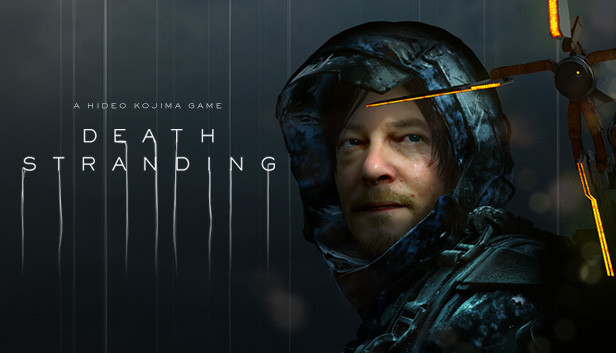
Death Stranding is an ambitious and heavily thematic game that tweaked my curiosity. Given fifteen hours to play through it, I captured my initial thoughts.
You play as Sam “Porter” Bridges, a porter that carries cargo between human settlements in a post-apocalyptic world where the divide between the dead and the living has muddied. The remnants of human civilization live scattered and disconnected.
The gameplay chiefly consists of the mundane but meditative act of hiking. Initially, Sam focuses on balancing his cargo while avoiding rocks, steep inclines and deep water. He soon gains additional abilities, like constructing ladders and bridges, and encounters challenges like humans, the dead or worse.
The gameplay is refreshingly unique. It takes the oft-maligned “walking simulator” moniker given to games like Gone Home and Dear Esther then renders them all pretenders.
Graphically, Death Stranding’s world is a persistently overcast landscape initially of grey bogs and rock exposed through green moss, like Scotland or Iceland. Playing with ray tracing and DLSS, the images would be awe-inspiring if the world was not intentionally dull. The water effects are superb.
Thematically, Death Stranding’s world is Shakesperean and human-centric, with the natural environment reflecting problems of the human one. Crows plummet to the earth to herald danger, while seagulls represent safety and the assurance that being surround by life brings. Grey, beached dolphins and whales denote when the player is at the boundary between life and death. The black dead claw at the protagonist to drag them down into the hellish depths. An inverted rainbow subverts the usual happy connotations as an augur of doom. Elemental water tries to extinguish the fire of life while air and earth passively observe.
Mechanically, Death Stranding tries to be too many things. The horror, body horror, combat and stealth conflict with the more meditative and novel hiking, load management and exhaustion mechanics. The transitions between them can be jarring and sometimes occur outside the player’s control.
Does some of Death Stranding‘s symbolism have to be so unsettling? Umbilical cords link the living to the dead, like dehumanized BB (“bottle baby”), your companion. The handprints of the otherwise invisible approaching BTs (“beached things”) are textbook horror.
Death Stranding’s overt symbolism also borders on clumsy. Is handcuffs the best model for Sam’s communication device, something so dualistic and confronting even Sam mentions it? Was it necessary to call a device to connect settlements a “q-pid”, like Cupid?
The game explains everything in detail under the guise of world-building or tutorials. The journal entry explaining “likes”, used as experience points, is unnecessary given our increasingly complex relationship with them in the real world. Letting the player guess or infer may be more effective.
Playing Death Stranding is like someone meticulously explaining a comedian’s jokes, removing the player’s inference and agency. When the player carries no burden, unlike the protagonist, the meaning and achievement disappear.
Worst of all, the symbolism and heavy themes are unrelenting. Sam is an isolated, herculean, messianic figure carrying others’ burdens through a purgatorial landscape. There is no middle ground between hope and despair. There is no mundanity or humanity, like a local merchant or comic sidekick. Supporting characters lack personality, with thematic names like Heartman, Deadman or Fragile. Place names are functional, like “Central Knot” or “Middle Knot”. Even showering and using the toilet have in-game uses.
Death Stranding is not a bad game, despite the comments above. It is an allegory about how social media disconnects us, with Sam gaining “likes” for successful deliveries and giving or receiving likes for shared constructions like ladders or bridges. Most human detract from constructive discussion by stealing deliveries (attention or content) but distract us from real threats. The game’s tenet is we are stronger together and must never lose our compassion.
Death Stranding also blurs the line between cinema and games, with character models matching their actors. The prologue slowly rolls credits as the player trudges through the dreary landscape set to an alternative rock soundtrack.
I suspect the developers wanted to make a subtler, thematic game. However, a requirement for mass-market appeal and sales dictated compromises. Playing further may alleviate these concerns. Death Stranding introduces some novel mechanics and deals with timely themes. It is worth a look for anyone looking for novel gameplay or something emotional, if unsubtle.
 The Single Player