
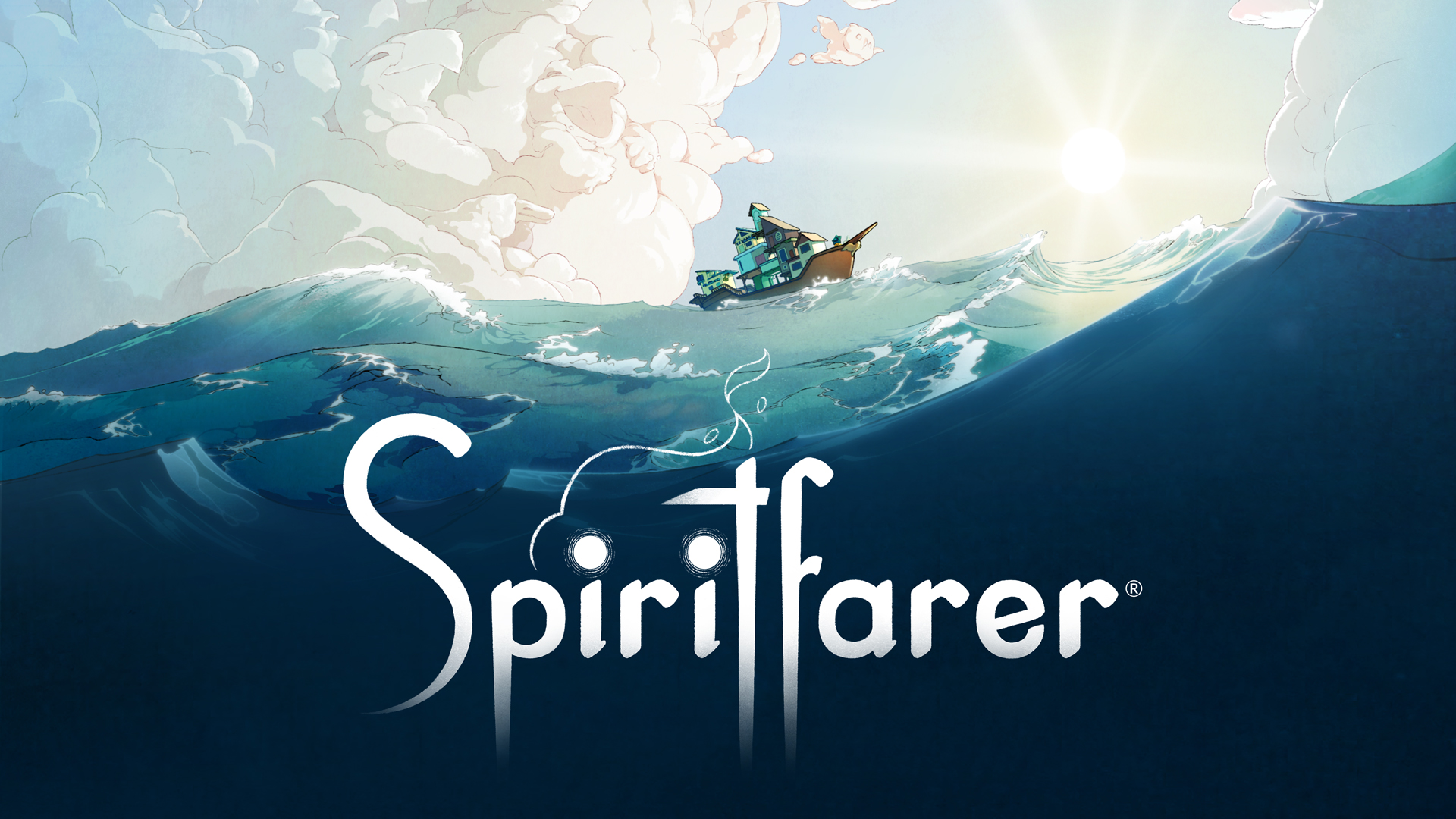
Spiritfarer is a game about dying masquerading as a disarmingly upbeat casual crafting simulation, like Stardew Valley or a less social Animal Crossing. It examines the emotional and social impact, a much rarer and more delicate topic than the usual in-game failure state that dying represents.
You play as Stella, the ever-smiling replacement for Charon, the Greek mythological figure who ferries newly departed “spirits” to their final ending. Stella and Daffodil, her feline companion and the avatar for optional cooperative play, travel between islands in their ship, finding spirits that need shepherding toward their last moments.
Each spirit has different needs, such as unique accommodation or favourite food, and introduces a minigame. Most of the gameplay revolves around Stella gathering word or ore, fishing or growing food, then processing these into ship upgrades or food. Exploration plays a part, both finding islands and navigating them, with light platforming puzzles.
Spiritfarer depicts spirits as animals, creating caricatures and personifications of their personalities and achievements. A picky and aloof art curator becomes a bird. A selfless housewife and mother becomes a cuddly hedgehog.
Each spirit spends their time with Stella to reminisce and work through final regrets, sometimes successfully and sometimes not. Much is implied, such as via quest names, leaving interpretation to the player. However, it also precludes judgement.
Spiritfarer’s music does a lot of emotional heavy lifting and context setting. Most pieces use soft, ethereal piano and flutes with support from the rest of the orchestra. The soundtrack is sometimes solemn, sometimes playful, sometimes mournful, and sometimes hopeful. It is almost as if the orchestra assembled to let each instrument remember its favourite motifs, inviting reflection and introspection.
The simple, clean, watercolor art style counterbalances the heavy themes and emotive music, preventing them from overwhelming the player. Some animations are absurdly funny, like the wide-eyed trepidation of a sheep about to be sheered or a hummingbird carrying a water buffalo. The writing also has some cheeky humour, like enjoying “fakinhage” for breakfast.
Spiritfarer’s setting is highly metaphorical. Stella travels an astral sea that bridges the nebulous time and distance between islands of memories. Her experiences, represented as awkwardly shaped and increasingly precarious buildings on her ship, accumulate in unique ways for each player, creating comforting chaos. The expensive baubles coveted in life, such as jewellery or art, are sold off as trash and replaced by items of emotional significance
Spiritfarer has a day and night cycle that initially feels like an artificial constraint around navigation, crafting and building. However, it soon recedes into something benign and dharmic. Like the seemingly self-absorbed other inhabitants, the world continues, oblivious to the gravity of the spirits’ final moments.
Spiritfarer shares a few similar themes with the movie Nomadland. Both deal with grief and the twilight of people’s lives. One’s taste and emotional state determine whether they are cathartic, triggering or introspective.
As for criticisms, Spiritfarer’s travel, resource gathering, and crafting can be repetitive. While these are non-challenging, meditative and provide recovery time between the weighty, emotional storytelling moments, Spiritfarer could be just as thematically effective with less busywork. It may expand the audience of the game, too.
Like Gwen’s or Astrid’s surprise when getting hugged, key animations are more impactful if not overused. Repeating these actions daily to increase a happiness score reduces them to something mechanical. Less may be more.
However, I applaud Spiritfarer’s heartfelt and restrained approach to a serious and sensitive topic. As each spirit departs, they leave behind an empty dwelling and a constellation, testaments to who they were. Hopefully, Spiritfarer will also remain. “After the artist has been long gone, turned to dust, the art remains,” as one spirit says. The game’s message is one of hope, allowing everyone to be at peace with themselves, leave a legacy and have sympathetic company at the final goodbye.
Like Nomadland, Spiritfarer is not always fun. Spiritfarer’s heavy themes and introspection will repel some, particularly those initially entranced with its casual gameplay and cartoony graphics. However, Spiritfarer demonstrates the power of games as a medium. The player is involved and not just a passive observer of the mundane but powerful acts of supporting and listening. Spiritfarer takes 30 to 40 hours to play and is worth it for players looking for something emotionally powerful or introspective.
 The Single Player